
Albion Jeune
Feiyi Wen and Xiaochi Dong
3.December.25 – 31.January.26
Albion Jeune presents Feiyi Wen and Xiaochi Dong in The Garden and The Gaze. This exhibition is a dialogue between two artists whose practices use established Chinese materials, approaches, and ideas to navigate the intersections of nature, perception, and cultural tradition.
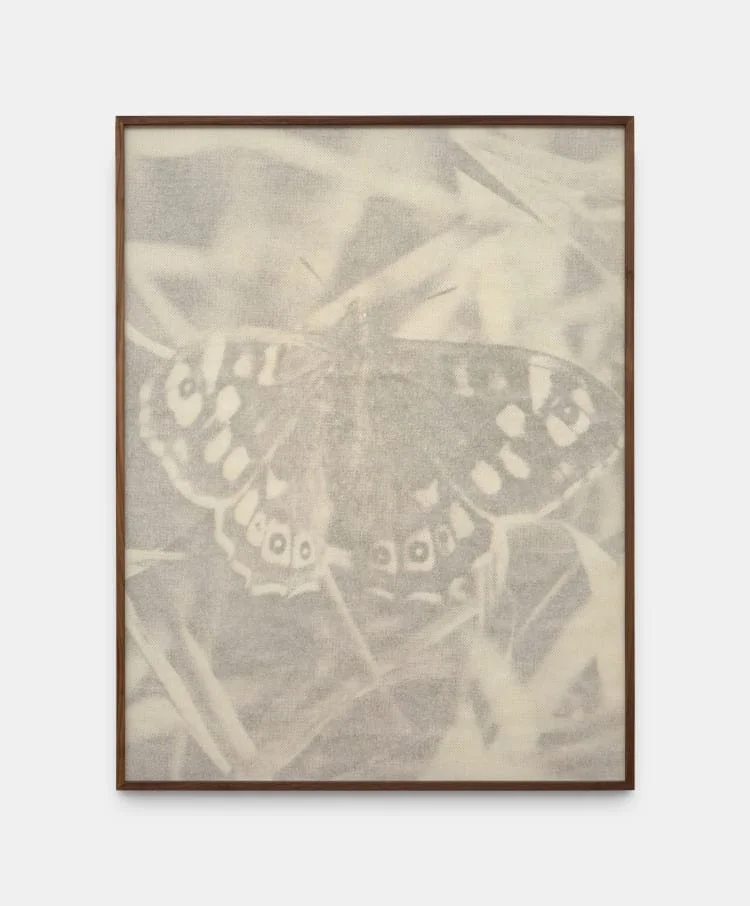
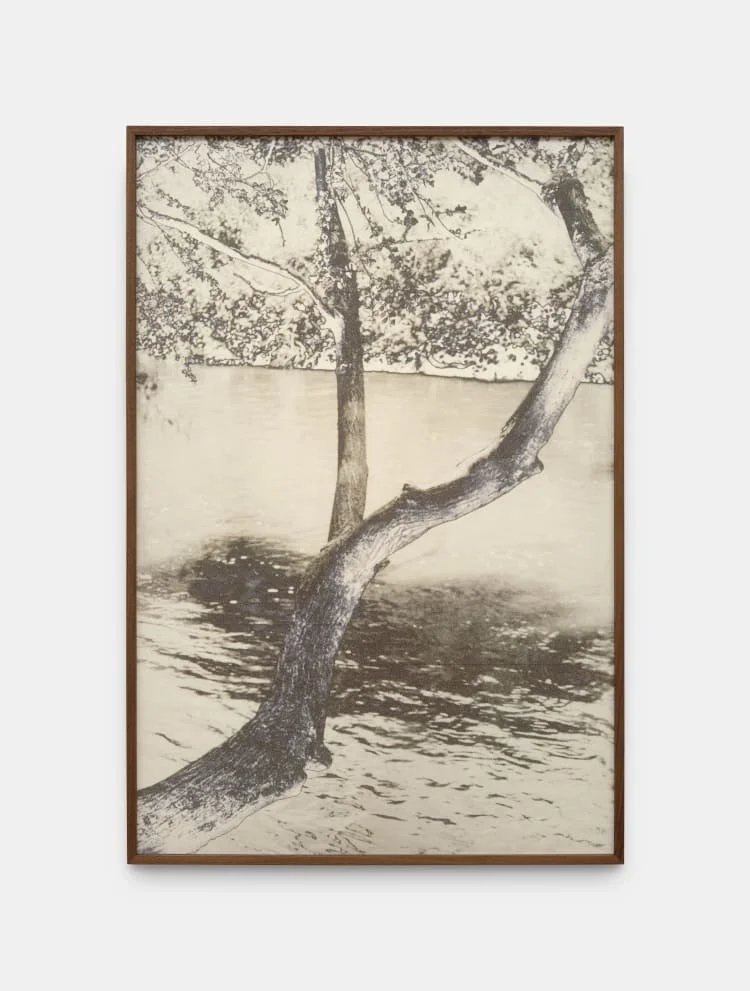
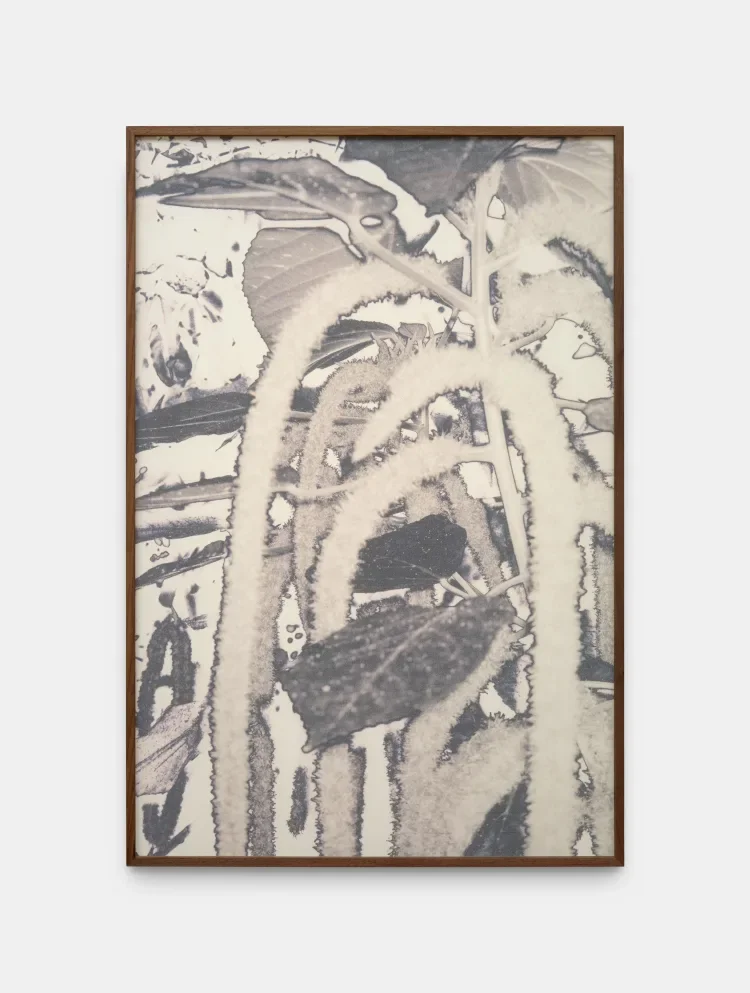
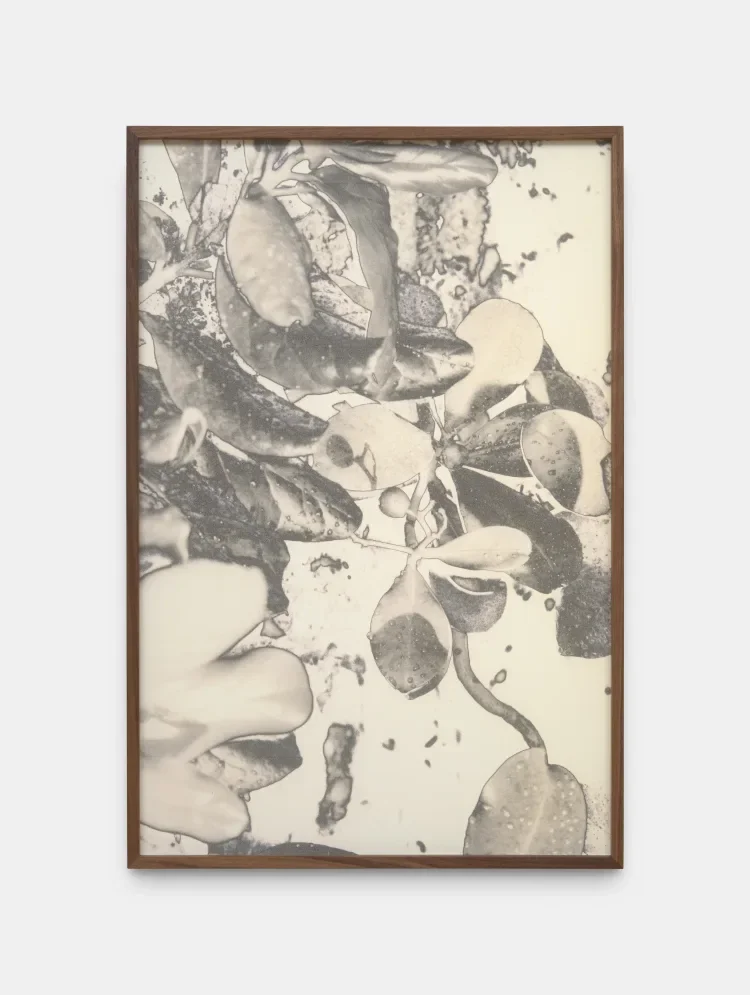
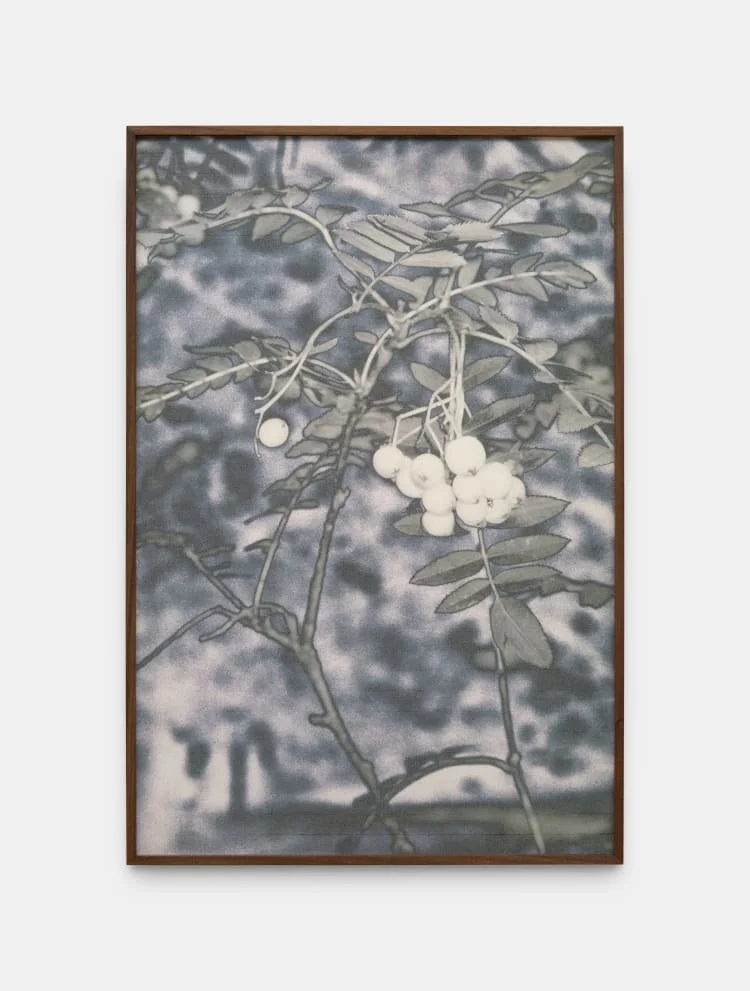
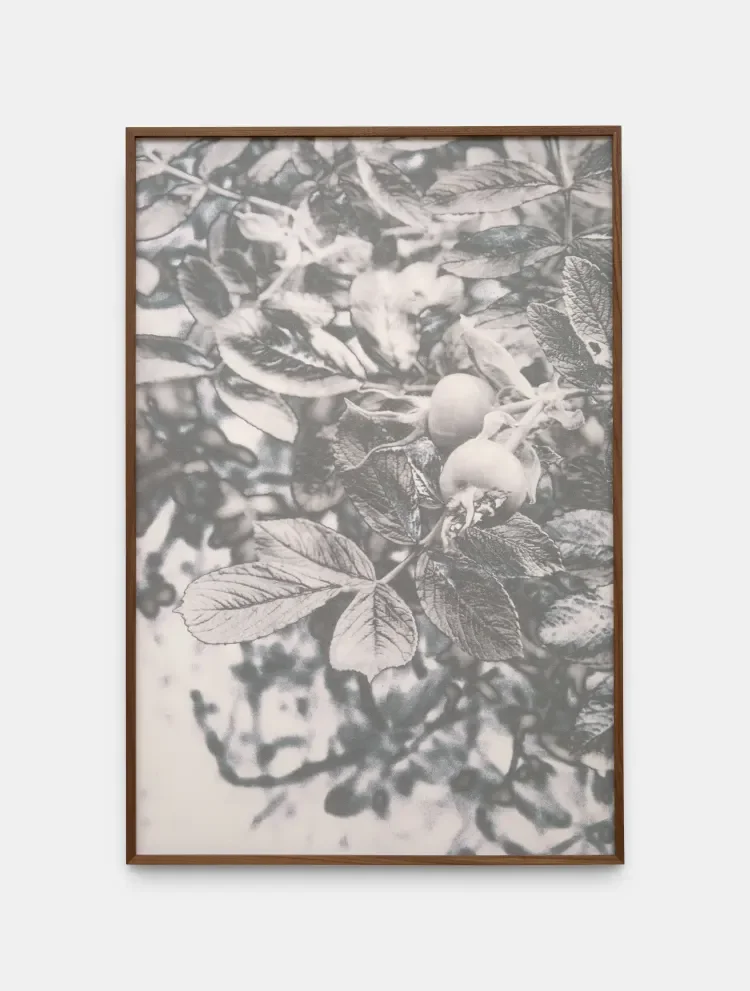
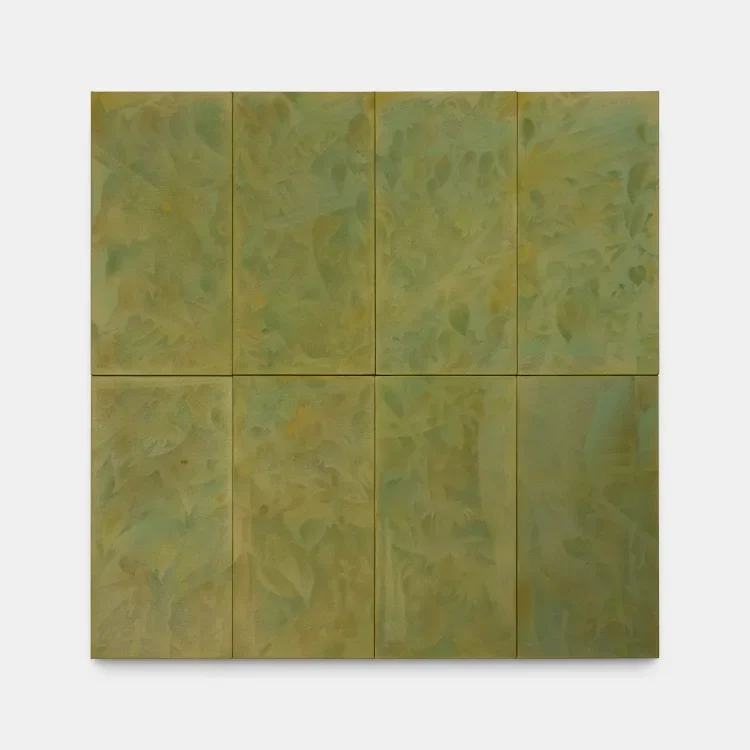
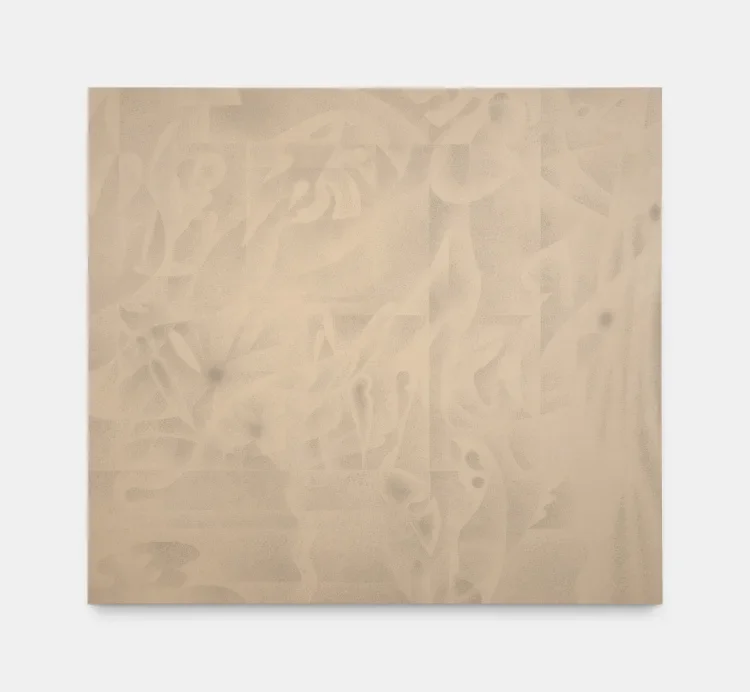
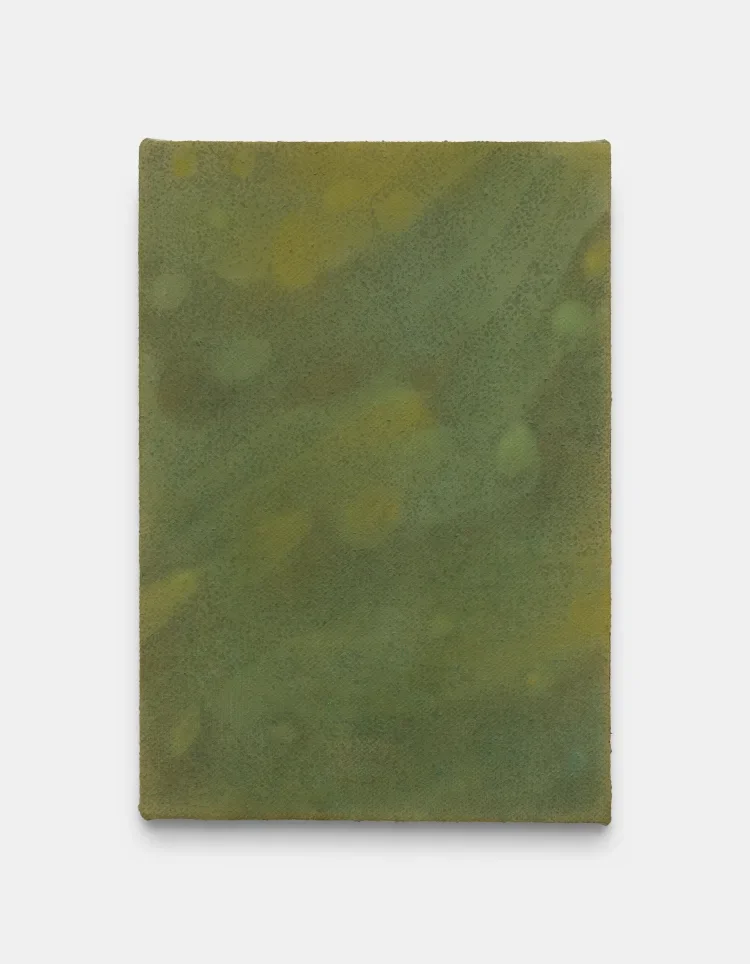
Wen’s worktranslates the approach of East Asian landscape painting and early 20th-century mechanised aesthetics into photography, evoking a quiet, painterly softness that bridges analogue and digital realms. Similarly, Dong’s richly layered paintings and mixed media works draw on classical Chinese techniques and ecological practices to immerse viewers in evolving, tactile natural words. Together, their work unfolds as an exploration of the organic and the constructed, inviting reflection on the fluid boundaries between cosmic order and the ecosystems that sustain us.
Wen, through repeated scanning and reprinting of her original image, discards photographic precision to acquire a painterly softness—a texture echoing the ink-wash paintings of her birthplace. Wen seeks resonance over realism. Her photographs, human-less and hushed, offer a space for reflection, where nature breathes without spectacle. Here, a flower’s fleeting bloom becomes a memento mori, a symbol of the beauty that only impermanence affords. Like Taoist Qi, the life force that animates the world, Wen’s work reminds us that energy flows even through stillness—that what appears static is always becoming. Wen’s compositions often unfold with exaggerated flatness, resisting Western one-point perspective in favour of a non-linear spatiality that encourages open interpretation over fixed meaning. The result is a visual field that feels expansive, yet introspective.
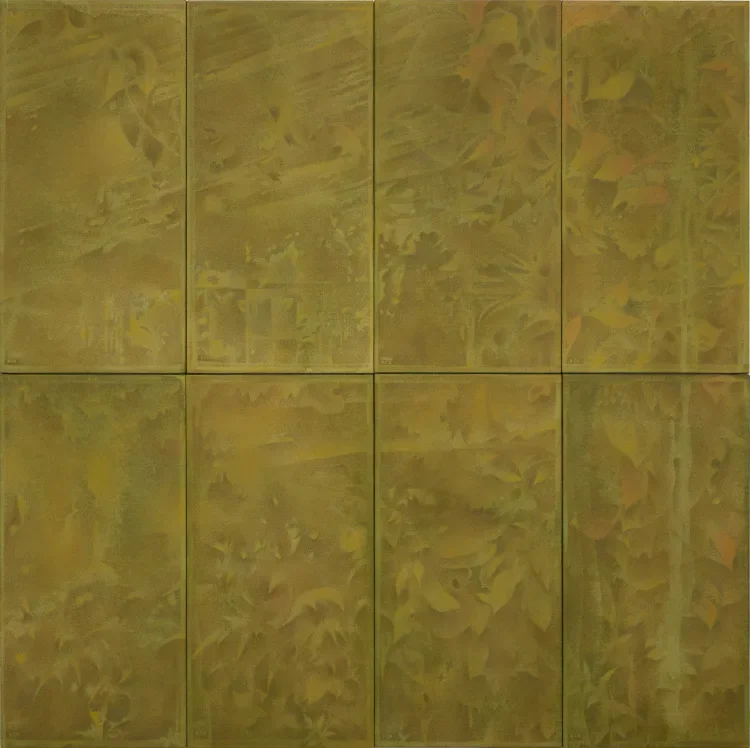
Working primarily in painting and mixed media, Dong uses ecological materials such as Akadama soil mixed with gesso as a base layer, grounding his practice in both material and conceptual concerns. Dong’s methodology reflects a deep attention to materials and ecological systems. The daily care of terrariums, amphibians, and reptiles inform his tactile engagement with natural elements such as fungal beds and moss. In this new body of work, scale and measurement have become increasingly central, with each painting’s dimensions drawn from the Waterlily House at Kew Gardens and the window dimensions of Derek Jarman’s Prospect Cottage. These works carry the layered experience of moving in and out of the space, a double vision shaped by breathing inside and outside, compressing perception into painterly form. These precise formats deepen the sense of immersion and function as portals—recalling both Chinese landscape scrolls and natural history museum dioramas—while the imagery emerges from his own visual and bodily impressions of light, humidity, and organic overgrowth. The notion of symbiosis is central to Dong’s practice, exploring the relationships between species, materials, and cultural frameworks that serve to inform the relational logic of his visual language. Dong’s works invite us into complex and interdependent systems, offering a contemporary image of nature shaped by both ecological reality and poetic composition.
Dong’s fascination with traditional Chinese gardens extends into a deeper meditation on the relationship between nature, artifice, and cultural memory, continuing a longstanding artistic engagement with Asian horticulture. Influenced by Song dynasty landscape painting, Dong uses traditional brush methods such as cun (texturing strokes) and dian (dotting) to echo natural forms and growth patterns. In his works, Dong overlays ink brushwork on grounds made from soils, establishing a mutual recognition between himself and nature. Despite rooting his practice in tradition, he introduces precise systems of scale that gesture towards the exact dimensions of contemporary architecture, creating a dialogue between inherited approaches and present-day preconceptions. Wen’s practice, though shaped through different means, arrives at a comparable synthesis. Her layered prints on rice paper draw on the Chinese literary concept Qing Jing Jiao Rong 情景交融 (the fusion of scene and emotion), a framework that has informed broad strands of Eastern aesthetic thought and resonates with Nishida Kitarō’s philosophy of Basho (place), where human life and the natural world intersect. By presenting nature stripped of human presence and by collapsing perspectival depth into flattened, non-linear space, Wen adapts the visual principles of Chinese painting to her own modern printing processes.
Together, Wen and Dong invite viewers into a shared space where time, memory, and nature converge—challenging conventional perspectives and encouraging a deeper awareness of the subtle energies that underlie our human experience. Their works resonate as meditations on impermanence, transformation, and coexistence, offering a subtle yet profound reflection on how we relate to the natural environment and to each other.
Info + opening times
Albion Jeune