
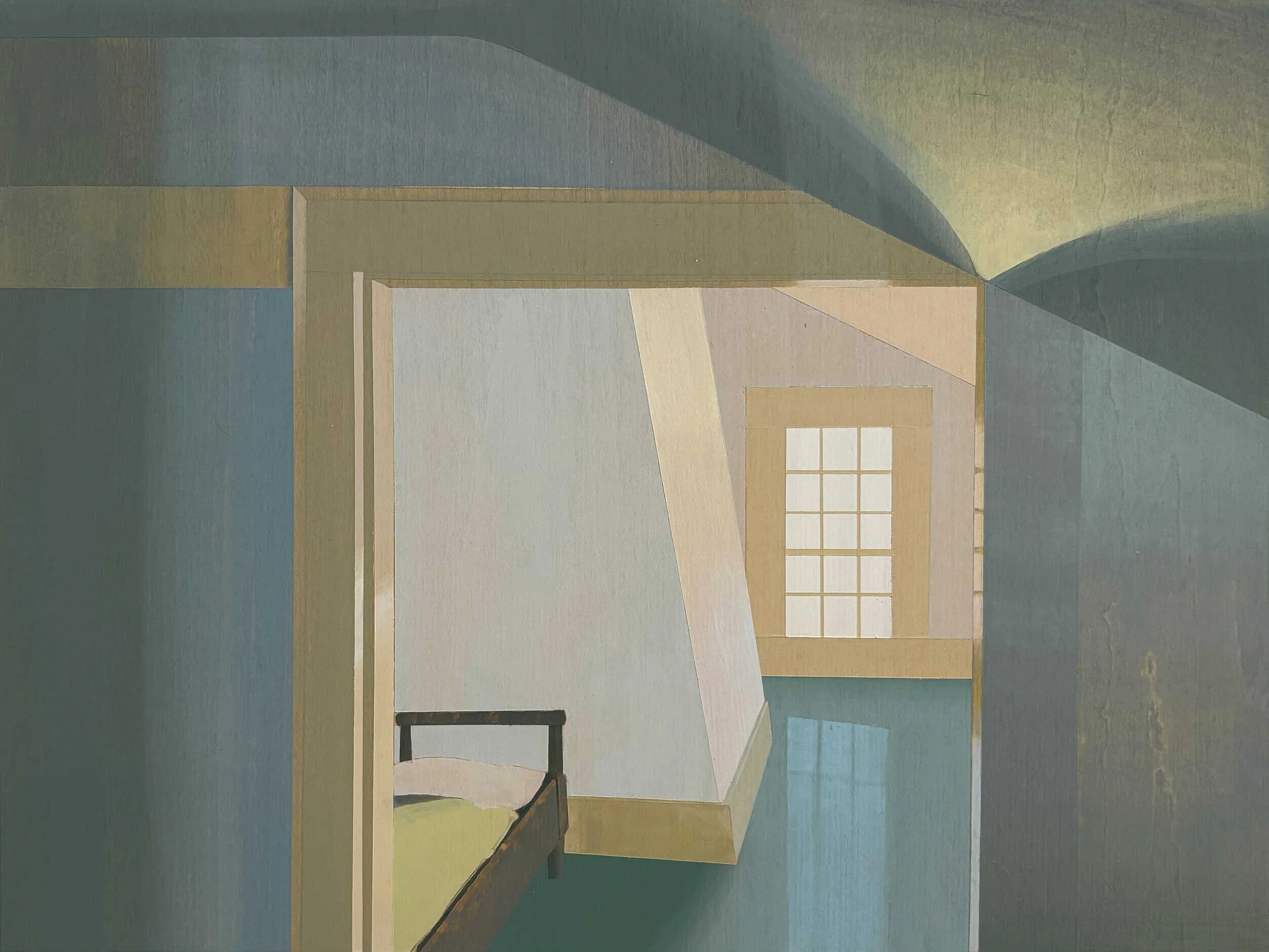
Huxley-Parlour, Swallow Street
In the American Grain
24.September.25 - 22.October.25
Huxley-Parlour presents a three person exhibition, In The American Grain. Borrowing its title from William Carlos Williams’ modernist meditation on the origins of the United States, the exhibition brings together three artists that probe the fragile and contested textures of American history. Madeleine Bialke, Emily Pettigrew and Aaron Spangler each consider the contested mythologies, lived histories, and expansive landscapes that have come to shape America’s evolving identity.
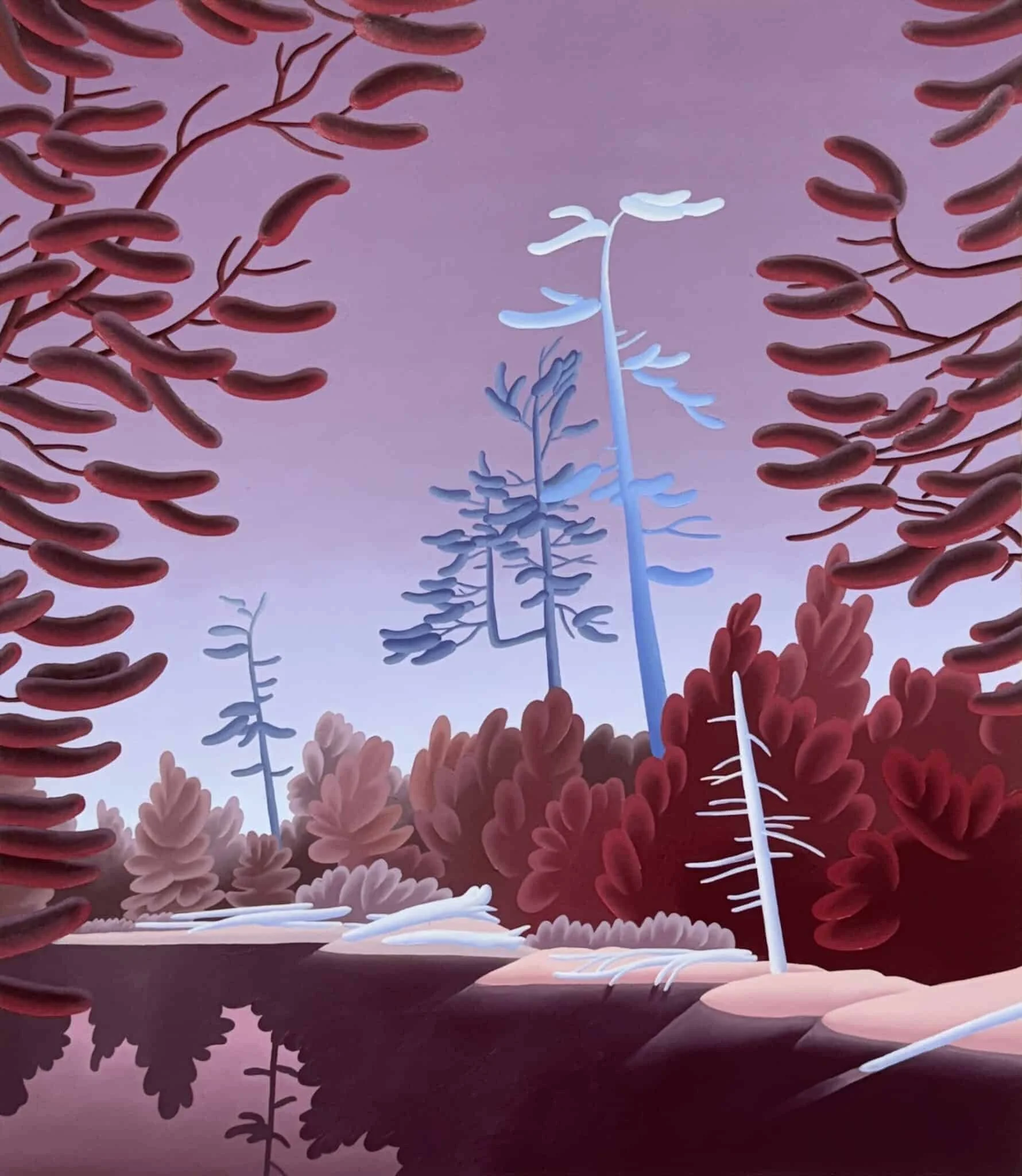
Madeleine Bialke traces the confluence of environment, myth and memory. The
vast landscapes described in her canvases are sites of inheritance, where trees are
archives of time, each a witness to the fragility of history. Drawing imagery from the
largest old growth forest acreage east of the Mississippi, in the Adirondack mountains
of Upstate New York, Madeleine Bialke contends with the eternal nature of these
forests that are now tested by crisis. The expansive scenes themselves are partially
obscured by rhythmic foliage acting as an obfuscating screen. These new paintings
feature bodies of water, drawing upon old luminist traditions of light and water as an
idea of American spiritual transmutation.
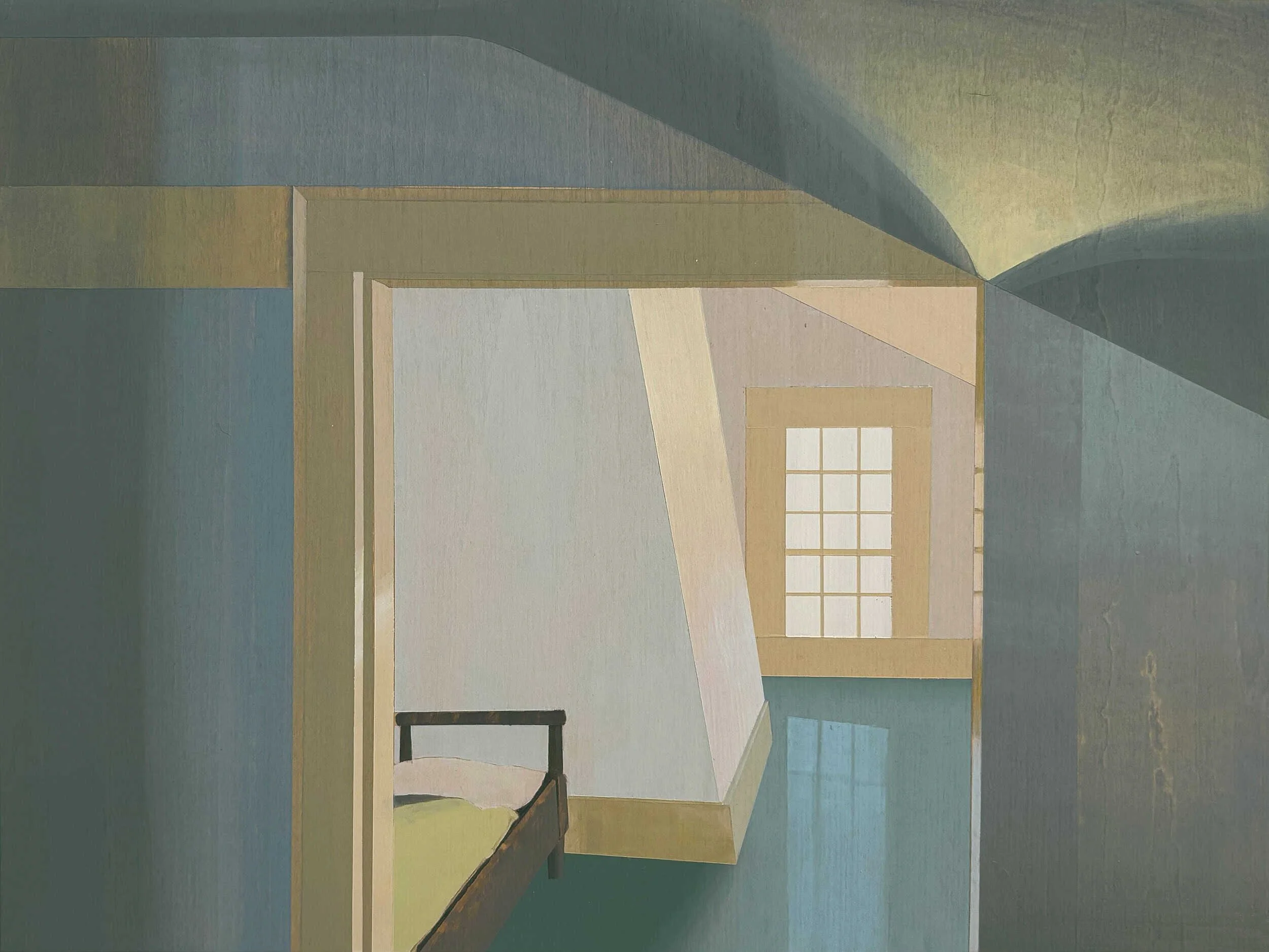
New paintings by Emily Pettigrew blend remnants of early American life and the ghost
of it today - and explore how ancient histories inevitably haunt the present. Pettigrew’s
practice, based in the Catskill region of New York, distills and makes tangible the
presence of time. Through her economy of both composition and application of
paint, she creates tableaus that speak to both the dark and raw nature of American
history, as well as its desolate beauty. Referencing modern compositions and shapeoriented
representation, the work continues an East Coast tradition of formal severity
or bleakness.
Aaron Spangler’s work mines the rugged landscapes and mythic weight of the
American Midwest. The remnants of war, imperialism and religion in the American
psyche serve as the foundation of his intricate reliefs. He continues the American
tradition of ‘whittling’ folk art, as well as Native American totems. The dark value of the
graphite-rubbed surfaces homogenises the subjects, so that every object becomes
figural; expressively and democratically rendered, trees and burn piles therefore take
on bodily associations. Like Bialke and Pettigrew, Spangler’s works are also placespecific.
Minnesota has long been understood as a place for free-thinkers and selfstarters
to come and live on their own on the outskirts of the law. Imagery of rural selfsufficiency
and with a dangerous thread of religious intensity run through these works.
Bialke, co-curator of the exhibition, notes “Carlos William’s book reveals the deadend
in the search for a singular American Identity. At the heart of this dense history
is a sense of rootlessness and longing for meaning. For settlers, the idea of Nature,
with its perceived vastness and age, was the most powerful force to contend with,
so its representation became religious, moral, nationalistic. Eventually, the landscape
became a substitute for a missing national tradition, synonymous with national pride.
The American landscape became iconic just as it was disappearing, and so has only
ever been a fantasy.”
Williams’ book, published in 1925, was less a conventional history than a lyrical
excavation of the forces - violent, visionary, and contradictory - that underpinned the
formation of the United States. A century later, these tensions remain unresolved, and
it is within this unsettled ground that Bialke, Pettigrew and Spangler situate their work.
The works see past and present coalesce as a palimpsest of American mythology
revealing a narrative at once fragile, fractured, and increasingly vital today. These
three artists refract the complexities of place, religion, memory, and belonging. The
works do not propose a unified story but instead unearth fragments - ecological,
historical, and psychological - through which the shifting contours, an overarching
story of ‘America’ that may be seen.
Info + opening times
Huxley-Parlour