
Annely Juda Fine Art
Nicola Turner
01.October.26 - 07.November.26
Annely Juda Fine Art announces its first solo exhibition by Nicola Turner, I Tear Secrets from Your Yielding Flesh
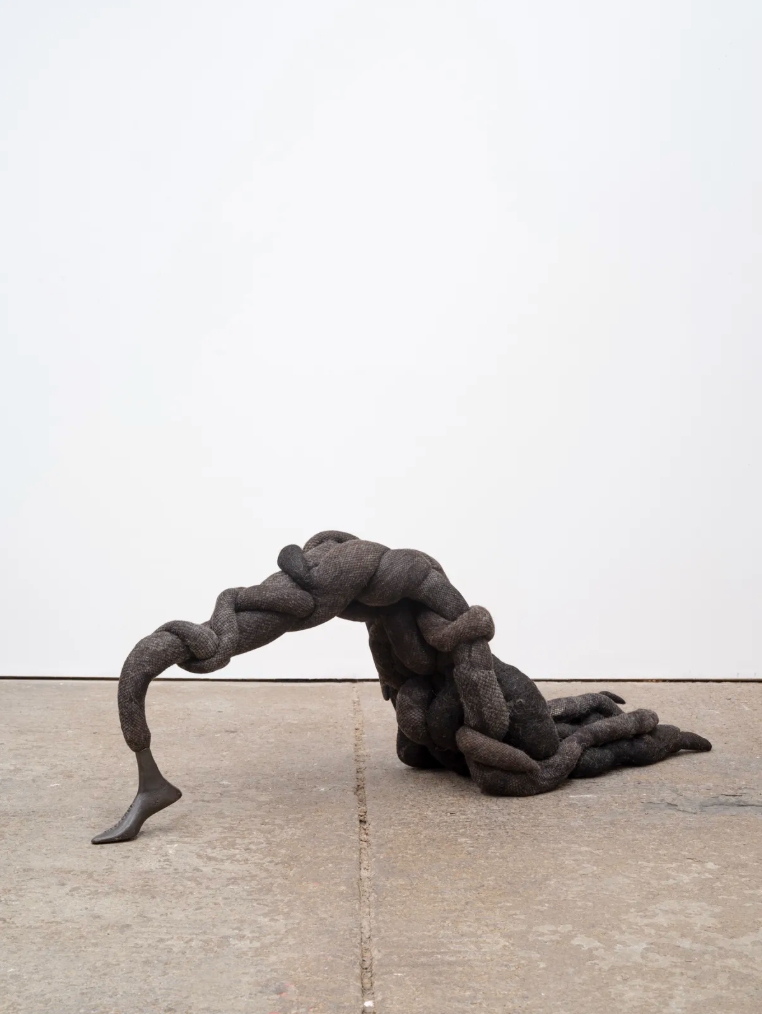
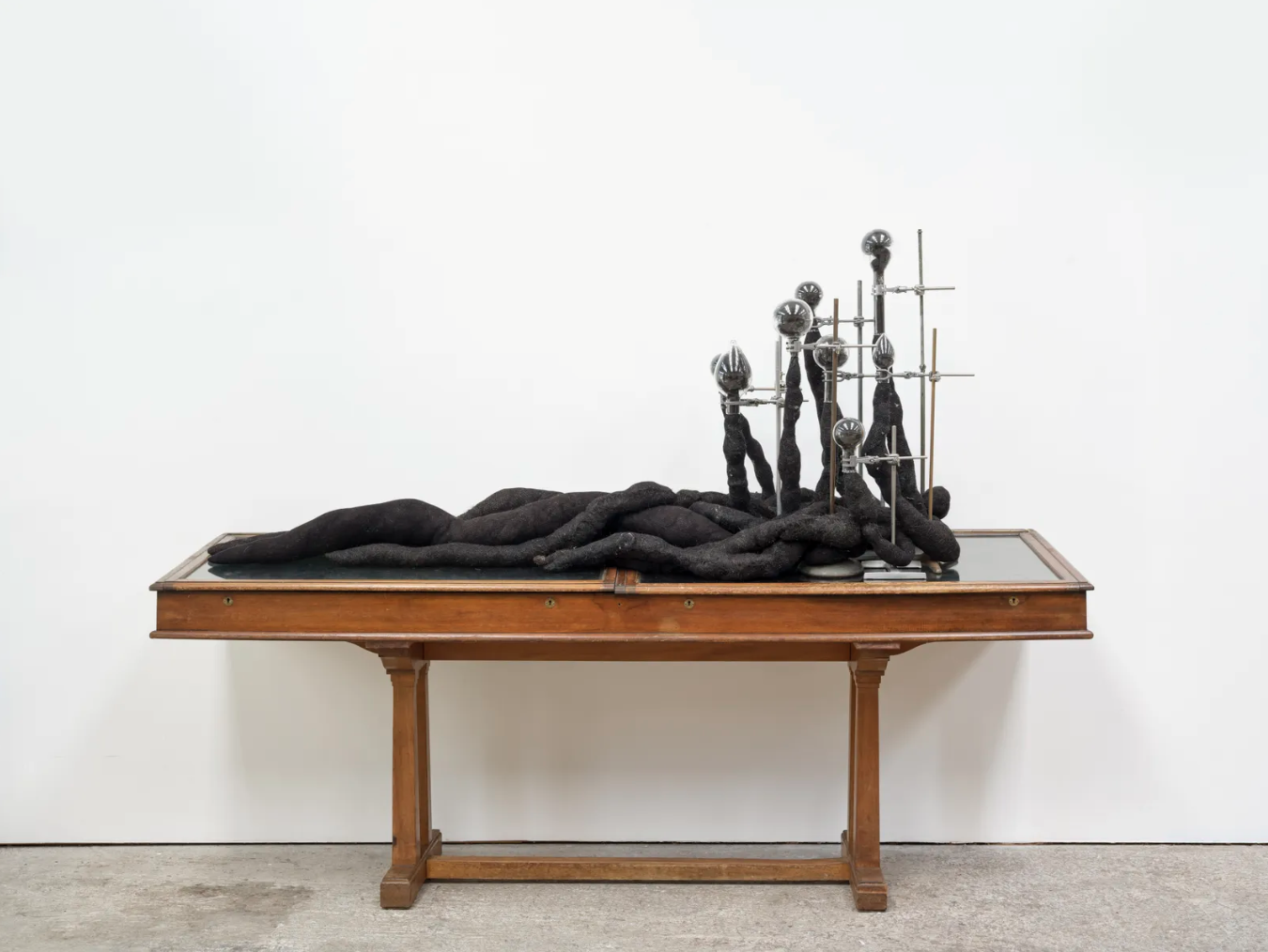
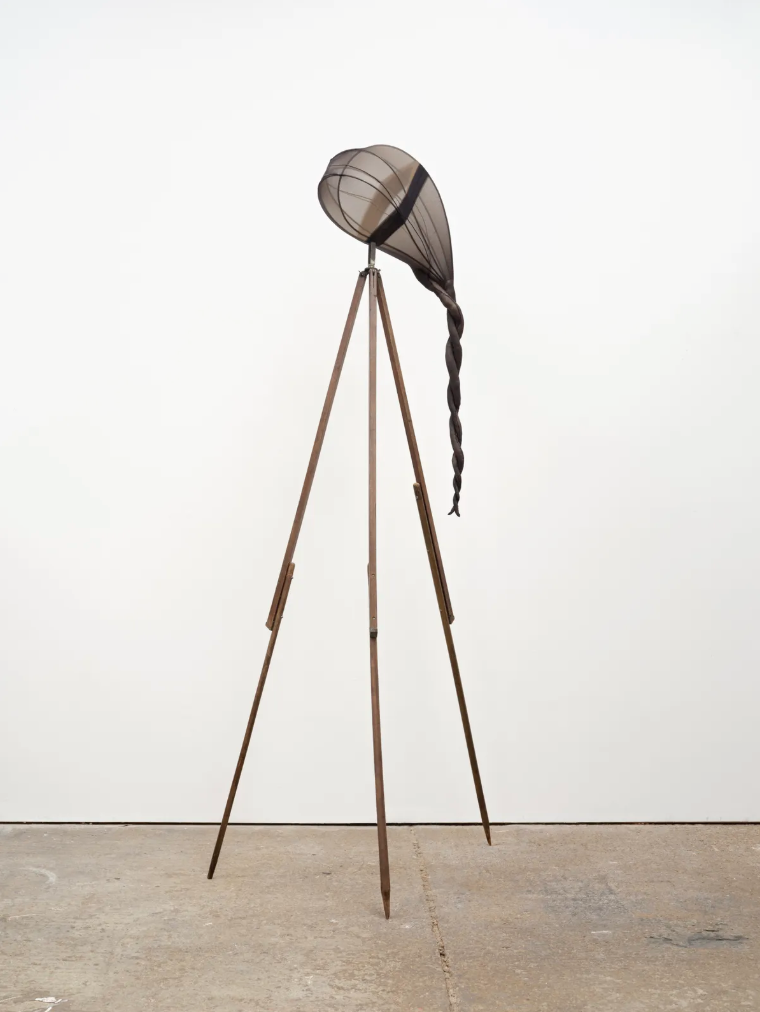
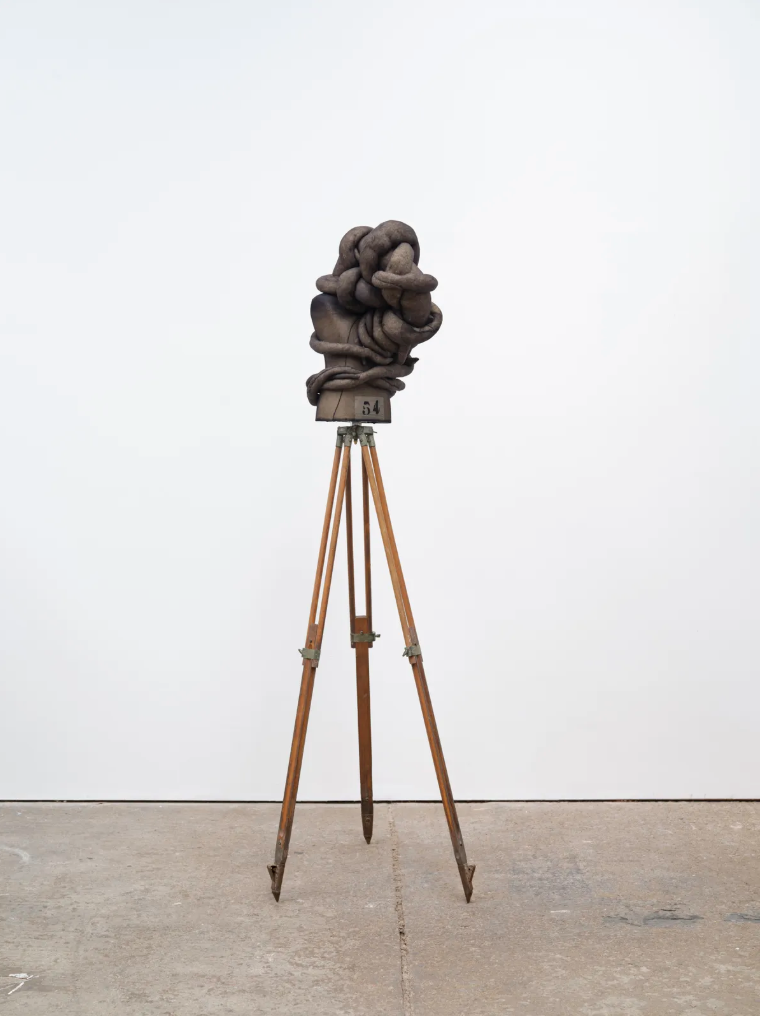
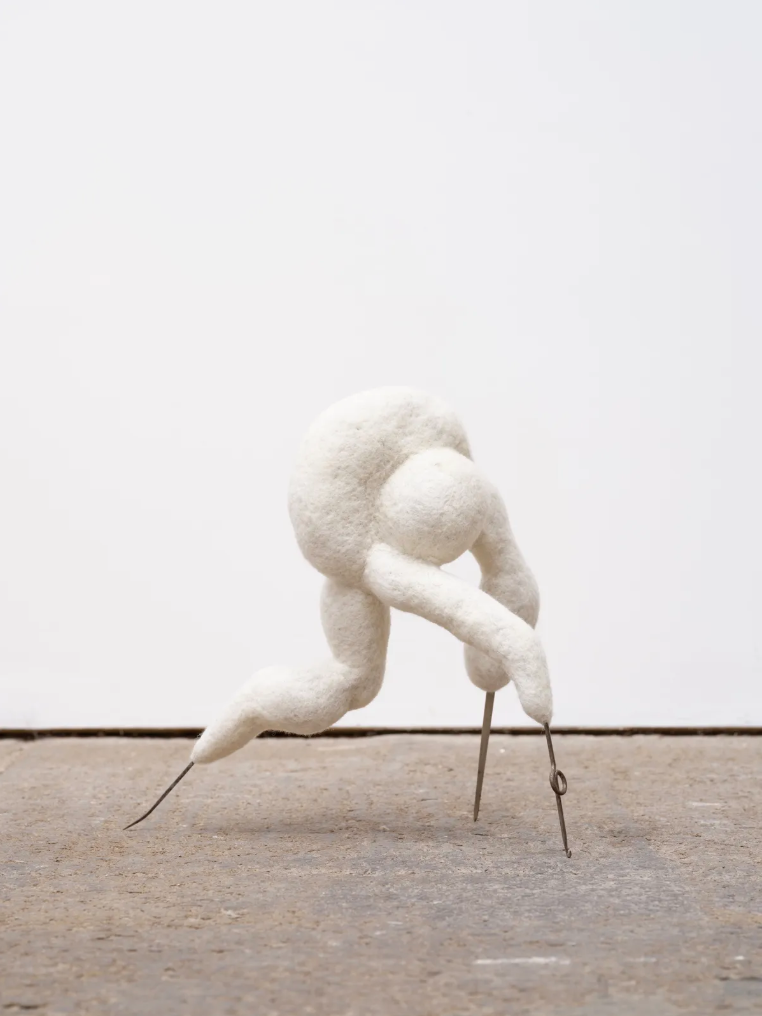
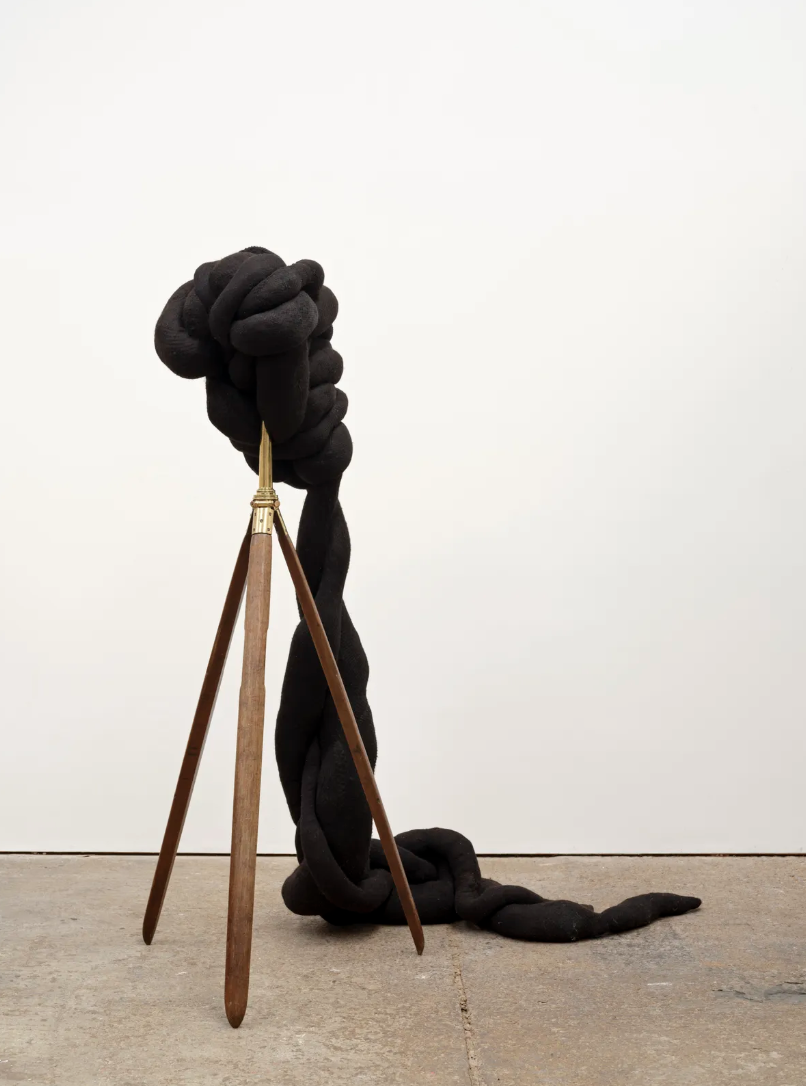
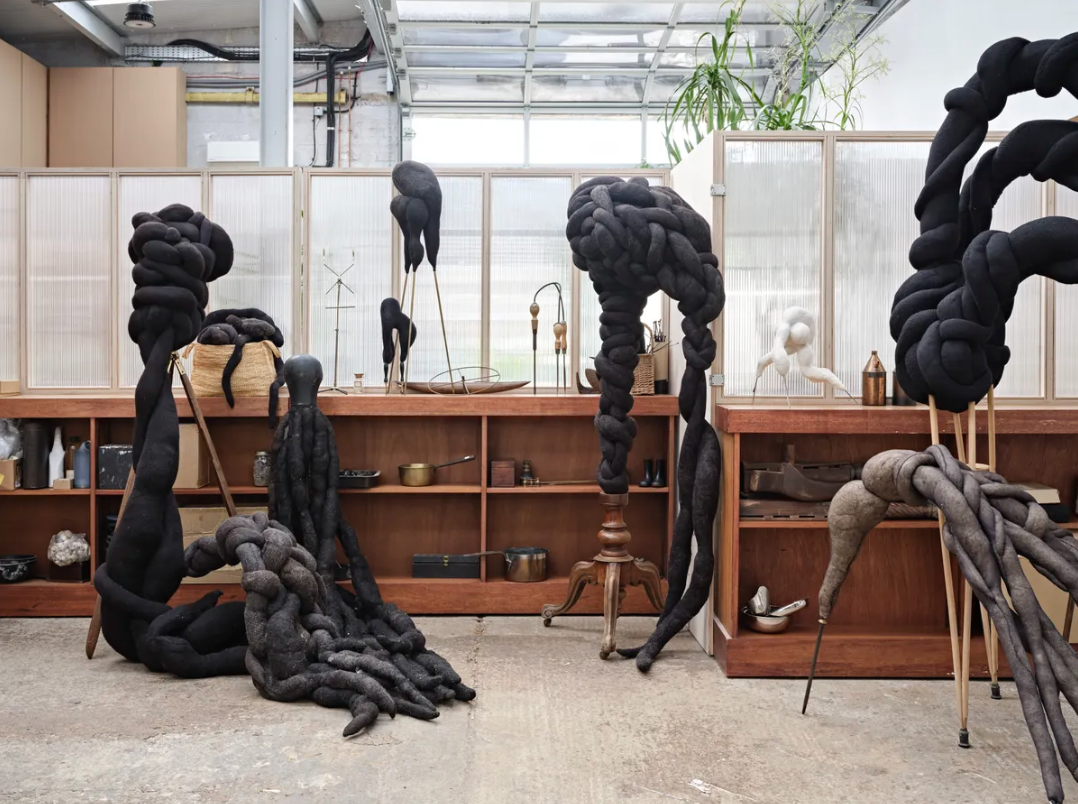
A site-responsive installation made mainly from dark wool and horsehair will fill the ground-floor galleries at 16 Hanover Square, extending in a procession-like manner that continues 12 metres up the façade of the Georgian townhouse. In line with Turner’s practice, the installation will reference the fascinating history of the building, whilst touching on myriad issues such as shame associated with the female experience, secret-keeping and the inherent ‘memory’ of materials.
A sense of place is fundamental to Turner’s work and installations. The history of 16 Hanover Square, a Grade II townhouse built in 1720, plays a key role in shaping this exhibition, with a particular focus on two key historical moments. Firstly, in 1845, August Wilhelm von Hofmann, a prominent German chemist, started the Royal College of Chemistry on the site at the request of Prince Albert. The institution eventually formed the basis of Imperial College. One of Hofmann’s students, William Henry Perkin, accidentally – and for a while secretly – discovered synthetic purple dye while attempting to produce quinine. He went on to patent the aniline dye, which led to the popularisation of fashionable purple clothing, which had hitherto been reserved for the very wealthy.
Secondly, from around 1906-1911, elite London couture house and dressmaker Reville & Rossiter was based at 15–16 Hanover Square. The firm held a Royal Warrant from 1910, when they dyed all their fabric stock black to cope with the demand for mourning dress following the death of King Edward VII. They famously designed Queen Mary’s coronation robe in 1911. The stories of both the aniline and black dyes evoke the fluid and hidden meanings carried within fabrics and matter. Vita Sackville West’s 1913 wedding dress was made by Reville & Rossiter and was described by Lady’s Pictorial Magazine as: ‘the colour like the tassel of Indian corn, the silk shimmering bright like the silk on the cocoon’. For Turner, Sackville-West’s marriage to Sir Harold Nicolson, alongside their now well-documented same-sex affairs, speaks to the gendered experience of shame and secret-keeping. Referencing the Latin word for female genitalia, pudendum, which also meant to be ashamed or to be modest, Turner draws attention to inherited cultural narratives of female shame whilst connecting to her own experiences of being told to ‘pretend’, to foreground modesty and downplay ability. The exhibition title is drawn from a line in Vita Sackville-West’s erotic poem to her secret lover, Violet Trefusis, written in 1918 and only discovered in 2013.
Turner’s works explore fundamental dichotomies: life and death, human and non-human, attraction and repulsion. Using ‘dead’ materials such as horsehair and wool alongside found objects, her works touch upon the history and ‘memory’ of materials. Retrieving horsehair from old mattresses where ‘conceptions, births and deaths occur’, Turner is interested in the traces of history that the once-alive material holds. Parts of re-purposed, salvaged antique furniture form the foundations of many of her sculptures. Particular to this exhibition, dressmakers’ scissors and scientific instruments reference thebuilding’s history and become anthropomorphic feet or hands, giving her freestanding sculptures a precarious, animated presence, teetering on the verge. The work possesses an animalistic quality, with ‘tendrils’ that weave around and interact with their surroundings. This particular installation will give the impression of a wedding march or perhaps a funeral procession going through the building.
Turner describes her work as coming out of her in a therapeutic and cathartic fashion. Encased in hand-sewn mesh, the materials and method draw upon the artist’s experiences of loss, bereavement and medical intrusions. This lends her work a visceral, unsettling power, evoking both attraction and repulsion. Yet within this unease lies an affirmation of life, the possibility of renewal, and new ways of seeing. By choosing and reusing materials that have had a previous ‘life’, her work reminds us of our entanglement with our surroundings and the wider interconnected energies of which we are a part.
Info + opening times
Annely Juda