
Carl Kostyál
Desire Moheb-Zandi
04.June.25 – 24.June.26
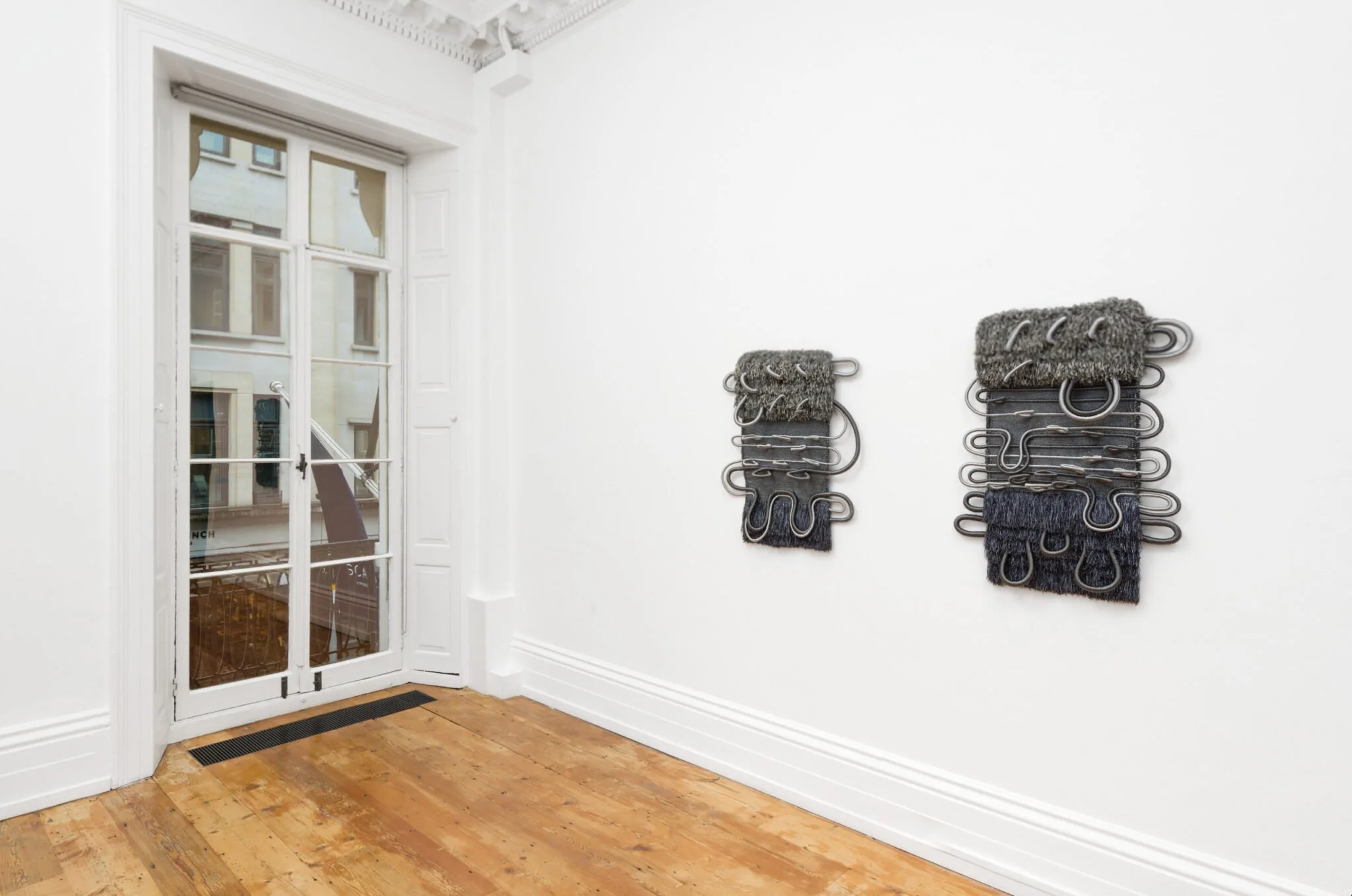
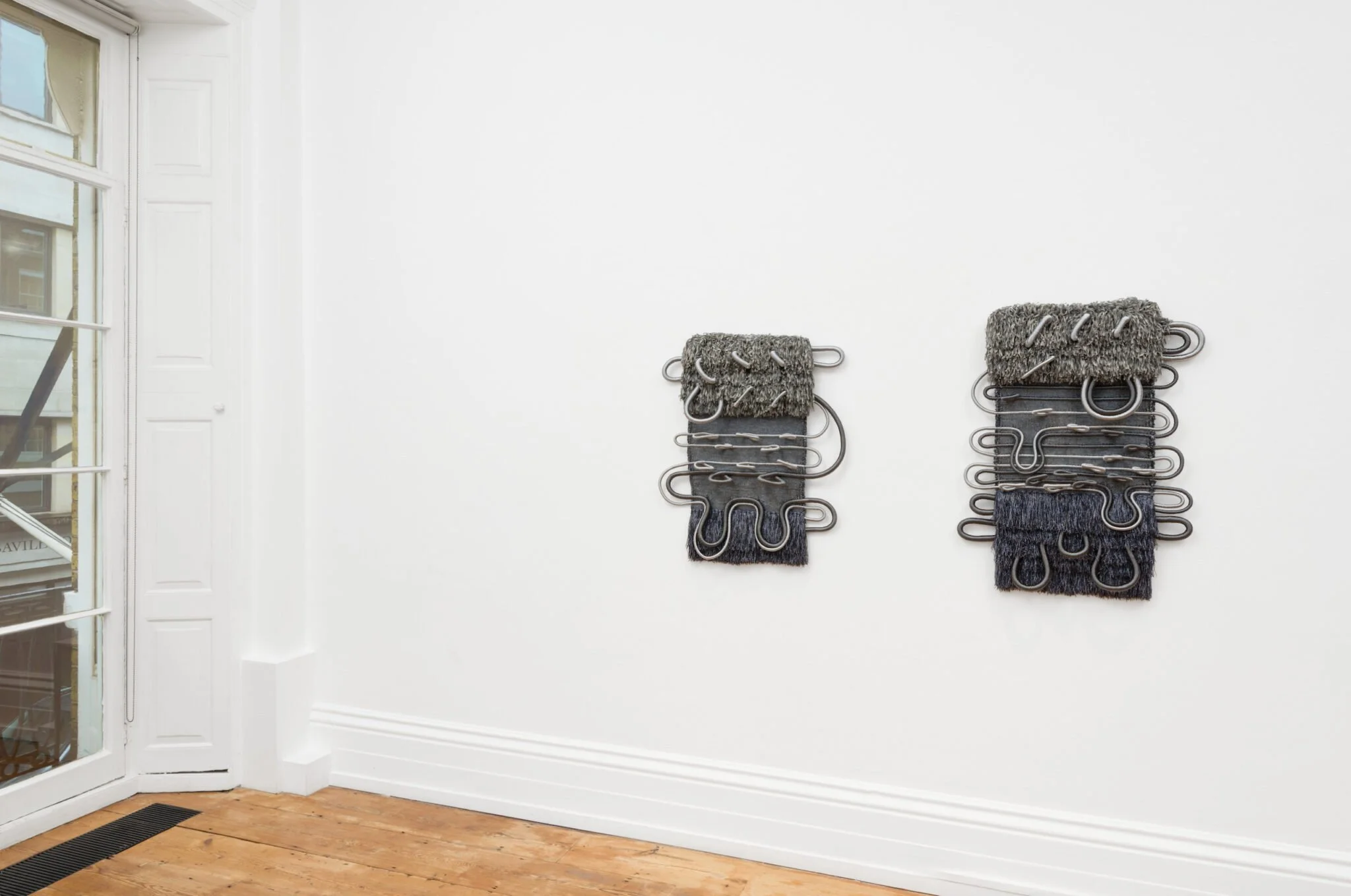
Carl Kostyál presents East of Somewhere Else by Desire Moheb-Zandi
A Great Wagon
Written by Rumi
Listen
When I see your face, the stones start spinning!
You appear; all studying wanders.
I lose my place.
Water turns pearly.
Fire dies down and doesn’t destroy.
In your presence I don’t want what I thought
I wanted, those three little hanging lamps.
Inside your face the ancient manuscripts
Seem like rusty mirrors.
You breathe; new shapes appear,
and the music of a desire as widespread
as Spring begins to move
like a great wagon.
Drive slowly.
Some of us walking alongside
are lame!
~
Today, like every other day, we wake up empty
and frightened. Don’t open the door to the study
and begin reading. Take down a musical instrument.
Let the beauty we love be what we do.
There are hundreds of ways to kneel and kiss the ground.
~
Out beyond ideas of wrongdoing and rightdoing,
there is a field. I’ll meet you there.
When the soul lies down in that grass,
the world is too full to talk about.
Ideas, language, even the phrase each other
doesn’t make any sense.
~
The breeze at dawn has secrets to tell you.
Don’t go back to sleep.
You must ask for what you really want.
Don’t go back to sleep.
People are going back and forth across the doorsill
where the two worlds touch.
The door is round and open.
Don’t go back to sleep.
I would love to kiss you.
The price of kissing is your life.
Now my loving is running toward my life shouting,
What a bargain, let’s buy it.
~
Daylight, full of small dancing particles
and the one great turning, our souls
are dancing with you, without feet, they dance.
Can you see them when I whisper in your ear?
~
They try to say what you are, spiritual or sexual?
They wonder about Solomon and all his wives.
In the body of the world, they say, there is a soul
and you are that.
But we have ways within each other
that will never be said by anyone.
~
Come to the orchard in Spring.
There is light and wine, and sweethearts
in the pomegranate flowers.
If you do not come, these do not matter.
If you do come, these do not matter.Simone Weil, in her book ‘Waiting for God’ (1950) describes the labyrinth as a hopeless effort to find a way out, where, at the end of the path, God consumes the invader. Yet, return remains possible, albeit in a transformed state, as one becomes a kind of gatekeeper who welcomes other curious adventurers. Horváth responds to this paradox by introducing radially directed silk threads, reminiscent of Ariadne’s thread, suggesting the possibility of an escape from what appears to be an unsolvable structure. The title of the exhibition, ‘House of Threads’, also alludes to Borges, evoking both the contradiction and fragility of constructed systems, as well as the idea of shelter, offering protection from harm while simultaneously implying vulnerability.
Fate and luck, as unpredictable and life defining concepts, play an important role in revealing the meanings of Horváth’s oeuvre, functioning as abstractions of existential questions. Not only the labyrinth motif, but also the image of the wheel of fortune and the two central figures of the exhibition contribute to this theme. One figure symbolises Fortune, while the other evokes the melancholic clown Pierrot, referencing Jean-Antoine Watteau’s, ‘Pierrot’, painted in 1719.
The yellow softness of their figures contrast with the white refined forms of the porcelain, alongside a third “element”: the modernist, column-like copper structures on which they stand. While Fortune operates as a guiding metaphor for the exhibition, the theatrical figure of melancholic humour reflects a character with whom the artist appears to identify. The theme of unpredictability is further developed through a sculpture of the head of Tyche, the Greek goddess of fortune and chance. This head, which recalls Brâncuși’s reclining wax heads, combined here with a porcelain cranium, is placed in an unstable position on an aluminium hemisphere, reinforcing the notion of uncertainty. It is the silk thread motif which connects these individual works, functioning as both a guiding element and as a signifier of complexity. In this sense, Horváth’s personal condition and artistic trajectory are embodied in this symbol. His oeuvre can be understood as an ongoing inquiry into the deciphering of fate and the search for motivation for further development.
The classical and antique art historical references in Horváth’s artistic vision are never isolated from the present. Their conceptual use points to the continuity of cultural heritages and its meanings, while recognising that symbols represent psychological archetypes and that mythological narratives reflect patterns of human behaviour. Horváth extends this tradition through his own interpretation, immersing it in his personal experiences, including its fears, failures and affirming successes. Italian scholar Cesare Ripa (1555 – 1622), in his ‘Iconologia’ (1593), systematised the symbols and metaphors of Renaissance and Mannerist art. The book functioned as a kind of dictionary, enabling viewers to decode visual meanings related to greed, anger, jealousy, belief, misery and other emotions and human actions. By contrast, within contemporary art, and in Horváth’s work in particular, artists of the past two centuries appear to have largely abandoned fixed correspondences between images and descriptive meanings. Viewers are instead free to engage with the aesthetic qualities of works and to interpret them openly. At times, as in Horváth’s practice, the artist offers guiding threads to lead the viewer toward deeper understanding. Yet, even without such guidance, the experience of wonder, like in Krasznahorkai’s short story, can itself open pathways of curiosity, prompting our continued search for meaning.”
– Zsolt Petrányi
Info + opening times
Carl Kostyal