
Carl Kostyál
Gideon Horváth
08.May.25 – 30.May.26
Carl Kostyál announces the debut exhibition of Hungarian-French artist Gideon Horváth (b.1990) in the United Kingdom.
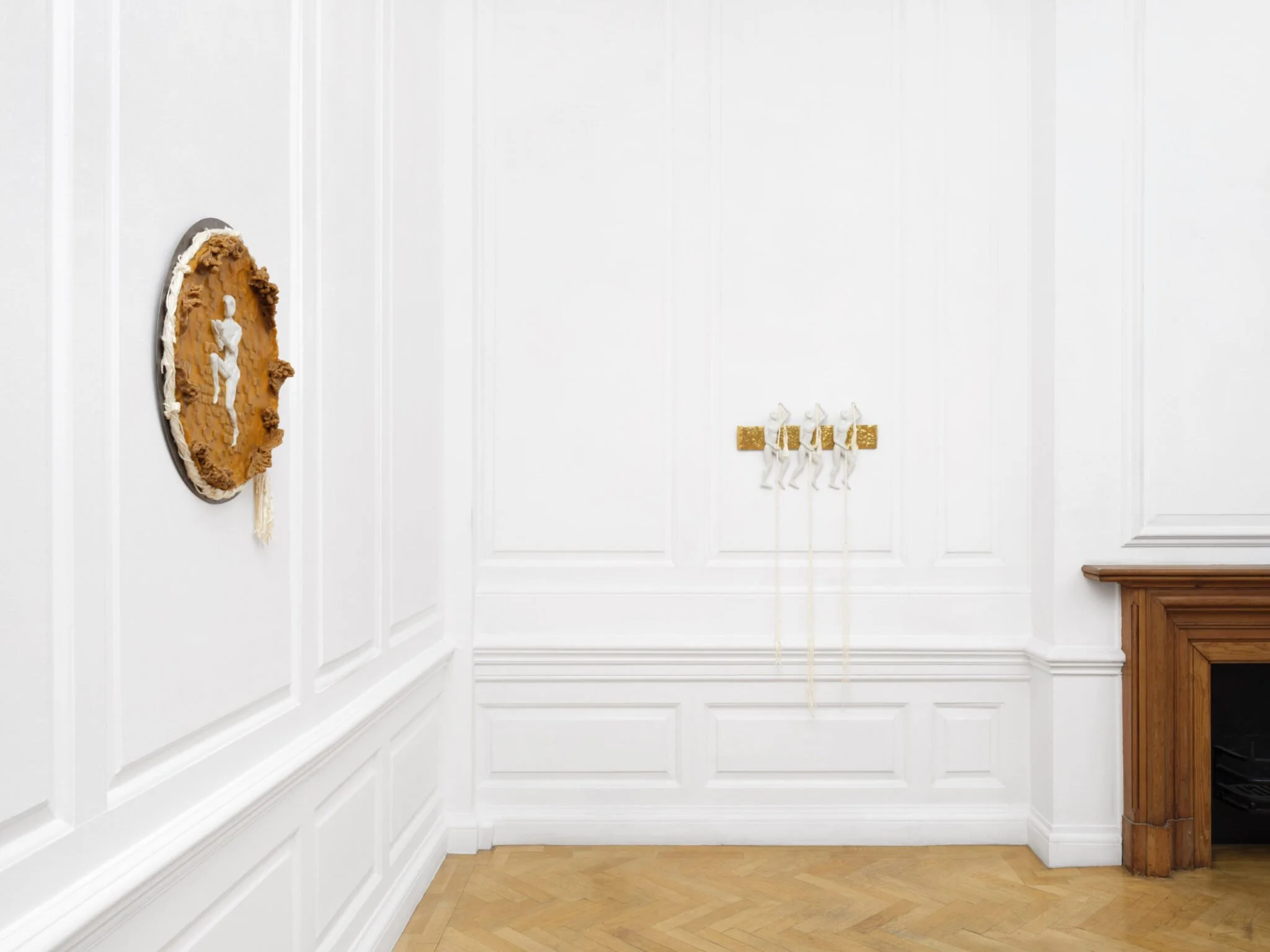
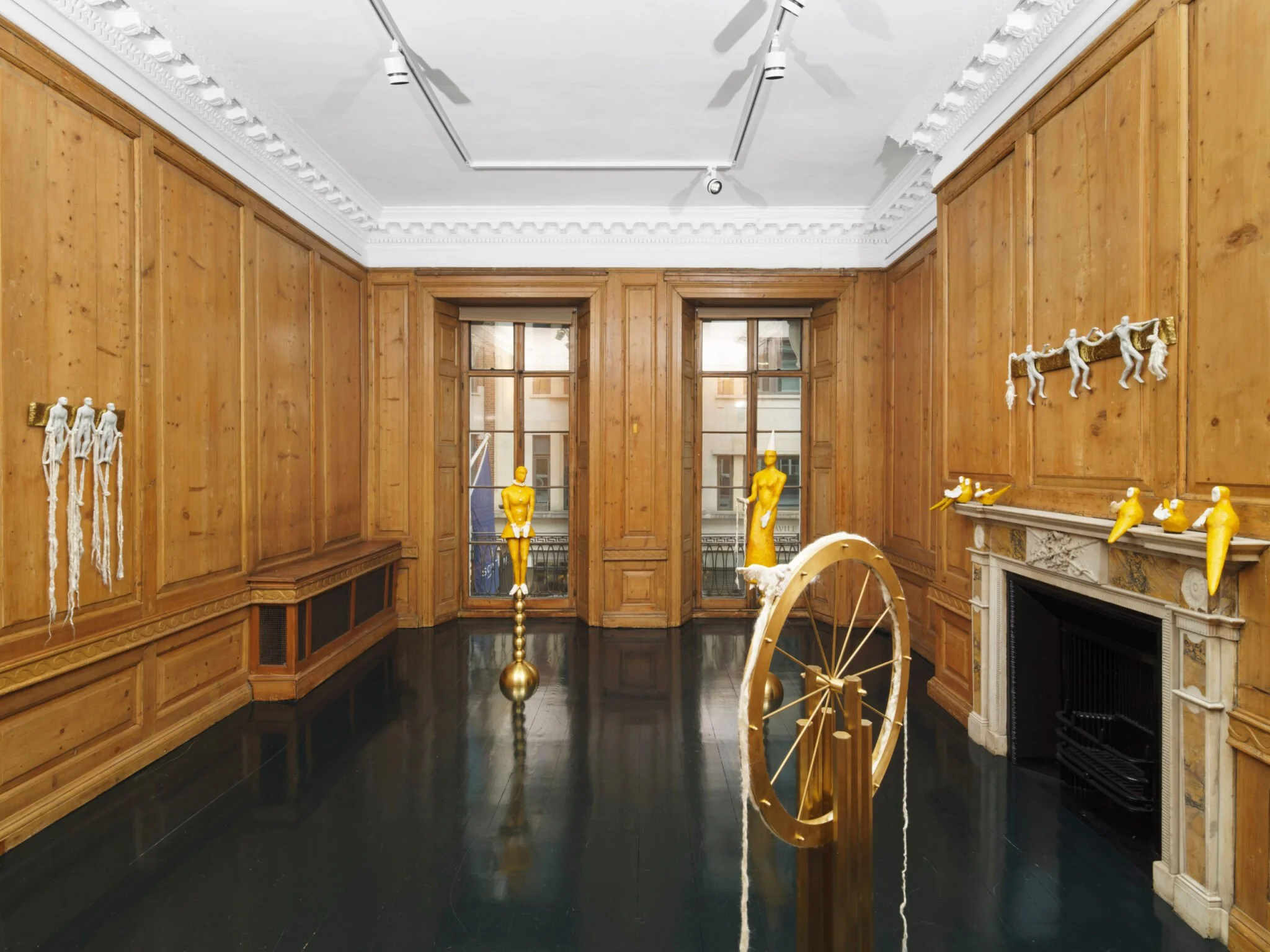
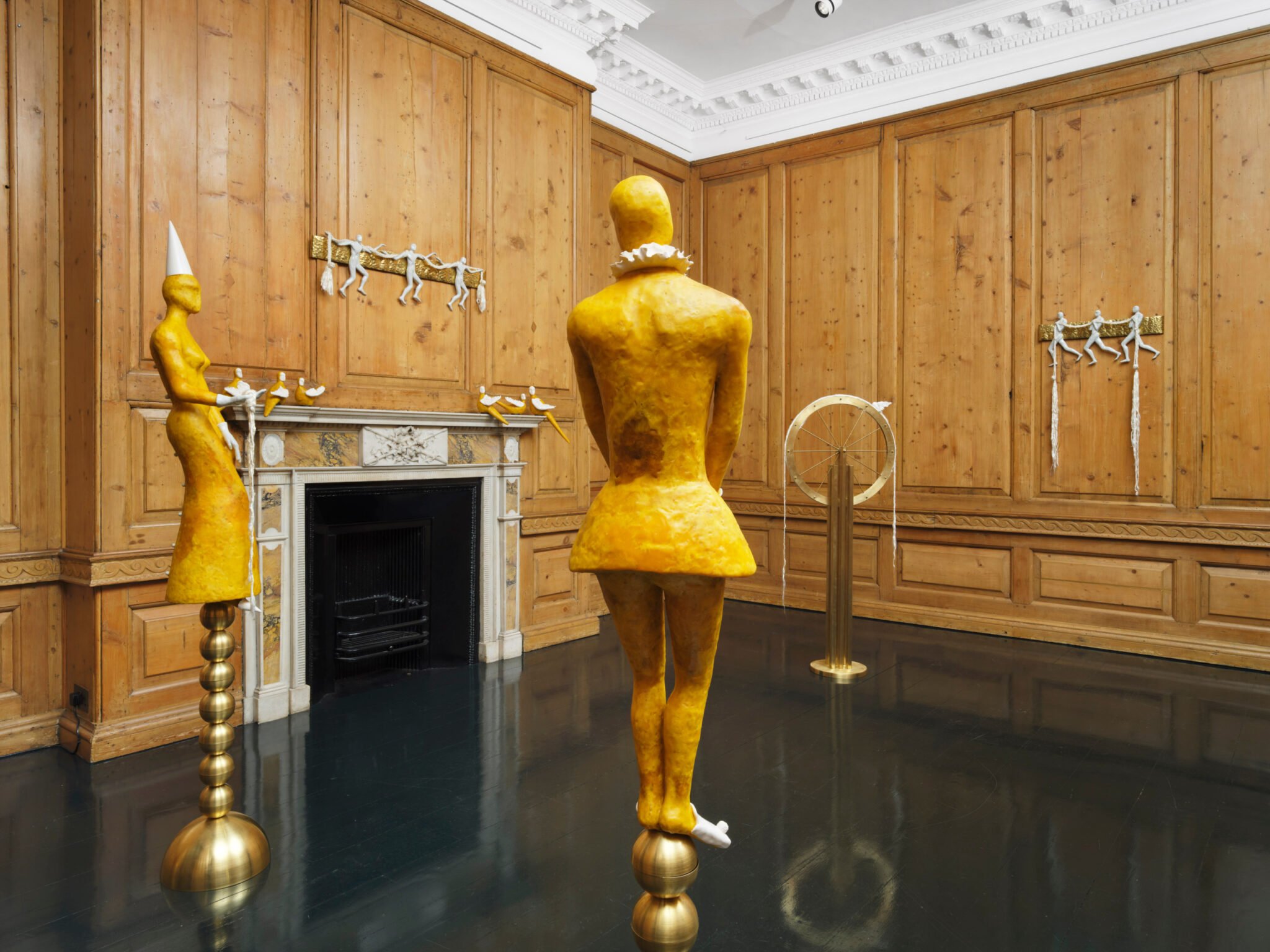
Horváth is a Hungarian-French interdisciplinary visual artist based in Budapest, working mainly with sculptural installations. Conceptually, he deals with queer and ecological theories. His works question anthropocentrism and dualistic worldviews, always giving space to the sensual and intuitive ways of experiencing his topics. In his sculptural installations he mainly works with beeswax, which he views as a queer material due to both its sensitive and highly resilient materiality. For Horváth, beeswax holds qualities of ambivalence, fluidity and a sense of becoming, all of which stand as central notions within Horváth’s practice.
“In László Krasznahorkai’s book ’Seiobo There Below’ (2008), there is a chapter which describes the daily work of a museum guard at the Louvre, who protects the famous sculpture ‘Venus de Milo’ (c.160-100 BC). During his working hours, he observes the visitors who admire the sculpture and explains to them the perfection of the antique beauty and tells the story of the sculpture. This borderless veneration of the absolute beauty of Greek art and philosophy is sensitively expressed in this short story, while also tracing Western art history across many decades. The past ideas and present-day life conditions come to a common platform to describe the relevancies of recalling the roots of our worldview.
Antiquity became highly valued in Hungary between the two World Wars due to conservative cultural policy. This reference remained a logical preference in Hungary after the communist takeover in 1948-49, serving as a significant point of orientation. Cultural policy under Soviet influence, more precisely, socialist realism, found citation beyond modernism, also drawing on nineteenth-century realist painting that reflected social issues. However, the suppression and circumvention of avant-garde processes also gave a push for the interest of antique philosophy, which functioned as kind of escape castle for intellectuals. I quote another reference, the experimental film by Péter Dobai, ‘Archaic Torso’ (1971) which portrayed a bodybuilder of that time. The character works in a factory as a cleaner, using his free time to read ancient and classic philosophy about the unity of the soul, as well as the idea that the body must be well maintained and that one should strive for muscular perfection. The catharsis of the film occurs when this person’s ideas are contradicted with the reality of that time. Ultimately, he collapses mentally, left entirely alone with his goals and ideas.
In the “new world” that followed the political liberation of the 1990s, enthusiasm for Greek philosophy began to fade, replaced by emerging postmodern ideas. In the arts, references to classical sculpture and painting came to be seen as outdated, giving way to the new media revolution. Photoshop, video and computer-based works became depositaries for the future of art. This effort to define contemporary reality without reflecting on the past, and instead to respond to global political and social issues, became a central expectation in the arts worldwide. At the same time, the notion of contemporaneity helped to liberate feminist and gay movements, and highlighted earlier interpretations of the human body in Hungary after the fall of the Iron Curtain.
In this context, the emergence of Gideon Horváth work at the end of the 2010s came as a real surprise. His primary interest at that time was the decline of humankind towards an environmental catastrophe caused by industrial pollution, the capitalist drive for profit, and failure to fully recognise the Anthropocene era. In his 2019 exhibition ‘I Put My Hand Into A Beehive’, he combined beeswax as a primary natural material with industrial aluminium plates to express the contradiction between “human-made” and “nature-made” products. Since then, the usage of beeswax has become a defining feature of his work, although its meaning and references have continued to develop. Non-binary queer ideologies became guiding frameworks for Horváth when developing nature-inspired forms realised from beeswax. The development he has undergone in recent years has led to a complex artistic worldview in which meanings have become culturally multilayered. His current interests relate to ancient ideas concerning existential questions of fate and identity, combined with the aforementioned revival of antiquity in Hungarian culture of the 1960s. In his installations, Horváth combines beeswax with porcelain, constructing objects and arrangements of metal structures which recall art, design and artefacts of past centuries. The sensitive character of the materials he uses reminds us of their vulnerability; the melting quality of wax and the fragility of porcelain evoke psychological associations of failure and shame as negative aspects of the process of growing up or reaching maturity. These function as metaphors for society, illustrating how power structures influence everyday behaviour and how individuals are exposed to exploitation, abuse and other kinds of aggression. Under such pressure, the question becomes how to live with this sense of suppression or how to confront it. The Hungarian poet János Pilinszky (1921- 1981), in his correspondence with French philosopher Simone Weil (1909- 1943), used the expression “straight labyrinth” to describe the contradiction of acting straightforwardly within a psychologically complex situation– a concept that resonates strongly with Horváth’s artistic practice.
The sources of these works can also be traced to popular figurative representations, such as porcelain knick-knacks depicting sentimental scenes, as well as to public sculptures and decorative art of the 1960s. These patterned elements combined classical forms with modernist ideas to convey messages about a bright future shaped by communist ideology, welfare and family happiness. By employing this visual language, Horváth’s combinations of deep yellow beeswax, porcelain and metal support structures reinterpret the aesthetics of the recent past. From both a formal and ideological perspective, his body of work focuses on the fragility of the human body and soul. Horváth’s approach seeks to express our transient existence within a timeless natural universe, in which society becomes a kind of battleground. Our culture, as well as our conflicts, politics and race, forms part of a historical process that appears as only a brief moment within the broader timeline of the universe.
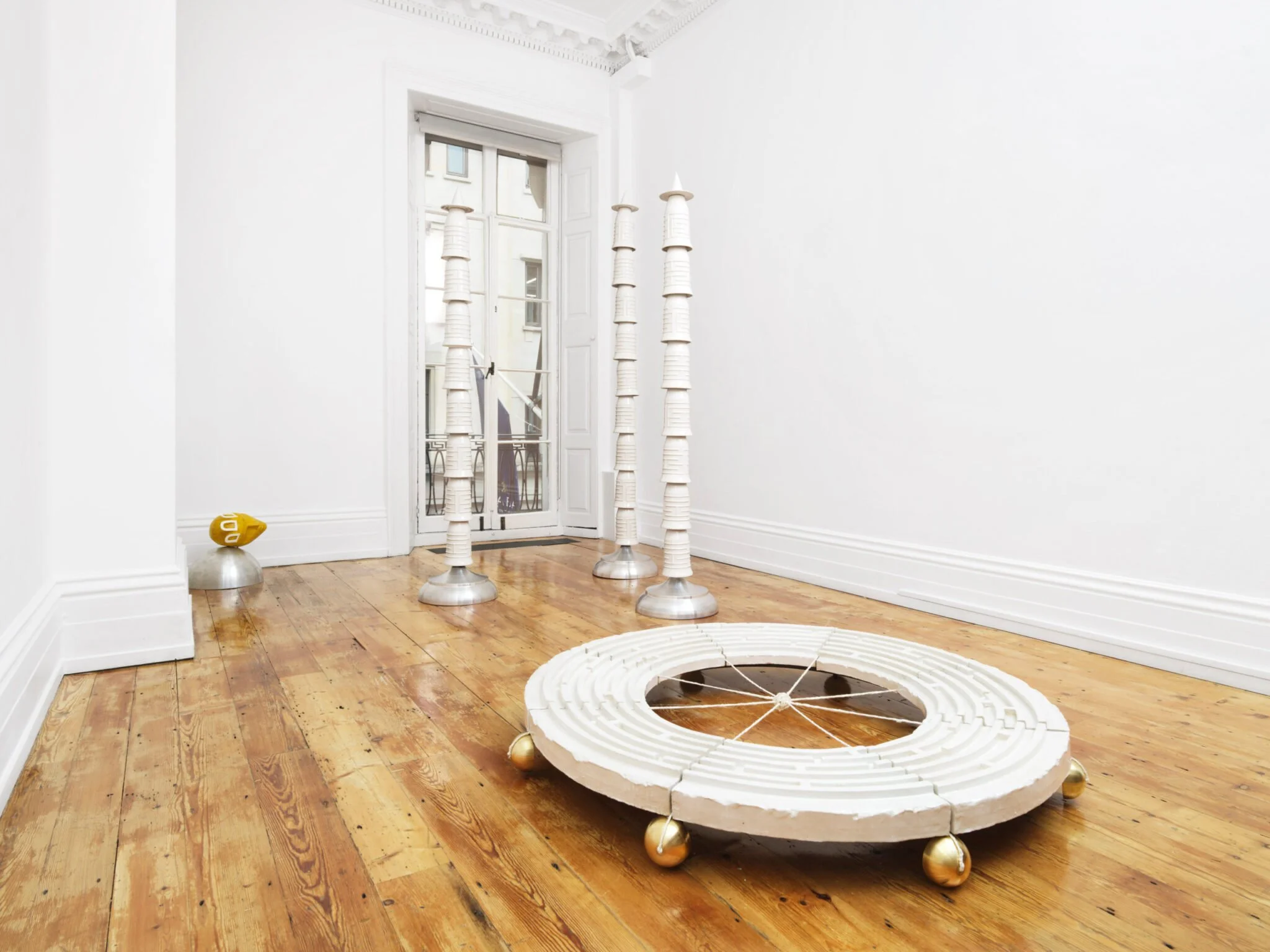
In his debut solo exhibition with Carl Kostyál at Savile Row, Gideon Horváth presents a group of new works, arranged as an installation. One of his most striking pieces consists of three porcelain towers, built from reduced bell forms and decorated with a simple labyrinth motif. As tower-like structures, they initially give the viewer an impression of stability, until their elements begin to move and produce a bell-like sound. The form recalls modernist ideas like Brâncuși’s ‘Endless Column’ (1918), yet through the addition of marks and patterns it becomes a multilayered symbol. The combination of fragility and functional refinement suggests an identity that appears stable on the surface but, upon closer inspection, reveals itself as an uncertain path through the complexities of the society. Horváth’s curiosity about species has also led him to reference mythological creatures, increasingly combining natural and fantastical forms with body parts or figures that recall small-scale Greek sculptures or decorative elements. The labyrinth as a metaphor appears in another work: a ceramic installation consisting of eight circular forms as a continuous labyrinth pattern, with an entrance but no exit. For Horváth, the labyrinth carries cultural references to the previously mentioned Simone Weil and Jorge Luis Borges, whose short story ‘The House of Asterion’ (1947) also evokes the ancient world of gods in relation to recurring patterns of human behaviour.
Simone Weil, in her book ‘Waiting for God’ (1950) describes the labyrinth as a hopeless effort to find a way out, where, at the end of the path, God consumes the invader. Yet, return remains possible, albeit in a transformed state, as one becomes a kind of gatekeeper who welcomes other curious adventurers. Horváth responds to this paradox by introducing radially directed silk threads, reminiscent of Ariadne’s thread, suggesting the possibility of an escape from what appears to be an unsolvable structure. The title of the exhibition, ‘House of Threads’, also alludes to Borges, evoking both the contradiction and fragility of constructed systems, as well as the idea of shelter, offering protection from harm while simultaneously implying vulnerability.
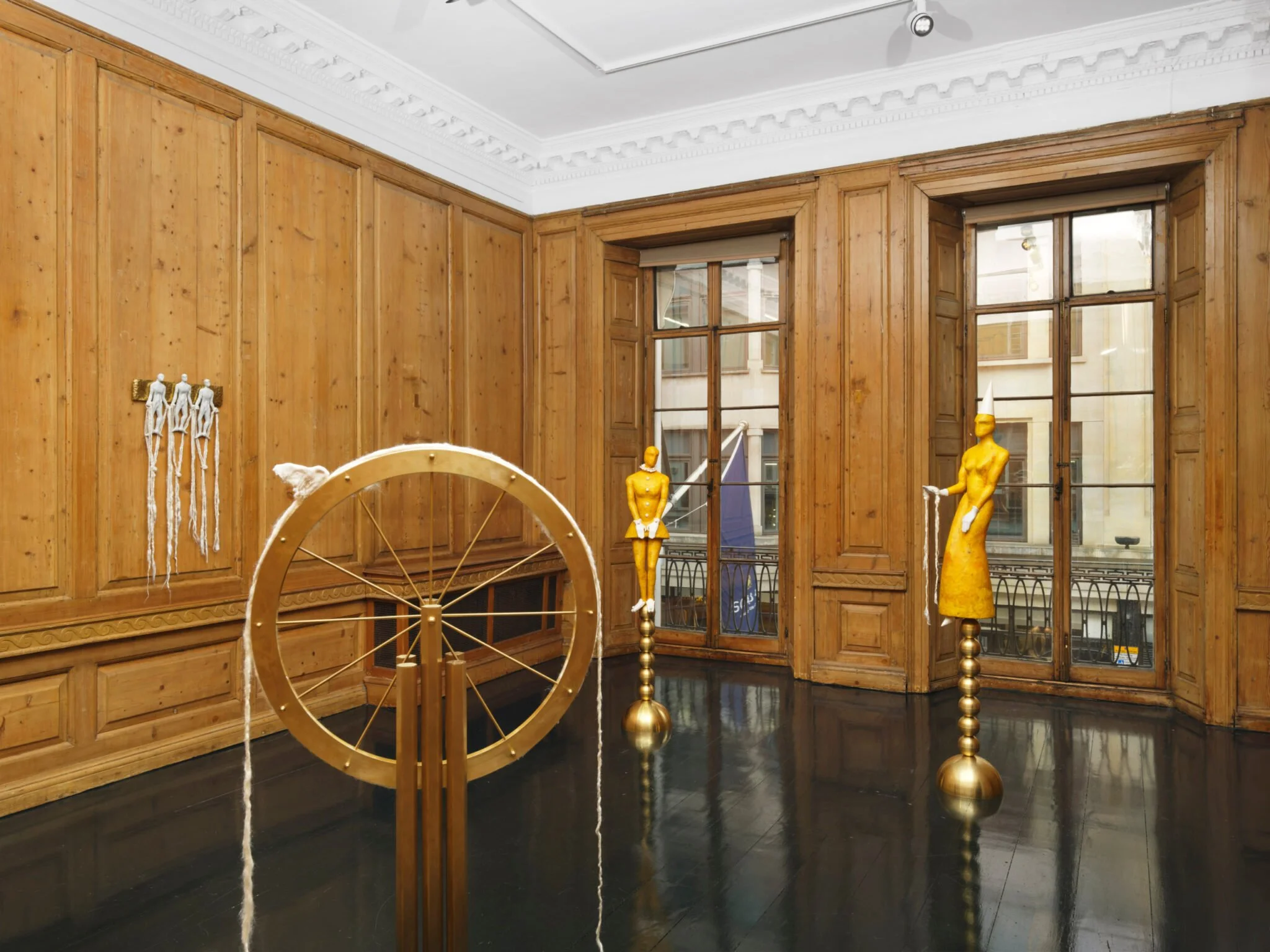
Fate and luck, as unpredictable and life defining concepts, play an important role in revealing the meanings of Horváth’s oeuvre, functioning as abstractions of existential questions. Not only the labyrinth motif, but also the image of the wheel of fortune and the two central figures of the exhibition contribute to this theme. One figure symbolises Fortune, while the other evokes the melancholic clown Pierrot, referencing Jean-Antoine Watteau’s, ‘Pierrot’, painted in 1719.
The yellow softness of their figures contrast with the white refined forms of the porcelain, alongside a third “element”: the modernist, column-like copper structures on which they stand. While Fortune operates as a guiding metaphor for the exhibition, the theatrical figure of melancholic humour reflects a character with whom the artist appears to identify. The theme of unpredictability is further developed through a sculpture of the head of Tyche, the Greek goddess of fortune and chance. This head, which recalls Brâncuși’s reclining wax heads, combined here with a porcelain cranium, is placed in an unstable position on an aluminium hemisphere, reinforcing the notion of uncertainty. It is the silk thread motif which connects these individual works, functioning as both a guiding element and as a signifier of complexity. In this sense, Horváth’s personal condition and artistic trajectory are embodied in this symbol. His oeuvre can be understood as an ongoing inquiry into the deciphering of fate and the search for motivation for further development.
The classical and antique art historical references in Horváth’s artistic vision are never isolated from the present. Their conceptual use points to the continuity of cultural heritages and its meanings, while recognising that symbols represent psychological archetypes and that mythological narratives reflect patterns of human behaviour. Horváth extends this tradition through his own interpretation, immersing it in his personal experiences, including its fears, failures and affirming successes. Italian scholar Cesare Ripa (1555 – 1622), in his ‘Iconologia’ (1593), systematised the symbols and metaphors of Renaissance and Mannerist art. The book functioned as a kind of dictionary, enabling viewers to decode visual meanings related to greed, anger, jealousy, belief, misery and other emotions and human actions. By contrast, within contemporary art, and in Horváth’s work in particular, artists of the past two centuries appear to have largely abandoned fixed correspondences between images and descriptive meanings. Viewers are instead free to engage with the aesthetic qualities of works and to interpret them openly. At times, as in Horváth’s practice, the artist offers guiding threads to lead the viewer toward deeper understanding. Yet, even without such guidance, the experience of wonder, like in Krasznahorkai’s short story, can itself open pathways of curiosity, prompting our continued search for meaning.”
– Zsolt Petrányi
Info + opening times
Carl Kostyal