
Cristea Roberts Gallery
Georg Baselitz
22.January.26 -28.February.26
On the occasion of Georg Baselitz’s 88th birthday, Cristea Roberts Gallery introduces Geschichte, the artist’s fourth solo exhibition with the gallery, which presents a new body of work that focuses on one of Baselitz’s most enduring and provocative motifs – the eagle or Adler.
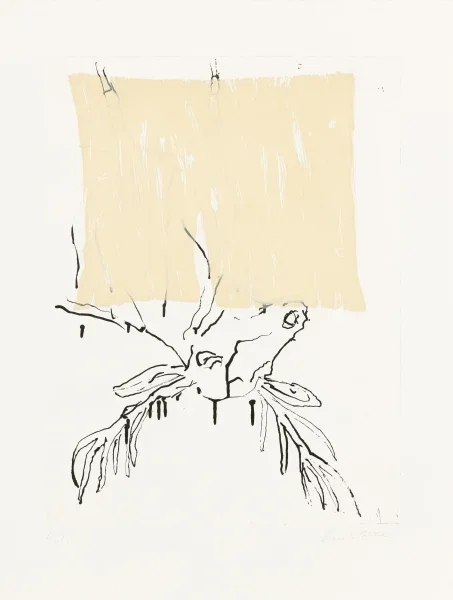
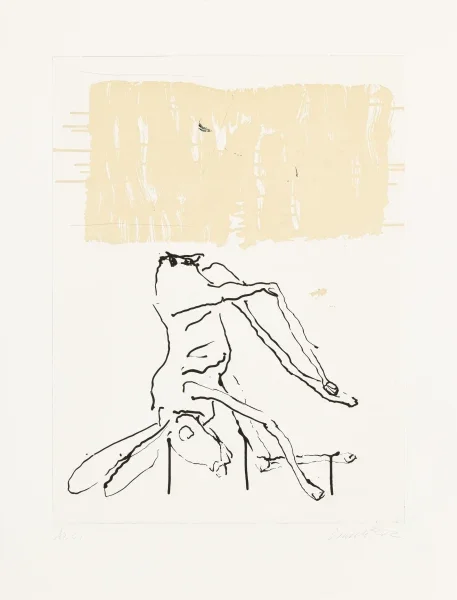
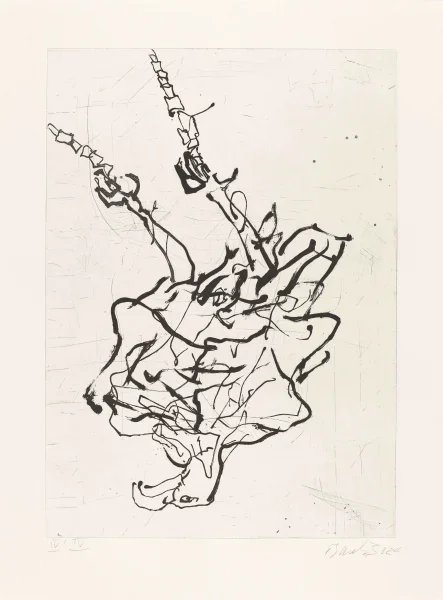
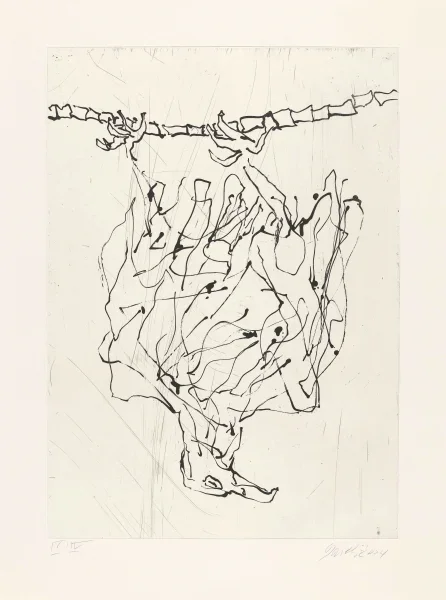
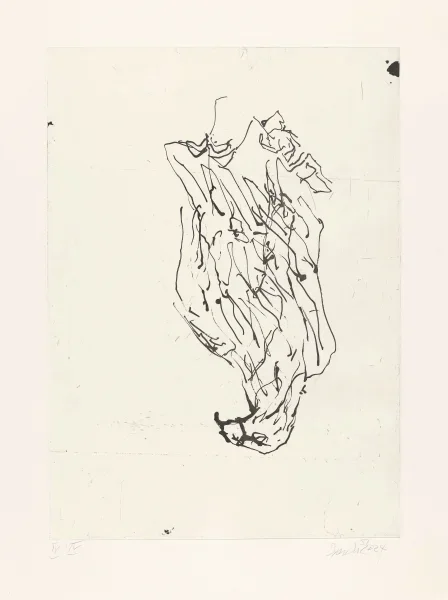
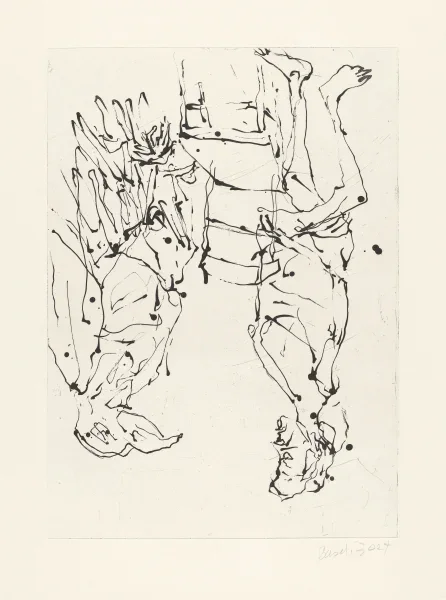
This exhibition brings together over twenty etchings and aquatints that depict the inverted eagle alongside other animals, such as the hare and the deer, as well as the artist’s most recurrent muse, his wife Elke.
The title of the exhibition, Geschichte, comes from the German word for history or tale. With this dual meaning in mind, Baselitz establishes a dialogue between two of his most famous motifs: the eagle and Elke, bringing them together in a new narrative (or Geschichte), whilst acknowledging the historical importance of both themes in his oeuvre. Baselitz’s graphic work often interrogates both personal and political histories and is constantly engaged in a disruptive process of orienting and disorienting, challenging what defines traditional, symbolic or subversive picture-making.
Baselitz first came to printmaking in 1964, with eagles becoming a steadfast feature of his graphic oeuvre from 1970 onward. Baselitz was drawn to printmaking due to the medium’s demand for precision; he noticed that where definitive lines were often absent in painting, in printmaking, there was the need for complete clarity and explicit mark-making to accurately transmute ideas to the matrix. The subject of the Adler was important to Baselitz for this very reason – the eagle being the ultimate symbol that bore the brunt of his German identity.
The eagle, the national and imperial emblem of Germany, became a provocative image when it was co-opted by the Third Reich in 1933. Baselitz has never shied away from controversy in his practice, rather he resists censorship and erasure, offering his own version of history and the reality of being a German artist. He is well-known for his admission: “What I could never escape was Germany, and being German.”
For Baselitz, the Adler is an autobiographical series, a realisation of the self, informed by signs of the visible world. Baselitz’s eagles defy expectations. In Später wurden Halbschuhe gefunden, 2024, the clawed feet of an eagle grip a branch; in Hütte Bank Ausblick, 2024, an eagle drops through the air. It does not raise its wings, its feathers implied through Baselitz’s distinctive marks. As is the way with all of Baselitz’s subjects, the eagles are inverted, as a reminder of surface and the illusory nature of figuration.
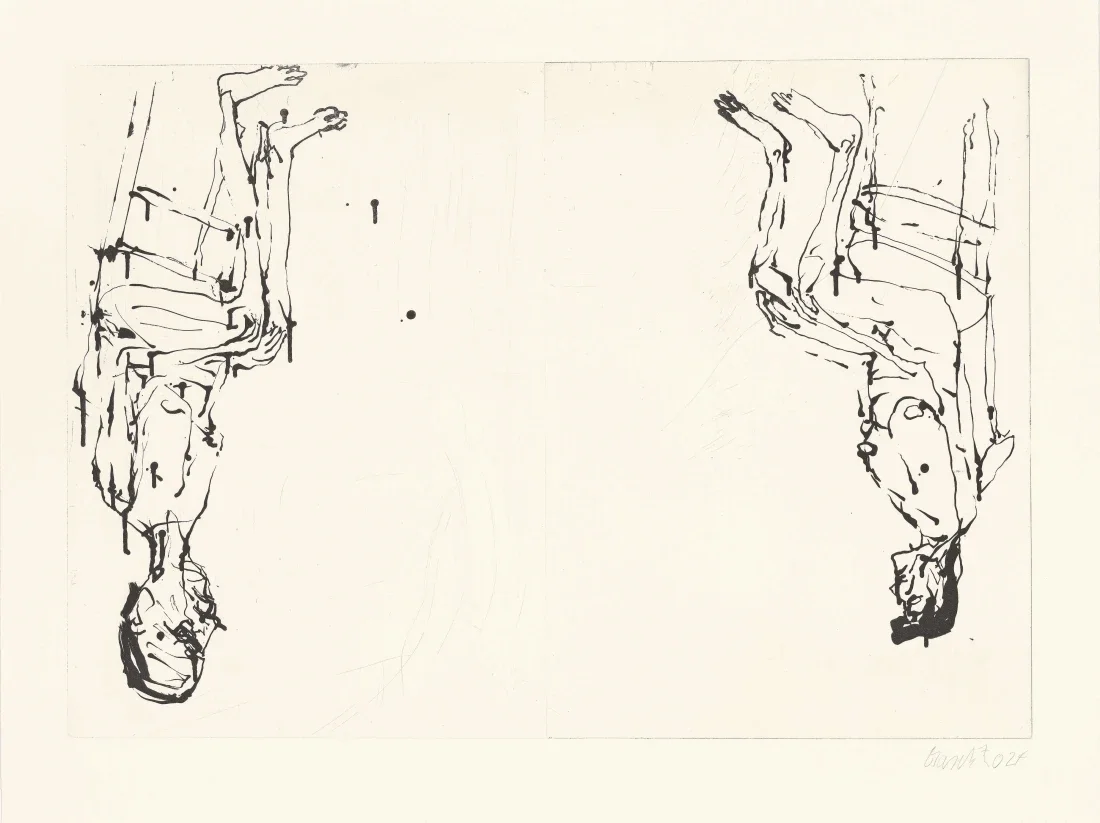
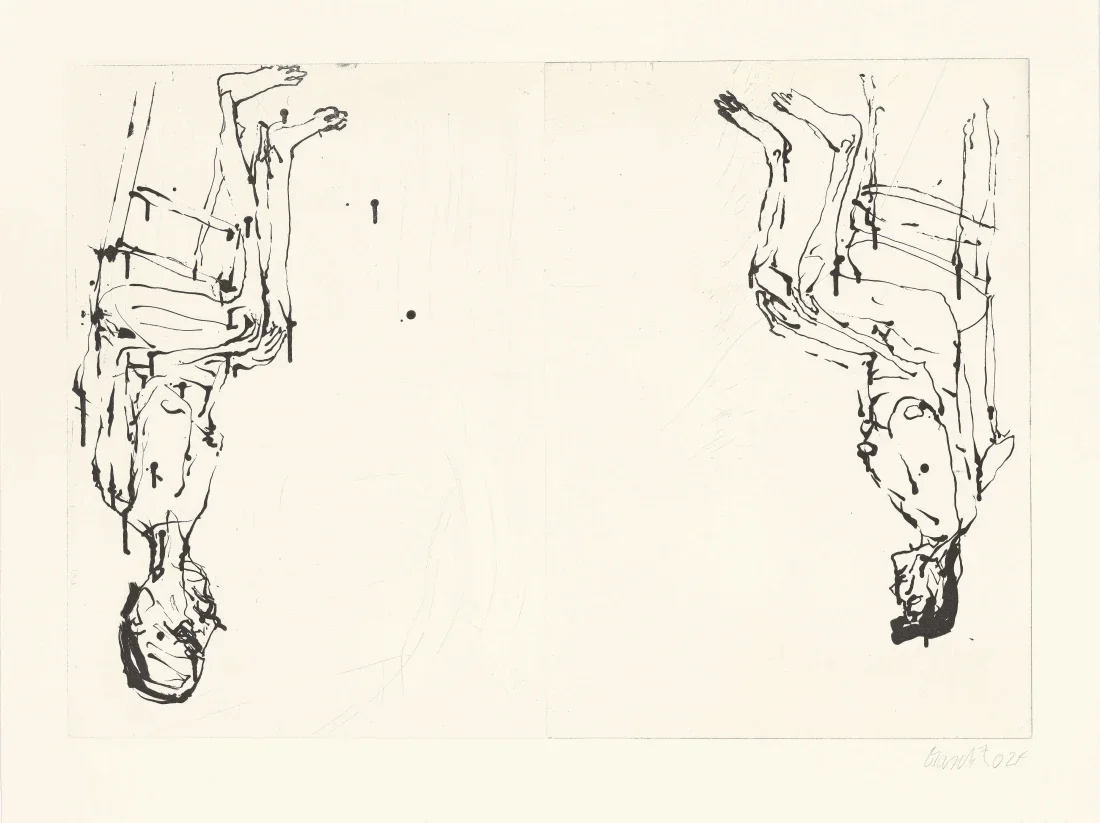
In Geschichte, 2024, Baselitz illustrates the seated figure of Elke opposing a large eagle, bringing two of his oldest motifs into the same frame. In another print, Verliebtheit damals und heute, 2024, the artist tenderly transcribes his personal history and that of Elke seated across from one another in conversation. These new works are steeped in art historical references.
Although Baselitz evokes the iconography of the Old Masters: the lovers; the seated nude; Ovid’s Metamorphoses and the many animalistic disguises of Jupiter; the artist’s overarching interest in the artificial echoes the Mannerists of the sixteenth century, who reacted against the harmonious compositions of the High Renaissance to paint asymmetrical, exaggerated subjects with elongated and distorted forms.
In the sugar-lift aquatints Kein Reh, Kein Hirsch, and Kein Adler, 2022, Baselitz portrays Elke, pictured beneath the gestural marks of an inferred blanket. Skeletal and intimate, the pale yellow marks of the blanket disrupt the rest of the configuration. The artist has often described how Elke plays a role in the editioning of his largescale prints with the artist describing her as his “left-hand.” Elke is both muse and collaborator, subject and participant.
In Hirschtuch, and Hasentuch, 2022, Baselitz employs the same motif, this time a hare and the head of a deer are shown beneath the blanket. The artist supplants Elke for another extension of himself, the hare and deer being classical representations of hunting animals and game, important characters in German symbolism.
When the artist was a teenager, a relative showed him pastoral hunting scenes by Ferdinand von Rayski, of deer, hare, rabbits and hunting dogs. These naturalistic paintings, which had a rich tradition in Germany in their own right, became important for Baselitz as the animals represented both loss and reclamation, the mythology of Germany from earlier centuries, as well as providing a connection to the landscape that was physically lost to him due to his move to West Berlin and the establishment of the Berlin Wall which remained standing from 1961 to 1989.
Baselitz reclaims these provocative pictures and examines their power, rooting them in his own mythology and the canon of art history - the artist’s own Geschichte.
Info + opening times