
David Zwirner
Flavin, Judd, McCracken, Ryman, Sandback
25.March.2026 – 22.May.2026
David Zwirner announces a group exhibition of works by Dan Flavin, Donald Judd, John McCracken, Robert Ryman, and Fred Sandback on view at the gallery’s London location. Featuring key artists from the gallery’s program who were at the avant-garde of American art during the 1960s and 1970s.
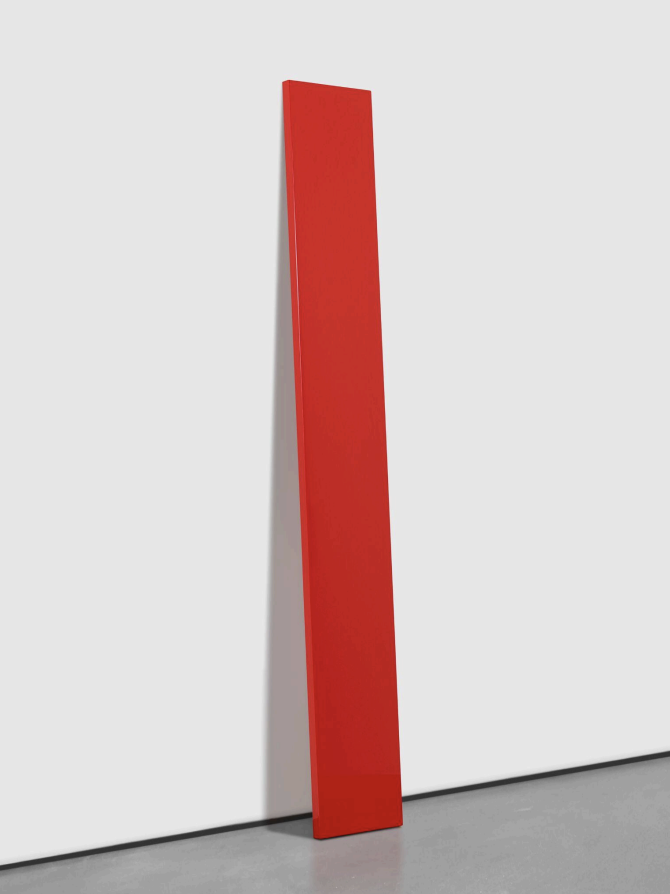
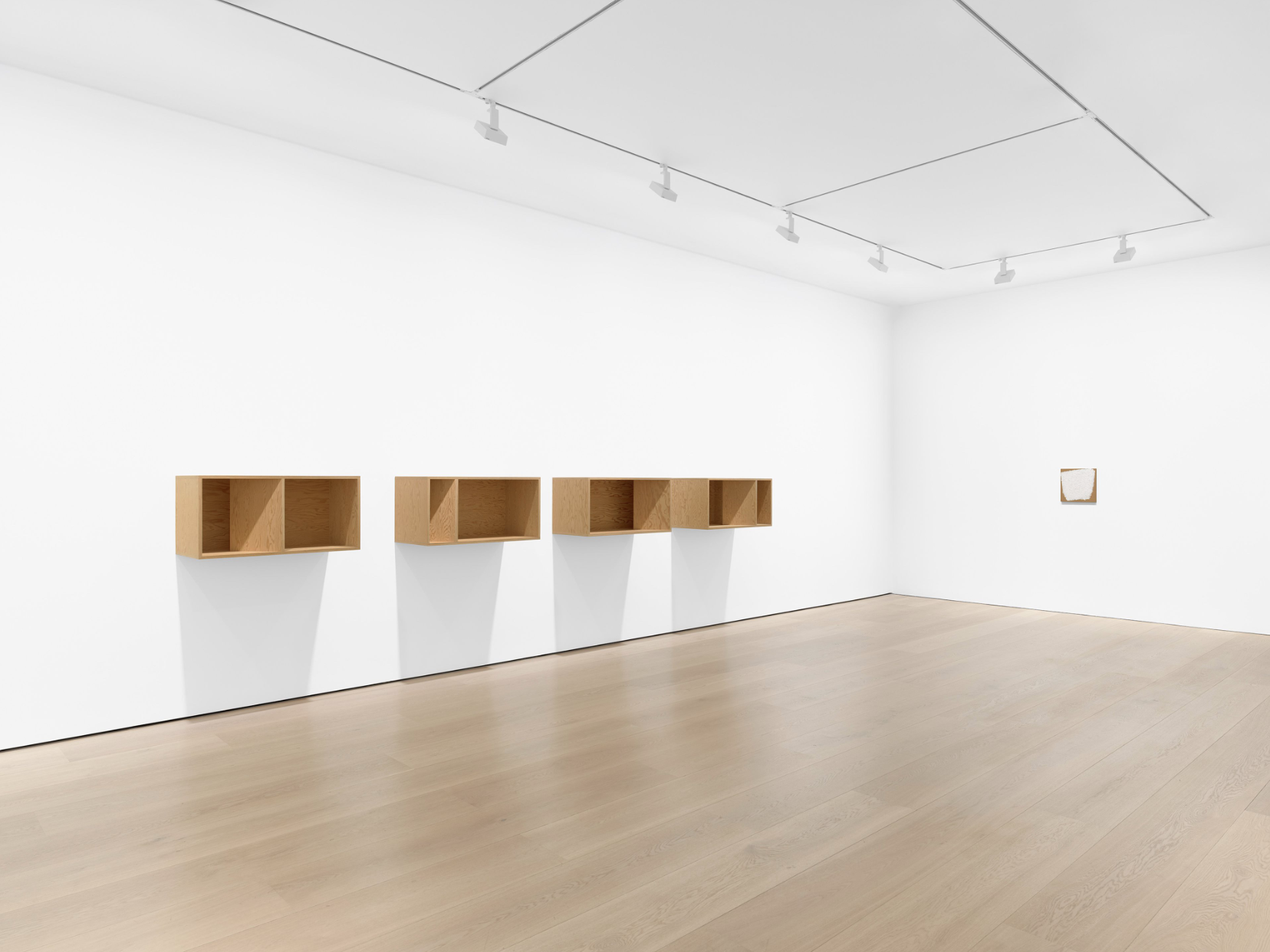
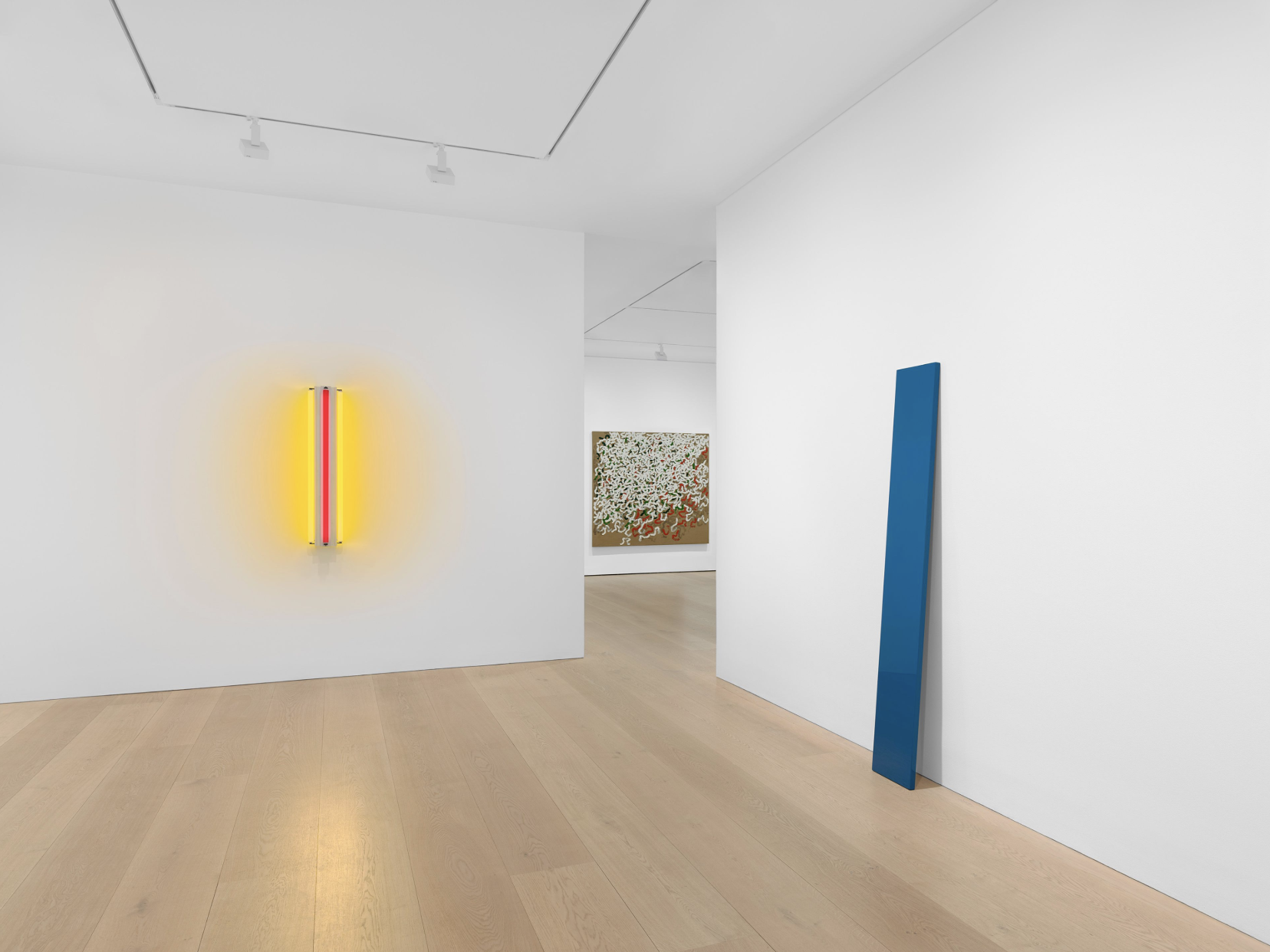
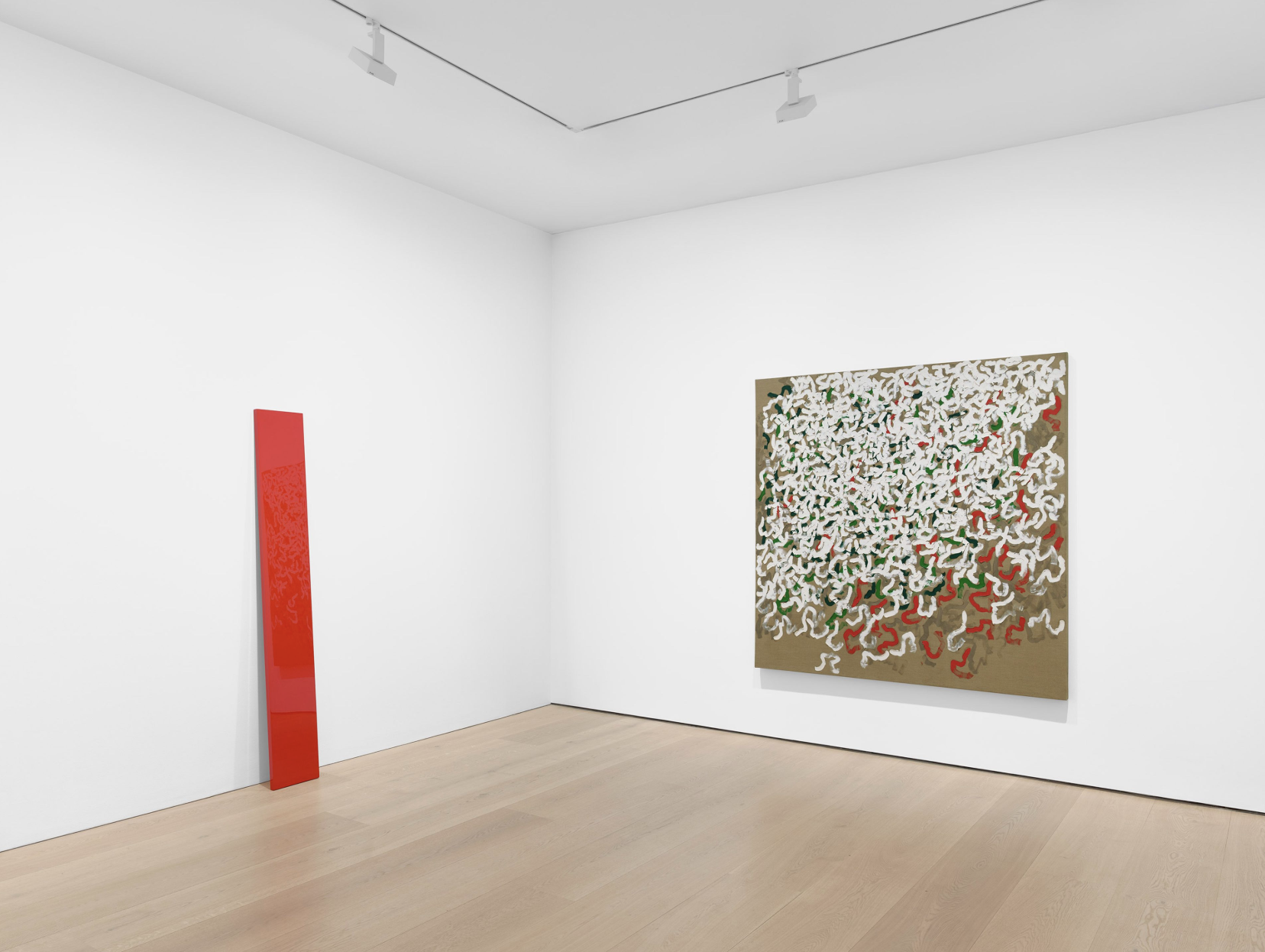
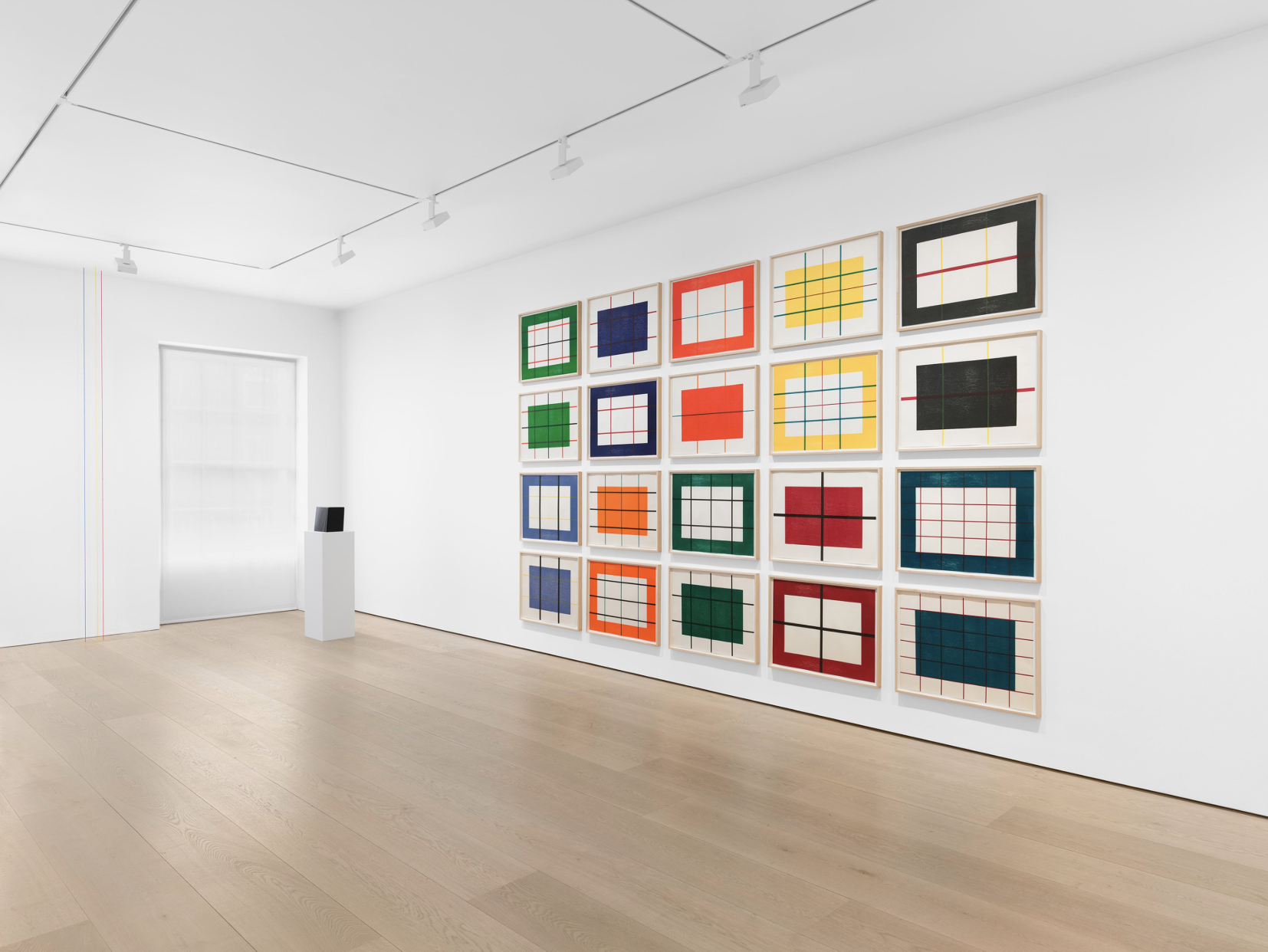
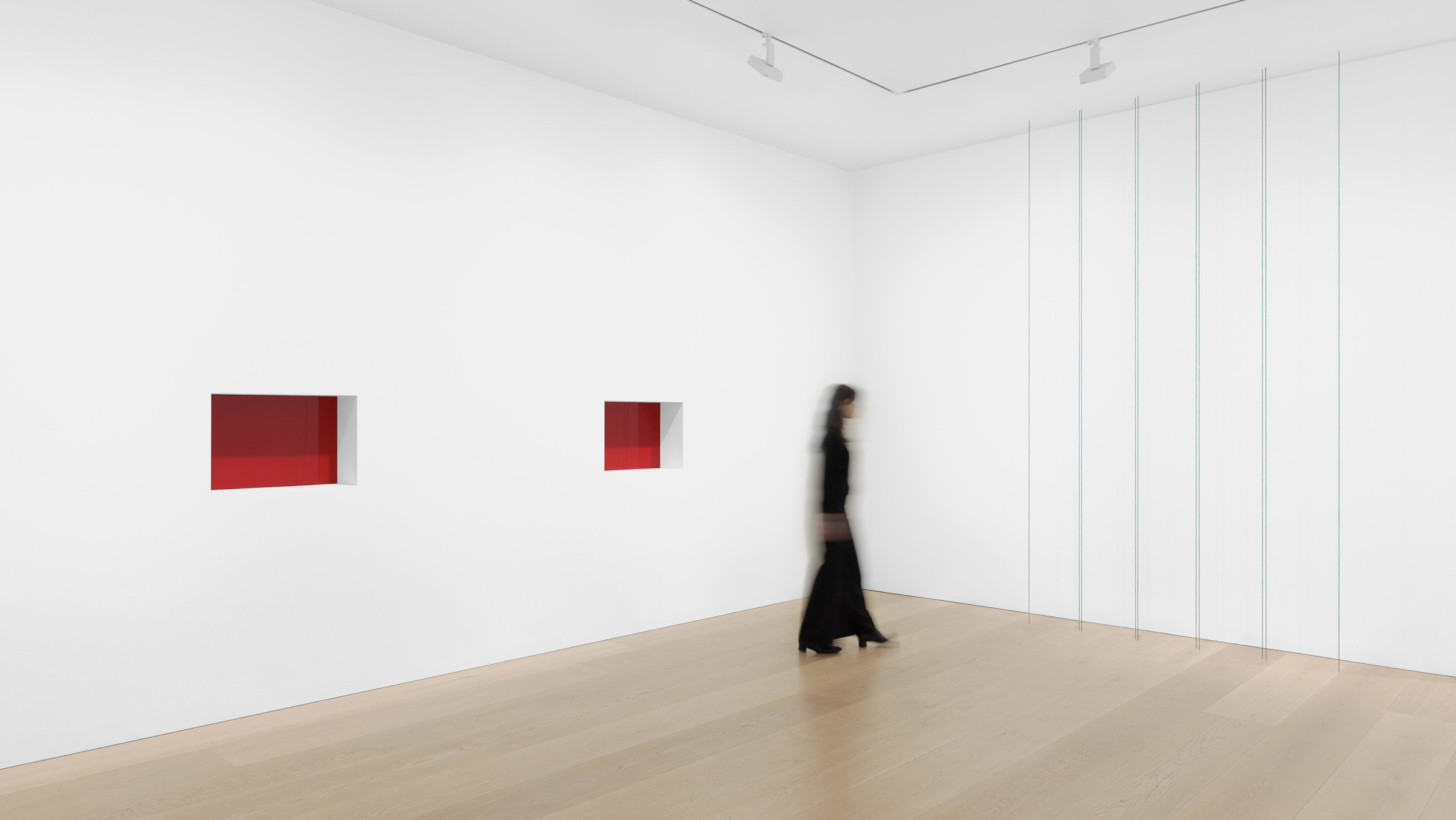
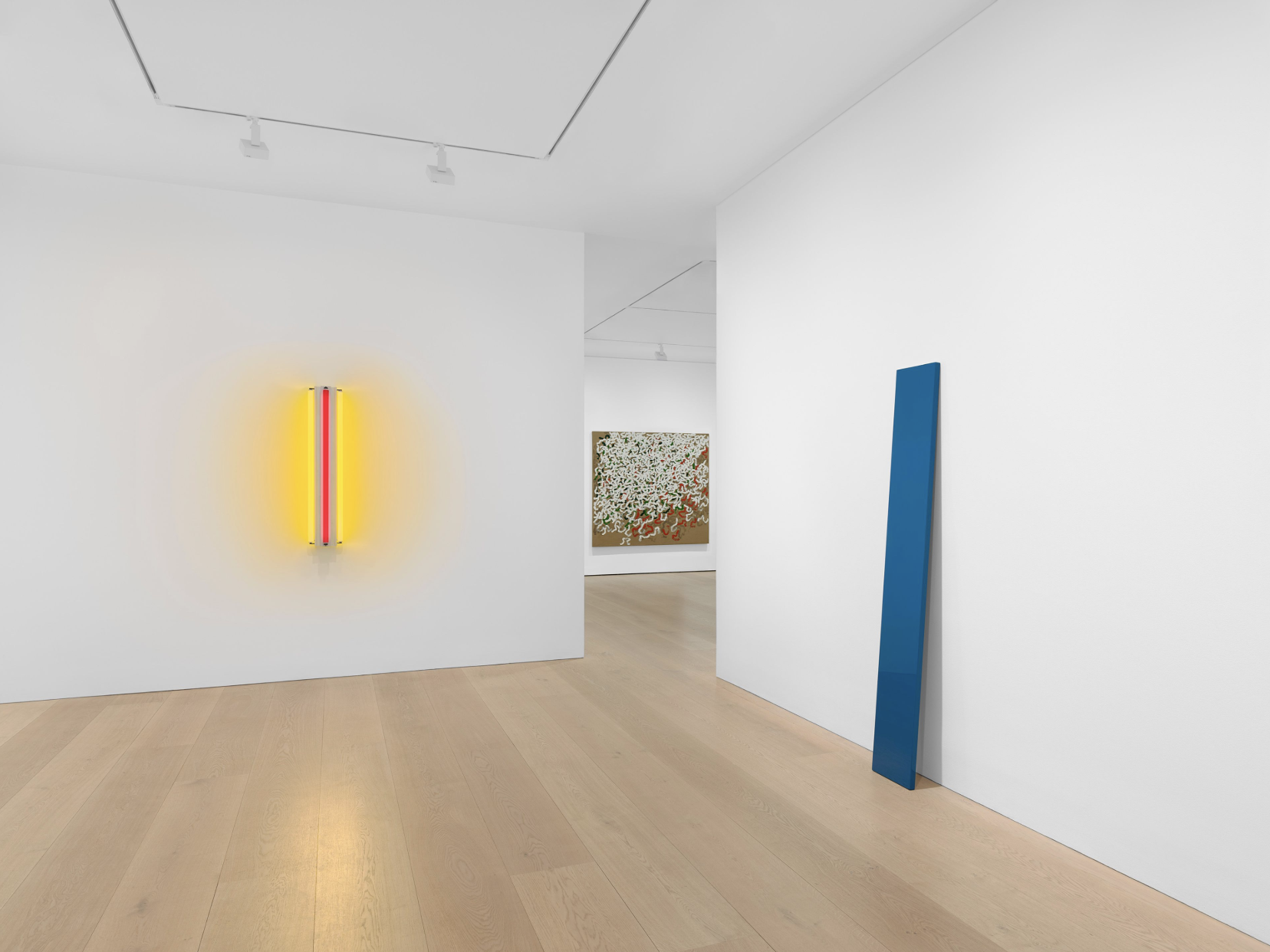
The show brings together a selection of sculptures, paintings, and prints that radically reconfigured the possibilities of abstraction, focusing in particular on these artists’ considered use of colour – or lack thereof – in their pursuit of a non-representational form of expression. Highly influential to each other as well as their peers in the United States and abroad, these artists established minimal, post-minimal, abstract, and conceptual vocabularies that continue to resonate across the art world today
In a 1993 essay, Judd opined that ‘Material, space, and color are the main aspects of visual art.’ 1 The works on view in this exhibition prioritise these fundamental concerns, utilising them in distinct ways to influence the viewer’s experience. The gallery’s ground floor features works by each of the five artists that marshal colour – and frequently primary colour – to define space and form. By contrast, the selection of works on the first floor is notable for its absence of colour, demonstrating the fluidity with which each of the five artists approached formal experimentation within their respective bodies of work. Among the works on view are Flavin’s three fluorescent tubes (1963), a rarely seen early work that was the artist’s first to incorporate more than one lamp, and his first multi-coloured construction using light; a major untitled set of twenty woodcuts by Judd that use colour to iterate variations across a single compositional format; as well as two planks by McCracken – the artist’s signature sculptural form – that are executed in highly glossed red and blue and exemplify his long-standing interest in the transcendent potential of minimalist abstraction. Also of note is a ten-part vertical construction by Sandback that is exceptional for its use of green yarn, a colour that he employed only in a small number of works, its vibrant hue underscoring the artist’s multivalent use of the seemingly infinite vertical line; and a major early painting by Ryman from 1963 featuring curving brushstrokes of white that overlay similarly rendered strokes of green, red, and taupe. Emblematic of his facture from this period, these glyph-like forms function as compositional building blocks for Ryman – much like the formal units deployed by minimalist sculptors, but translated into the artist’s own abstract painterly vocabulary.
About the artists:
From 1963 until his death, Dan Flavin (1933–1996) produced a singularly consistent and prodigious body of work that utilised commercially available fluorescent lamps to create installations, or ‘situations’ as he preferred to call them, of light and colour. Through these light constructions, Flavin was able to establish and redefine space. The artist’s work – which ranges in scale from individual wall-mounted and corner constructions to large-scale works, in which he employed whole rooms or corridors – testifies to his recurrent preoccupation with architecture.
With the intention of creating straightforward work without recourse to grand philosophical statements, Donald Judd (1928–1994) eschewed the classical ideals of representational sculpture to create a rigorous visual vocabulary that defines objects as its primary mode of articulation. The unaffected, direct quality of his work demonstrates Judd’s strong interest in colour, form, material, and space, thus establishing him as one of the most significant American artists of the postwar period.
John McCracken (1934–2011) occupies a singular position within the recent history of American art, as his work melds the restrained formal qualities of minimalist sculpture with a distinctly West Coast sensibility expressed through colour, form, and finish. While experimenting with increasingly three-dimensional canvases in the early 1960s, the artist began to produce objects made with industrial materials, including plywood, sprayed lacquer, and pigmented resin, creating the highly reflective, smooth surfaces for which he has become known.
Robert Ryman (1930–2019) is widely celebrated for his tactile works using white paint, in all its many permutations, which he executed using a range of painterly media on various supports, including paper, canvas, linen, aluminium, vinyl, and newsprint. Emerging in the 1960s, Ryman eschewed self-contained representational and abstract imagery, instead giving precedence to the physical gesture of applying paint. Unlike many of the artists and movements with which he is often associated, such as abstract expressionism and minimalism (labels to which he never subscribed), Ryman neither reveled in the emotive qualities of gesturalism nor sought to eradicate the painterly mark; rather, his works are novel and sensitive explorations of the visual, material, and experiential qualities of his medium that exist in a dialogue with their surroundings.
Fred Sandback (1943–2003) is known for sculptures that outline planes and volumes in space. Though he employed metal wire and elastic cord early in his career, the artist soon dispensed with mass and weight by using acrylic yarn to create works that address their physical surroundings, the ‘pedestrian space’, as Sandback called it, of everyday life. By stretching lengths of yarn horizontally, vertically, or diagonally at different scales and in varied configurations, the artist developed a singular body of work that elaborated on the phenomenological experience of space and volume with unwavering consistency and ingenuity.
Info + opening times
David Zwirner