
Gazelli Art House
Interweave
17 July - 19 September 2026
Gazelli Art House presents Interweave, a group exhibition bringing together artists whose practices connect to textile traditions while extending them into contemporary territories. Working across batik, tapestry, Jacquard weaving, carpet inlay, embroidery, digital image-making and AI, the exhibition explores textiles not simply as a medium, but as a way of thinking: one built through connection, accumulation and transformation.
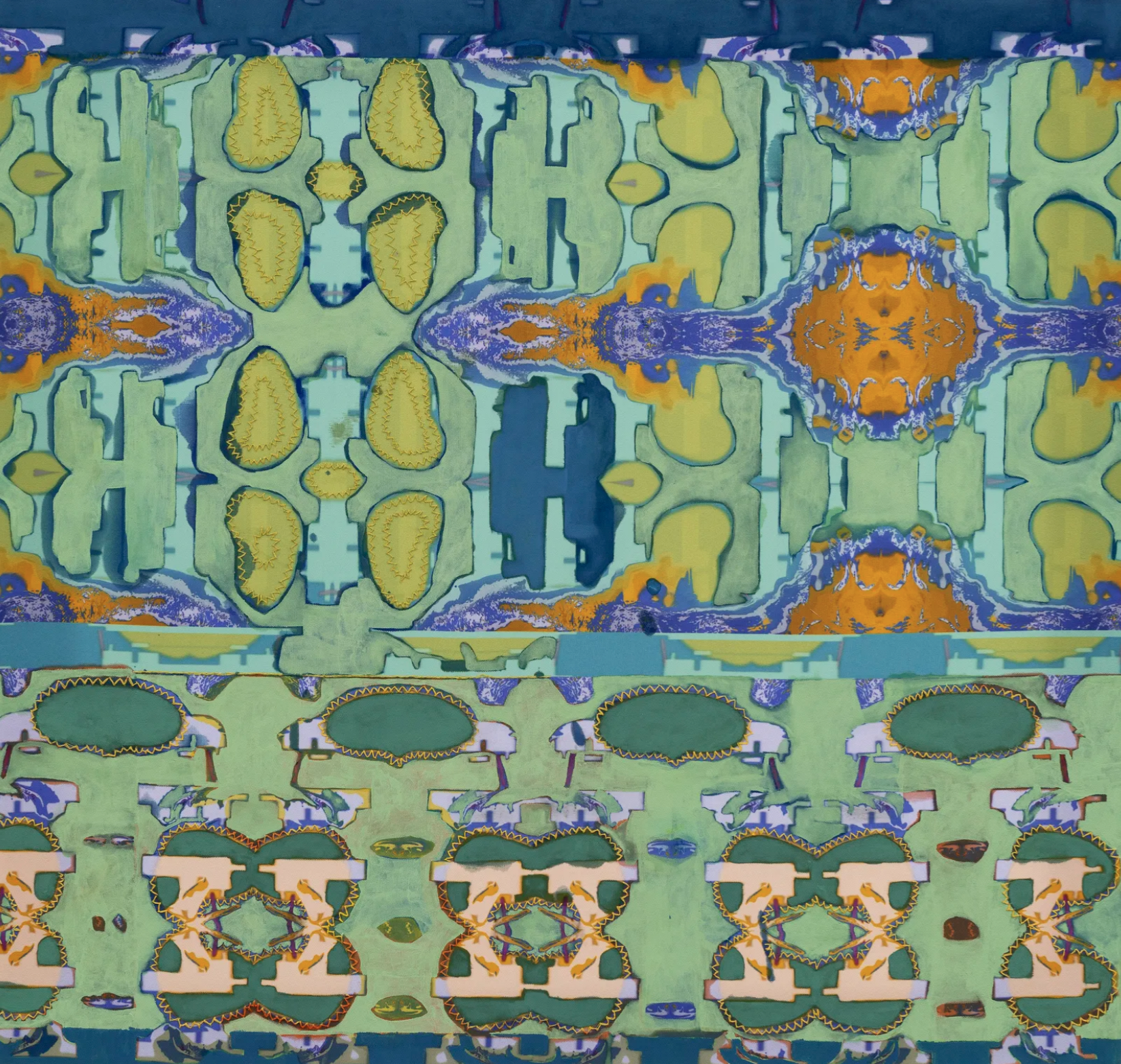
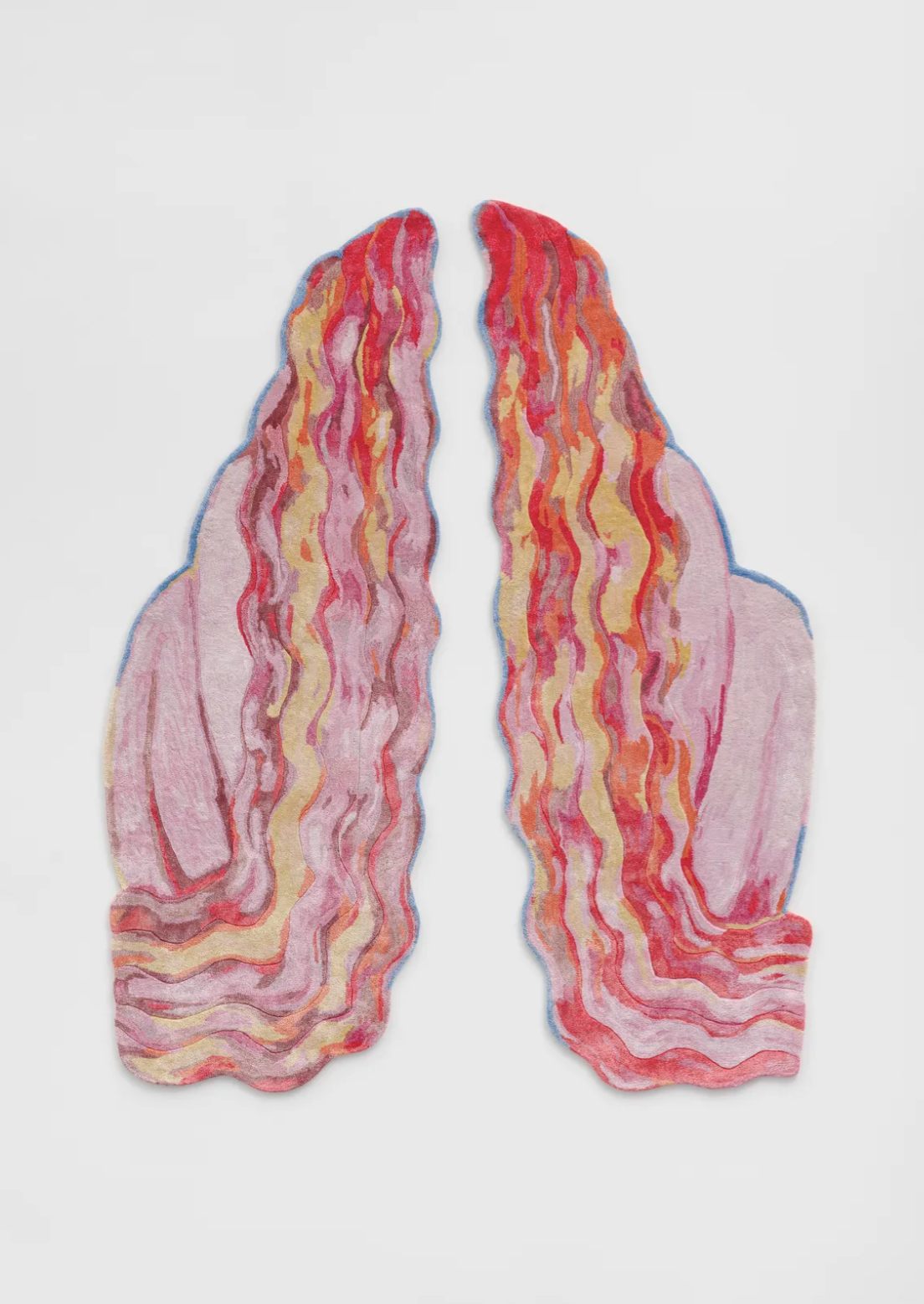
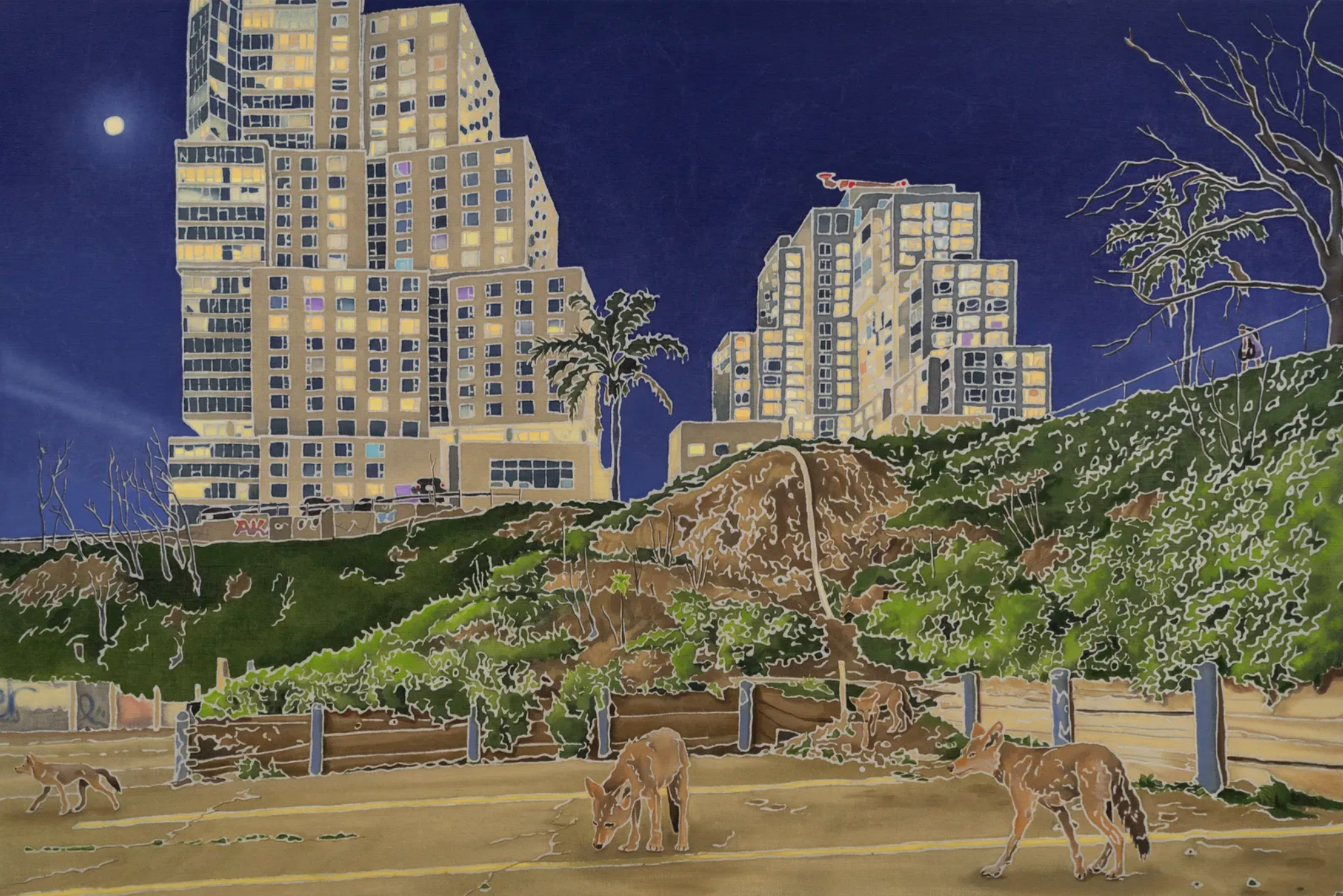
Spanning tapestry, painting and sculpture, the works in Interweave are united by an interest in how images, stories and materials are constructed through acts of layering and exchange. Traditional craft techniques sit alongside computational systems, ancient knowledge intersects with emerging technologies, and hand-made processes are placed in dialogue with machine-assisted forms of production.
The exhibition takes its title from the fundamental structure of weaving itself: individual threads crossing to form something larger than their constituent parts. Across the exhibition, this idea expands beyond material process to encompass cultural histories, personal narratives, mythologies, technological systems and ecological networks. The works reveal how seemingly distinct worlds are continually intertwined.
Together, the artists in Interweave challenge conventional distinctions between art and craft, analogue and digital, tradition and innovation. The exhibition foregrounds the textile as a living, evolving language—one capable of carrying stories across generations while continually adapting to new technologies, materials and ways of seeing.
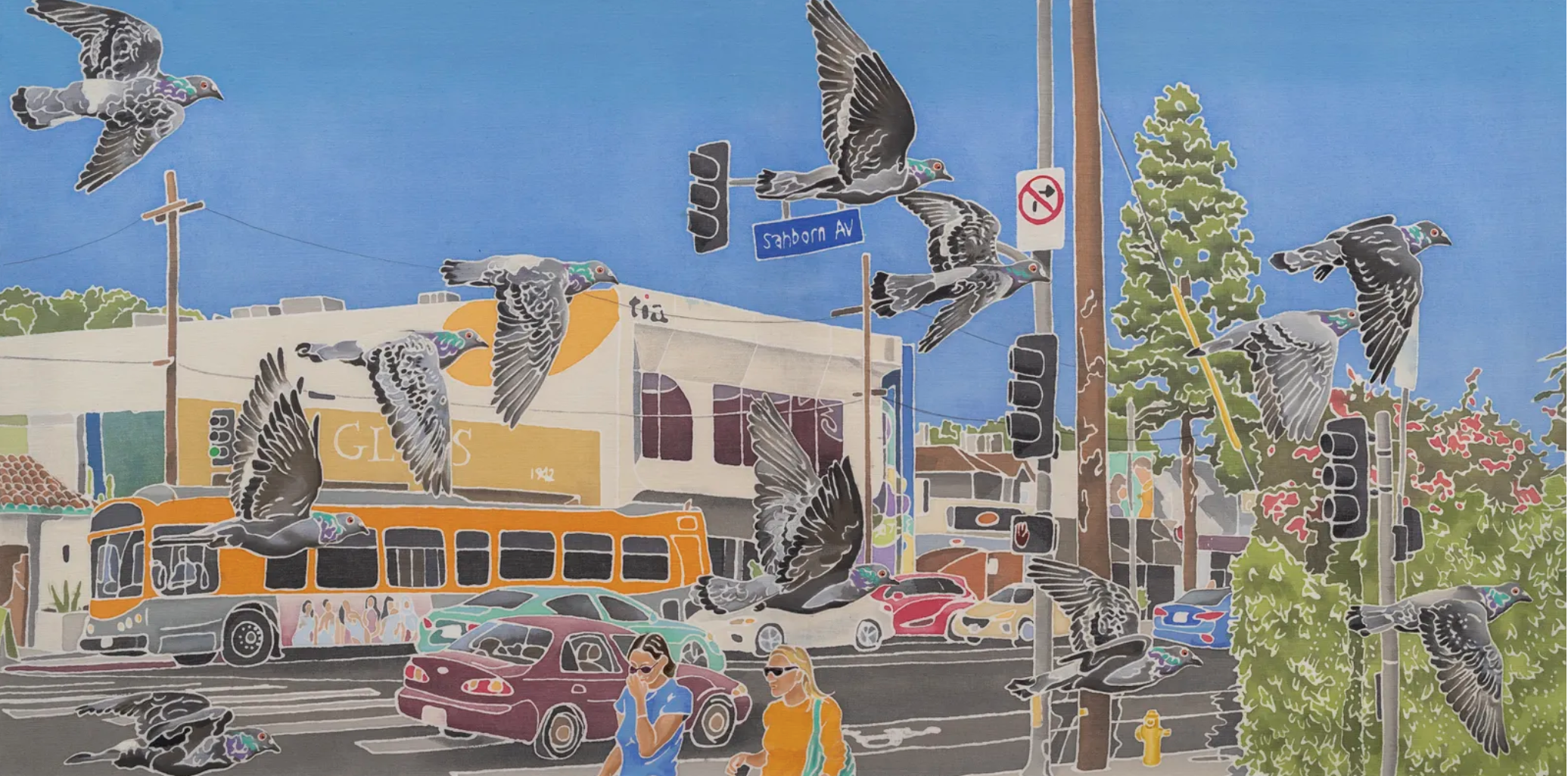
For Adam de Boer, textile processes become a means of navigating personal questions of place and inheritance. Combining traditional Javanese batik techniques with a Western painting lineage, his works frame moments in the cultural and visual landscapes of California and Indonesia, reflecting on the layered histories embedded within contemporary urban life, specifically in this series, Los Angeles.
Bea Bonafini draws upon mythology, spirituality and ecological thinking to create shapeshifting forms that move between human, animal and imagined worlds. Working across tapestry, cut carpet, cork painting, ceramics and installation, her practice reimagines ancient archetypes through richly tactile and materially experimental forms.
LoVid’s textile works emerge from over two decades of experimentation with analogue and digital materiality. Translating electronic signals, networked experiences and visual noise into densely layered surfaces, their practice collapses distinctions between the virtual and physical, the handmade and the computational.
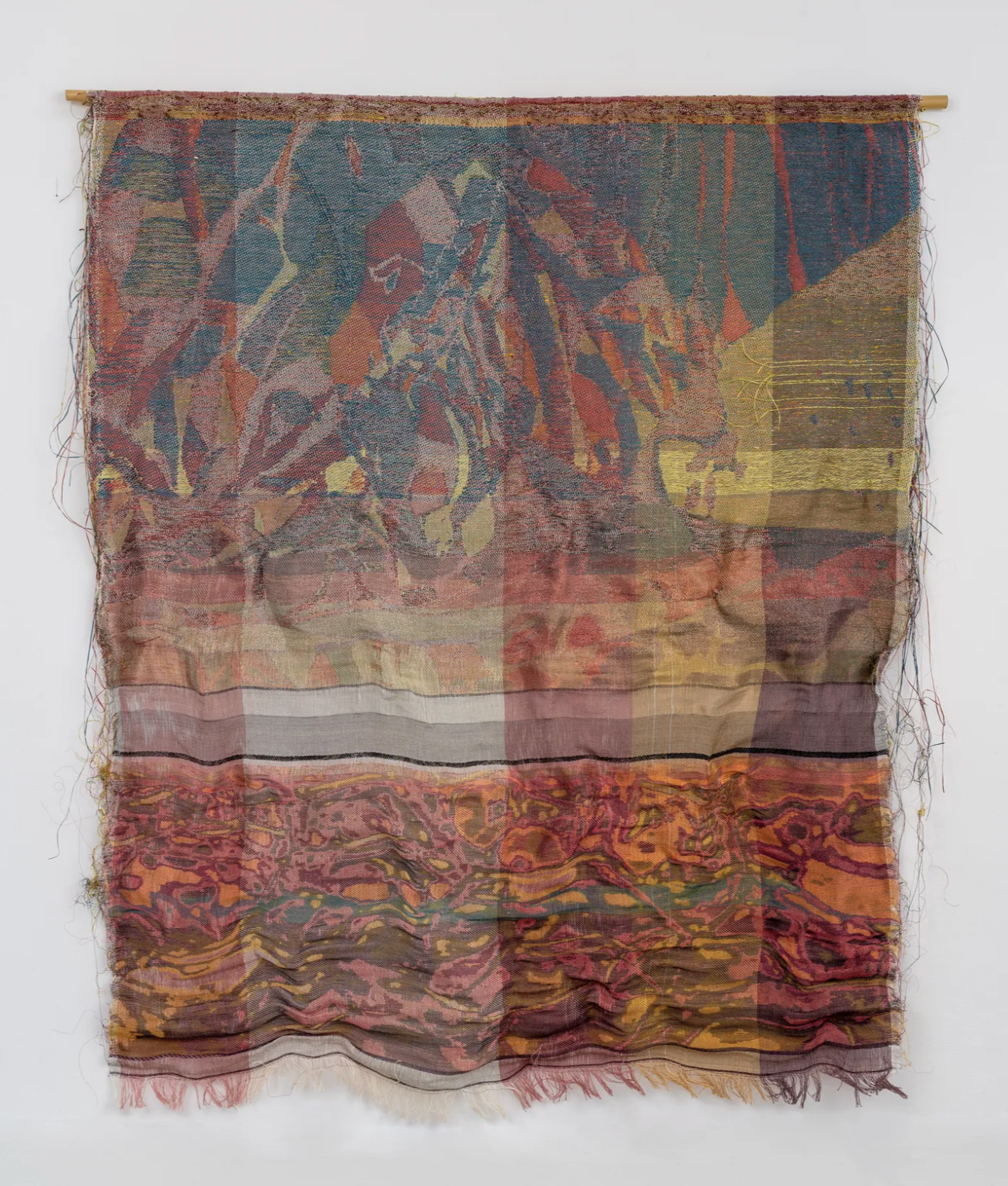
Joan Truckenbrod’s woven works explore hidden systems of connectivity, from fungal networks and sound patterns to the structures underpinning natural phenomena. Combining digital Jacquard weaving with hand-dyed fibres, metallic threads and sculptural interventions, her practice reveals intricate relationships between technology and ecology.
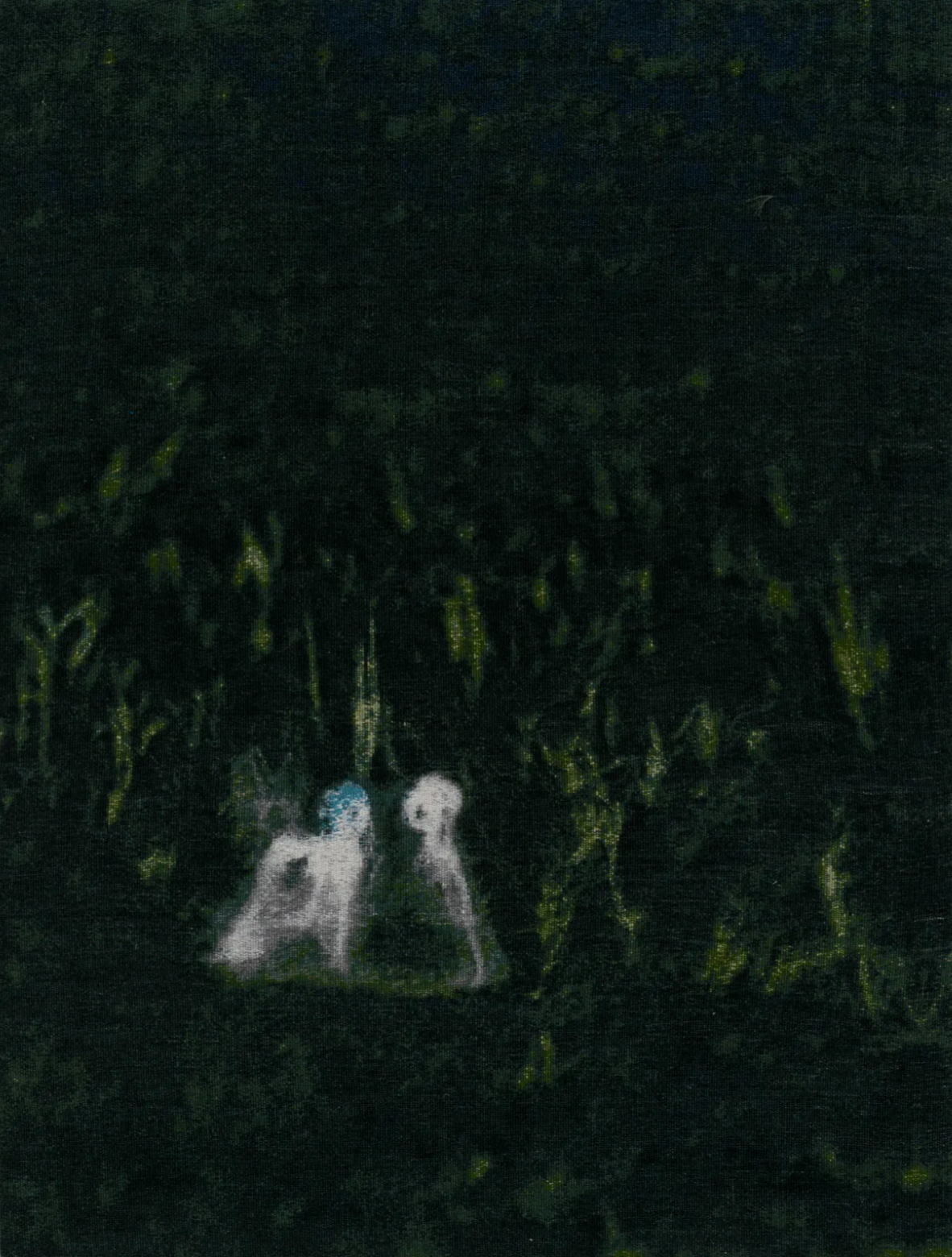
For aurèce vettier, textiles become a site where memory, dreams and artificial intelligence converge. Developed through custom-trained AI models built from personal archives, the artist’s works transform algorithmically generated imagery into tactile forms, extending the possibilities of both machine learning and traditional craftsmanship.
Info + opening times
Gazelli Art House