
Hauser & Wirth
Francis Picabia
21.May.26 – 01.August.26
Francis Picabia (1879 – 1953) is one of the most influential and essential artists of the 20th Century. His career and worldview were marked by ceaseless experimentation, and his oeuvre demonstrated a rapid progression through various artistic movements, which included Impressionism, Fauvism, Dadaism and Cubism.
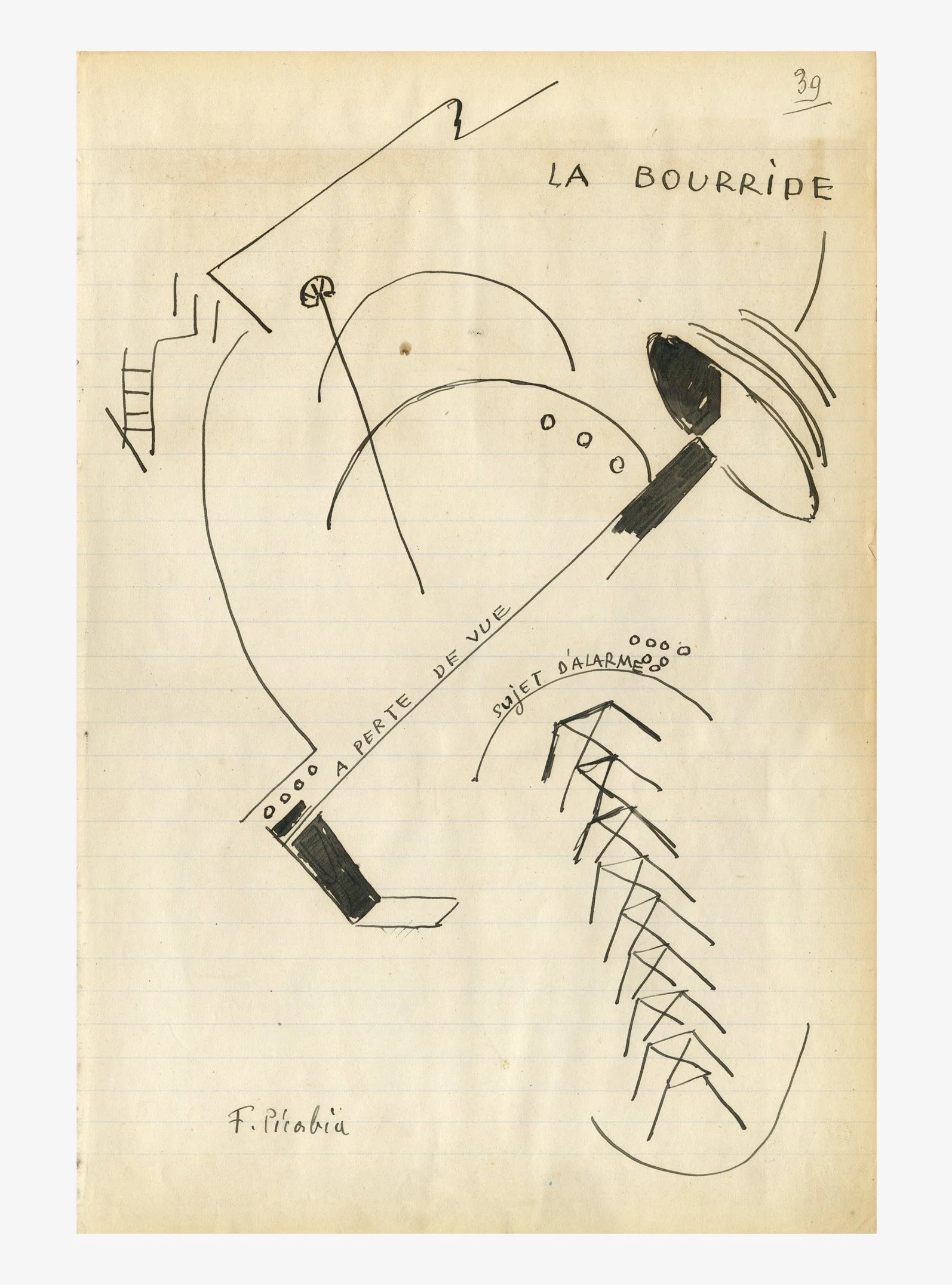
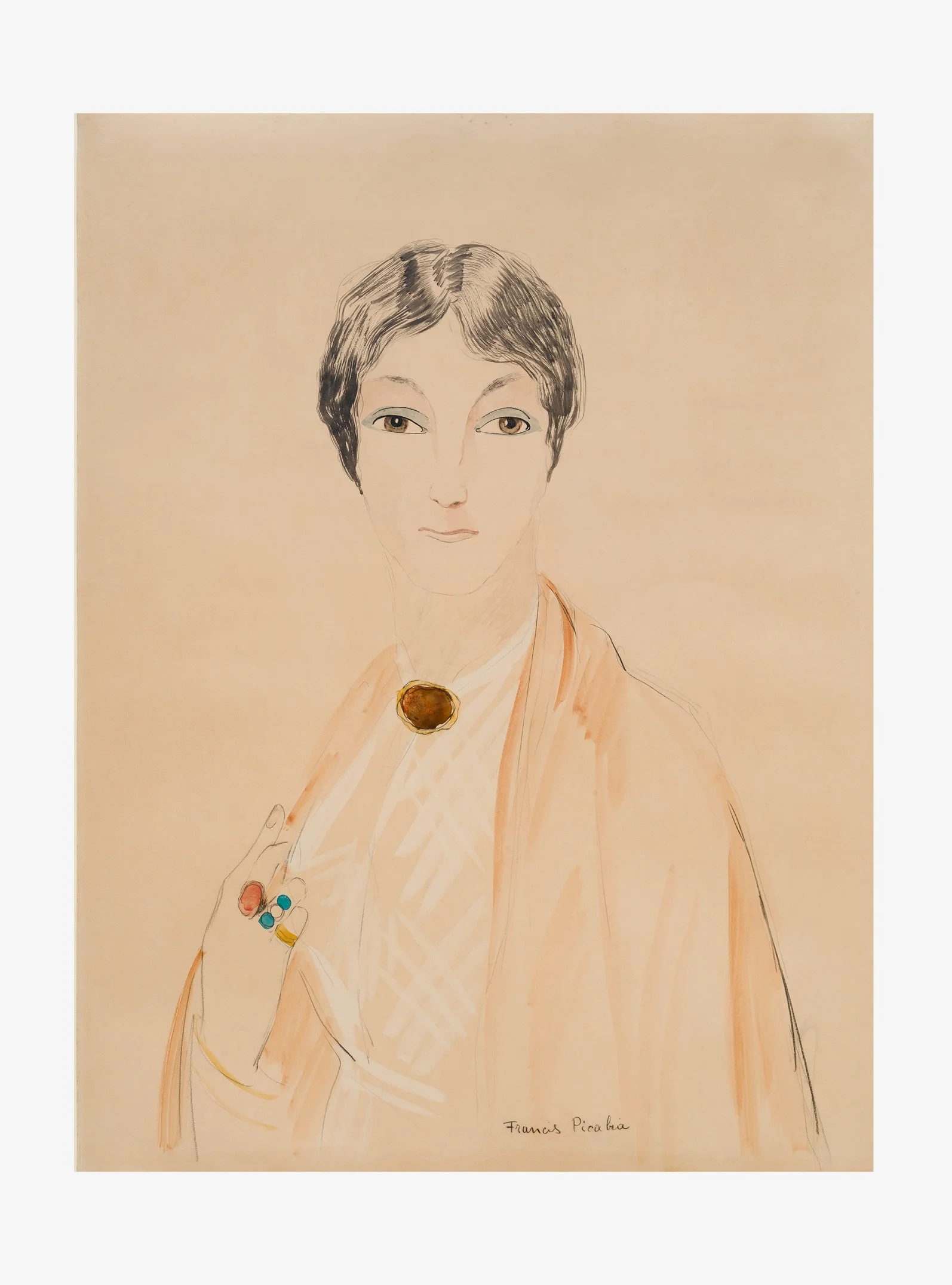
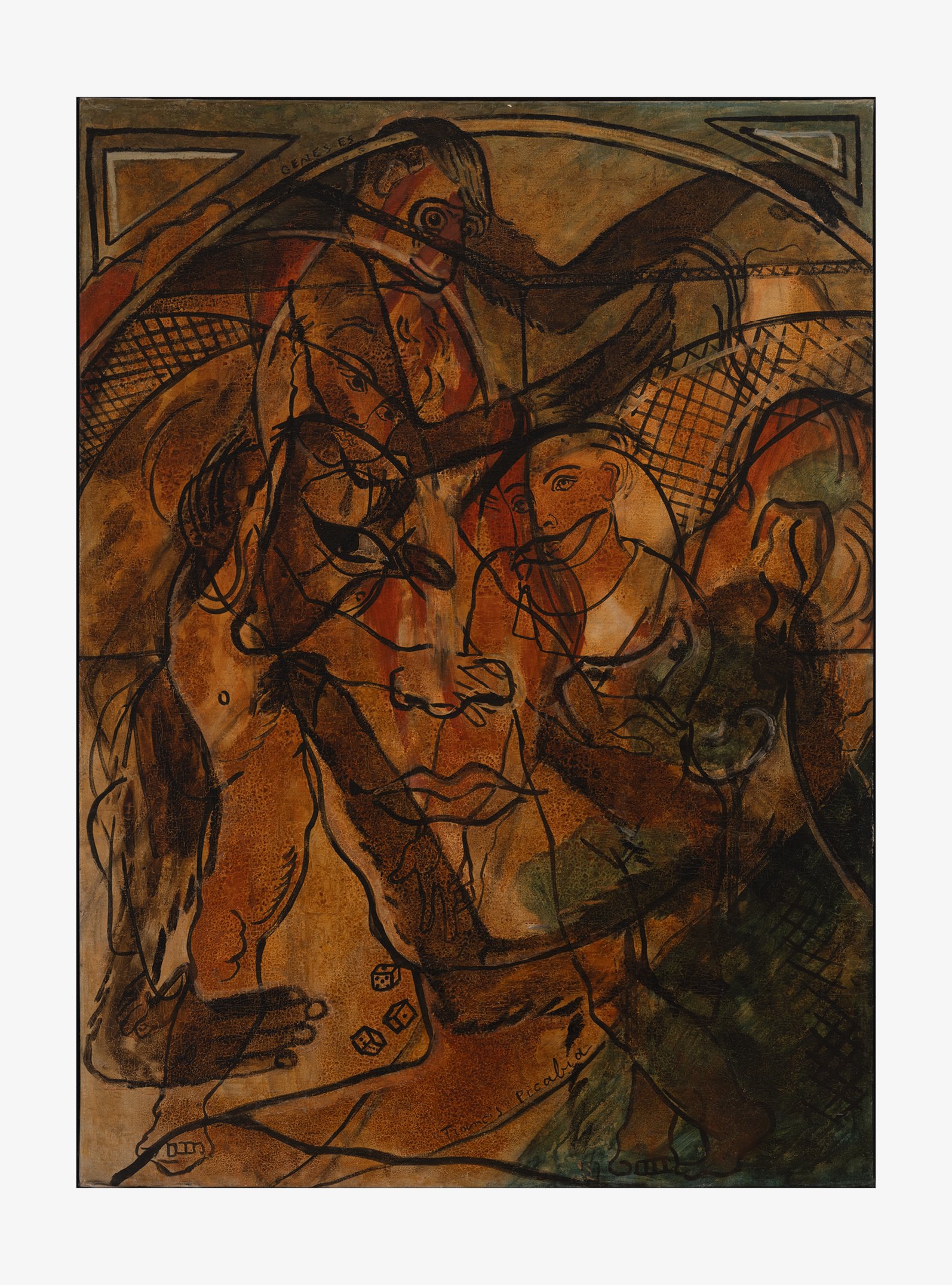
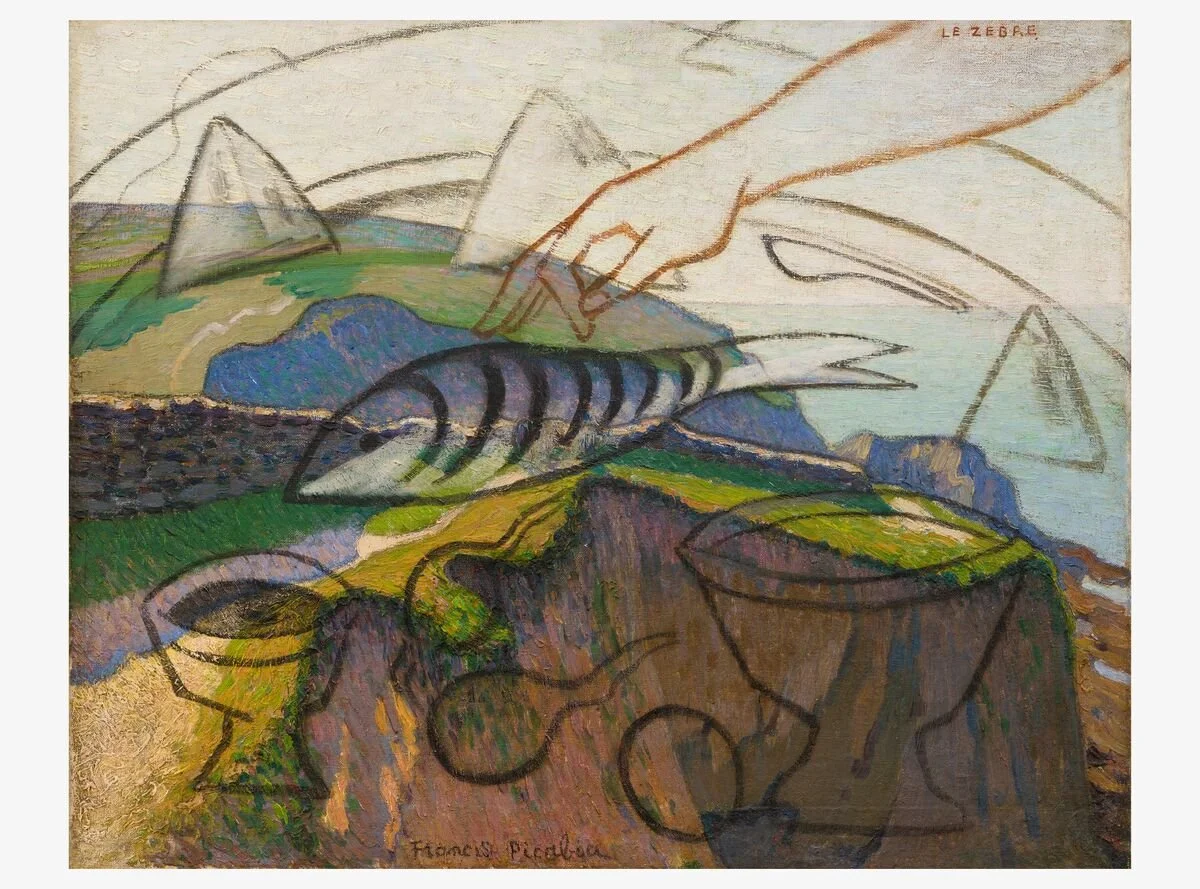
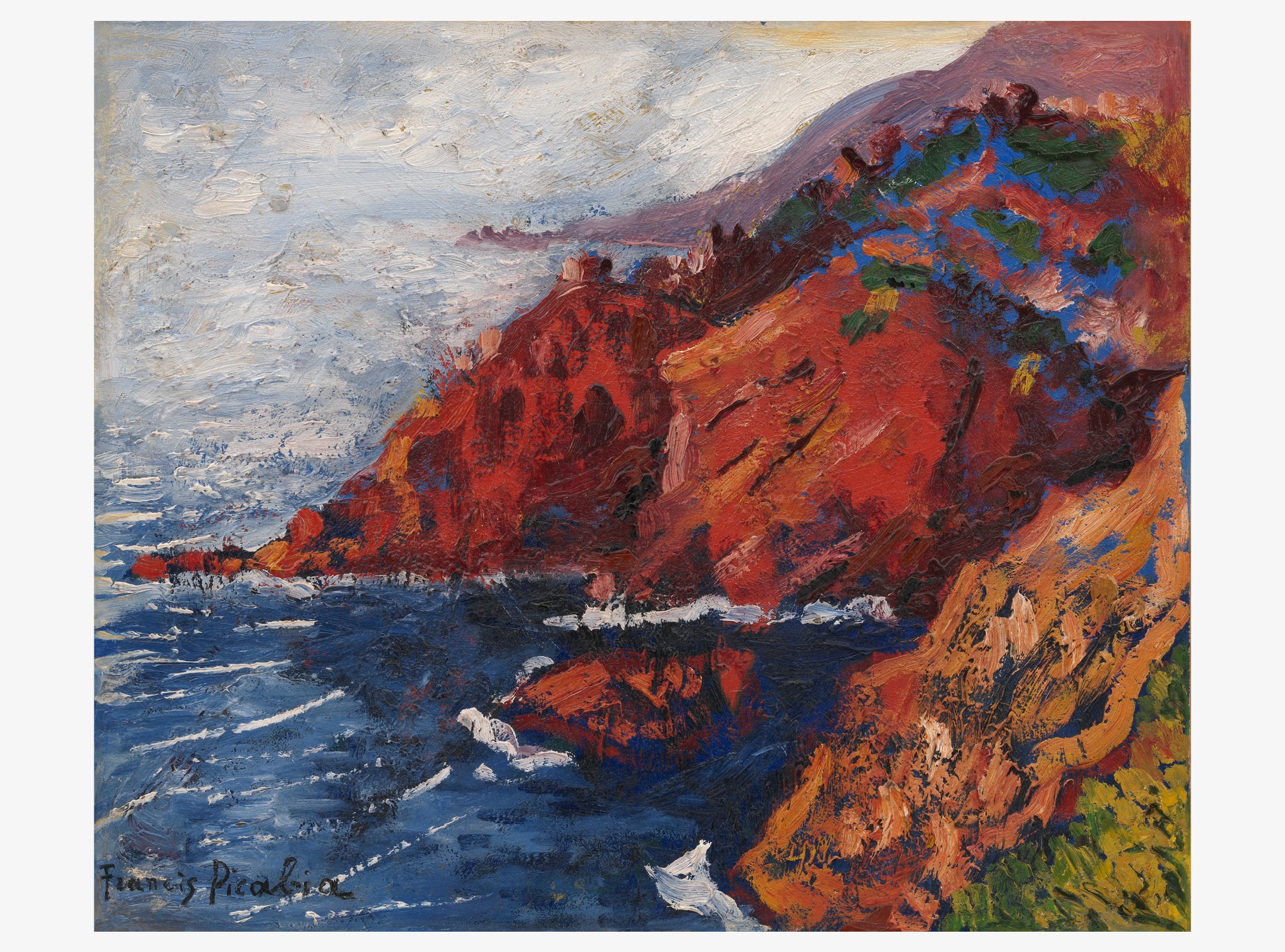
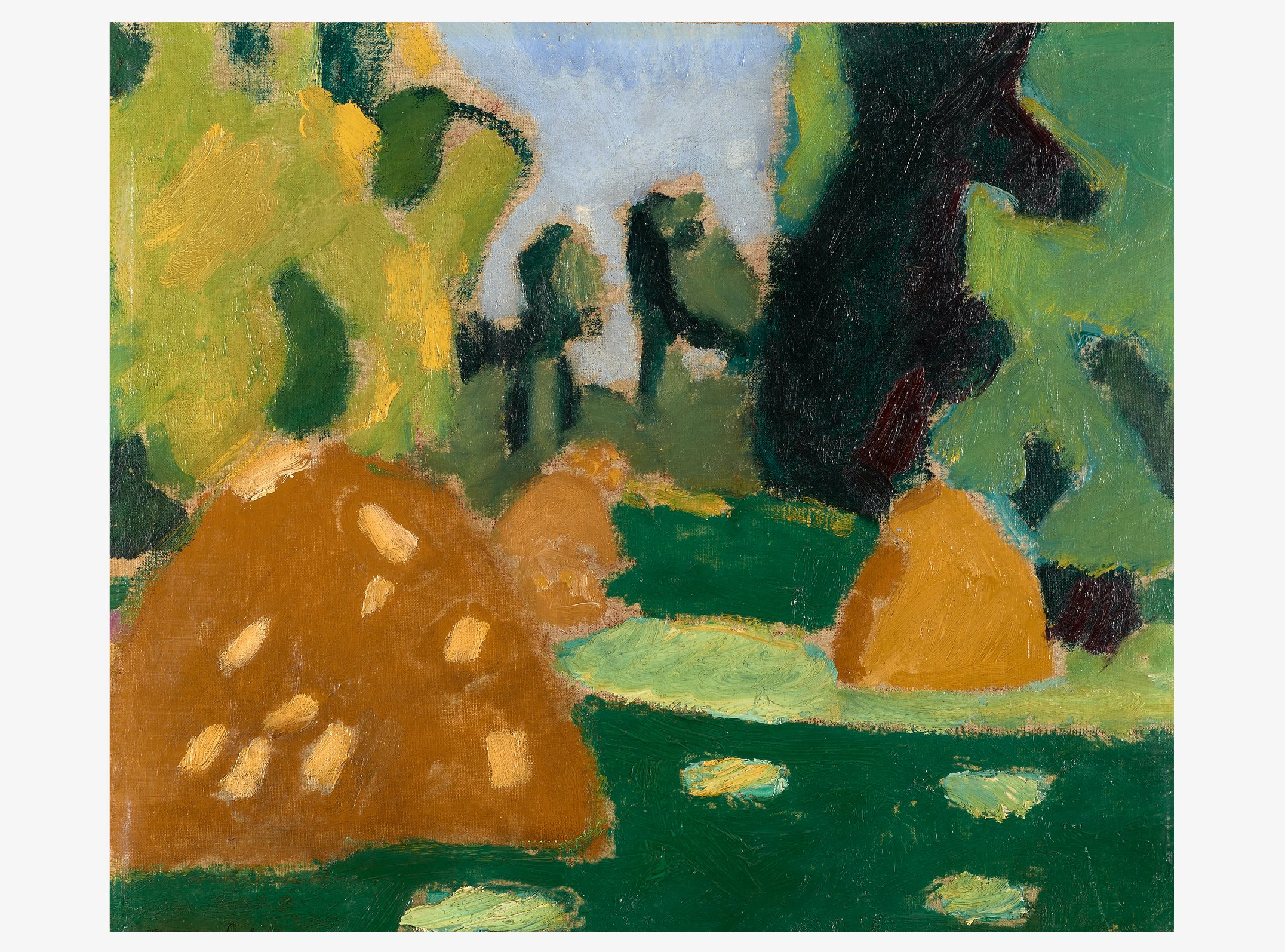
Organized in collaboration with the Comité Picabia, this wide-ranging overview covers five decades of creative output, from his early landscapes, Dada works and Transparencies through to his radical nudes, realist works made during World War II and textural abstract paintings created in his final years. Shedding light across every area of the artist’s practice, this exhibition highlights his fluid movement between figurative art and abstraction, affirming Picabia’s reputation as one of art history’s most ingenious shape shifters.
Offering a rare glimpse into Francis Picabia’s practice before he began his many self-reinventions, his 1902 landscape—the earliest work on view—attests to his Impressionist period at the start of his career. His approach began to shift as early as 1908, albeit subtly, towards Neo-impressionism and he broadened his horizon to encompass Fauvism and Cubism. This spirit of creative renewal is encapsulated in ‘Le Zèbre (The Zebra)’ (ca. 1909 – 1933), which presents a Neo-impressionist coastal scene in the background. This was later superimposed with a playful line drawing in the 1930s, emblematic of the artist’s tendency to revisit and revise canvases across decades. ‘Untitled’ (ca. 1911) sees Picabia’s landscapes moving even further from Impressionism, with simplified forms bordering on abstraction.
From the mid-1910s, Picabia, alongside Marcel Duchamp and others, participated in anti-painting manifestations in New York and he later became involved in Dada circles in Zurich and Paris until 1921, when he denounced the movement for no longer being ‘new.’ Yet, traces of his Dada sensibility remained and the rare self-portrait ‘Francis Picabia’ (ca. 1924) evokes his Dada works and playful use of text. As this chapter drew to a close, Picabia moved from Paris to the Cote d’Azur in the mid-1920s. Untethered to the capital, the Dadaists or a single creative style, he expanded his artistic horizon while living in the Château de Mai and aboard his numerous yachts, such as ‘L’Horizon I,’ moored across from the casino in Cannes.
This departure marked the artist’s move away from the Parisian avant-garde and towards figuration. From the late 1920s to the early 1930s, Picabia was occupied with his Transparencies, the name of which points to the visual effects of double and layered images. This new, highly personal style is exemplified in a charcoal and ink on paper from 1932 and the oil on canvas ‘Genèses (Geneses)’ (ca. 1930 – 1931). The title of ‘Genèses’ describes multiple points of origin, much like Picabia himself, whose career is marked by many creative beginnings. At the end of this era, the oil painting ‘Transparence, Portrait de femme (Transparency, Portrait of a Woman)’ (ca. 1937 – 1939) sees Picabia poised between the opposing forces of realism and abstraction.
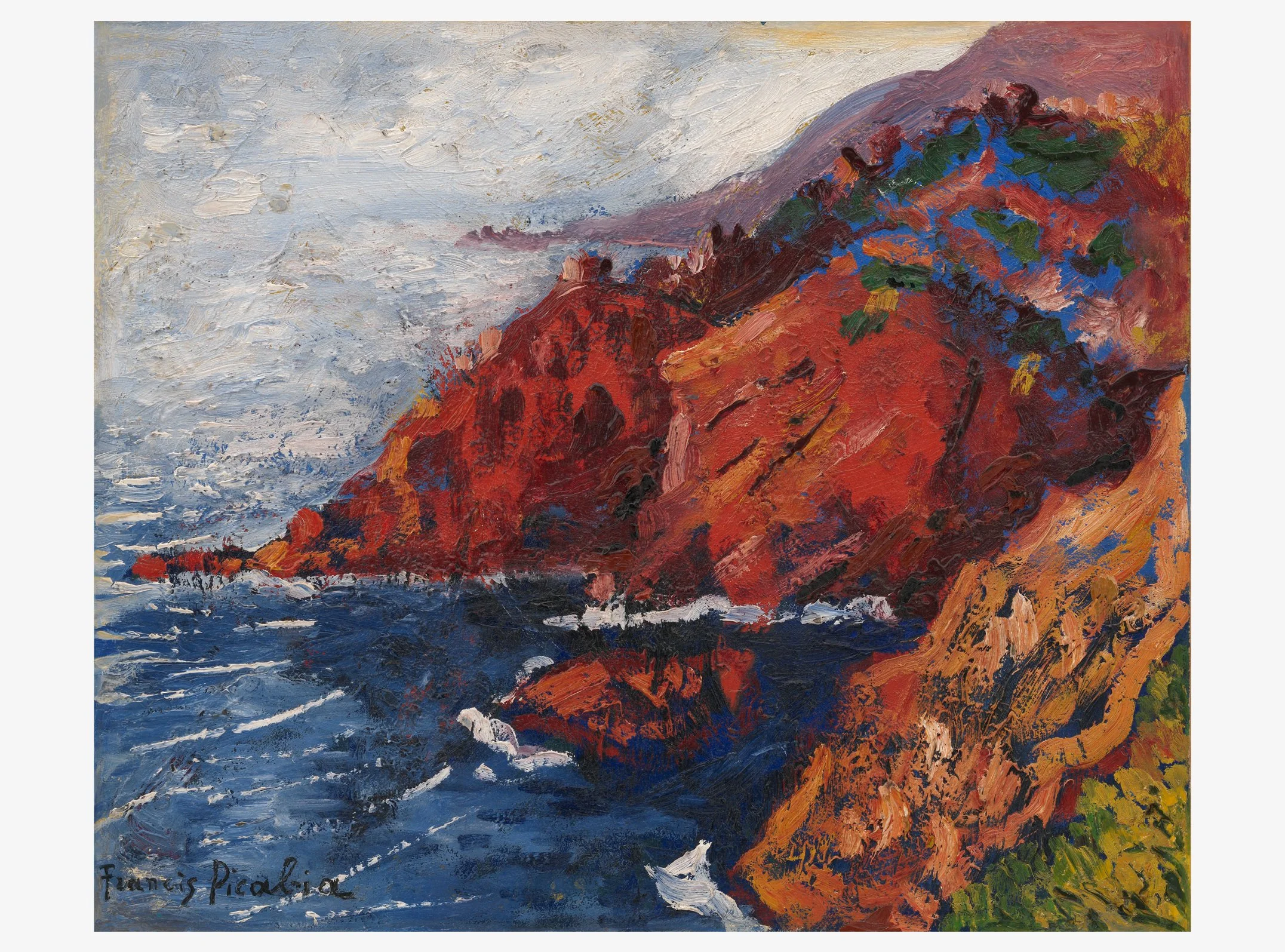
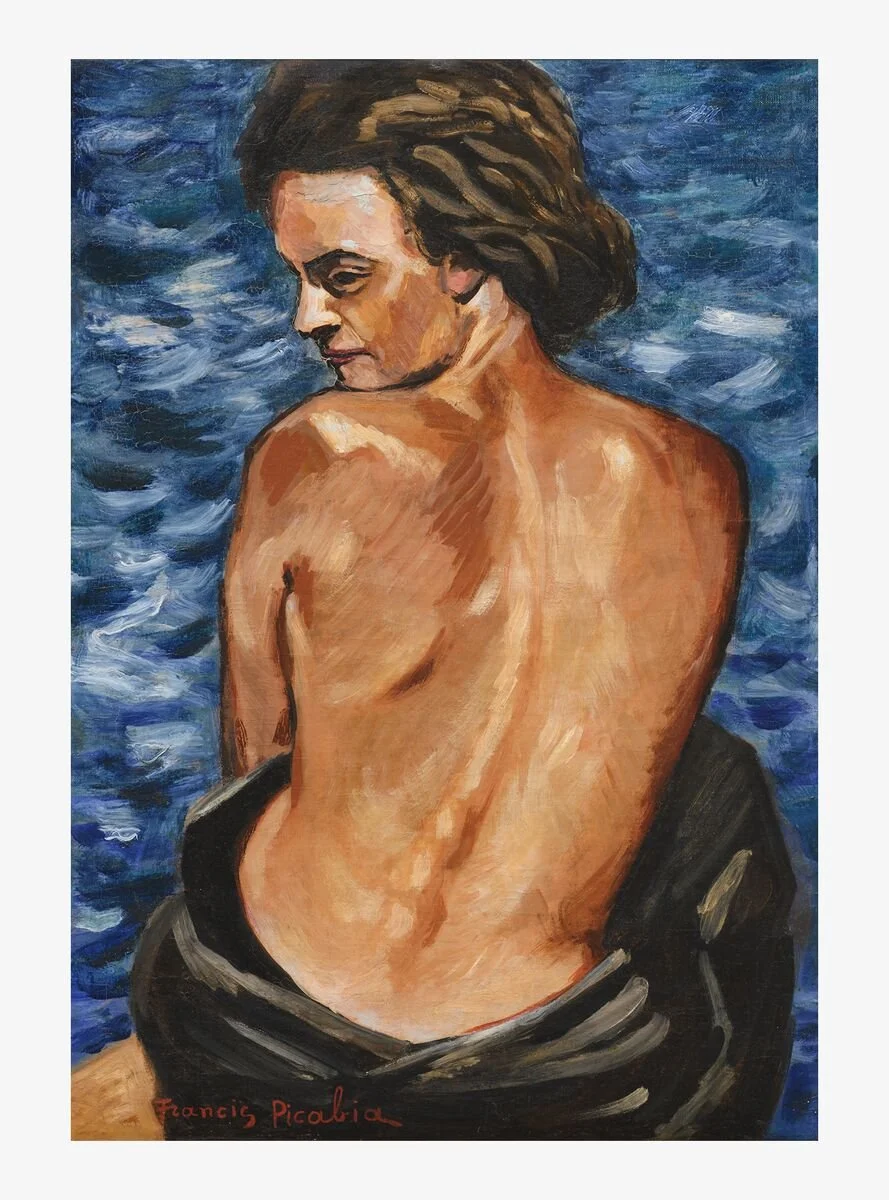
Picabia’s figurative imagery entered a new phase during the 1930s and 1940s, dominated by photo-based portraits and nudes. Using images from risqué publications such as Paris Sex Appeal and Mon Paris, the artist imitated their smoothness by flattening the picture plane and his application of paint. Adapted from a photograph published in Paris Magazine, ‘Nu de dos devant la mer (Nude from Behind, in Front of the Sea)’ (ca. 1942 – 1943) depicts a model sat with her back to the viewer. Almost resembling an odalisque pose, Picabia’s painting makes a reference to the tradition of the nude, juxtaposing art historical ideals with risqué images, ‘high’ art with ‘low’ culture. These wartime realist works were in stark contrast to Picabia’s previous styles, yet they did not exist in isolation. The appropriation inherent across these so-called kitsch pieces can be seen as echoing his Dadaist practice. Produced around the same time, the seascape ‘Les rochers rouges (The Red Rocks)’ (ca. 1942 – 1943) is based on a postcard and harks back to his Impressionist scenes, though with a wry undercurrent as Picabia parodies the movement’s gestural brushwork and pointedly challenges the conventions of plein air painting.
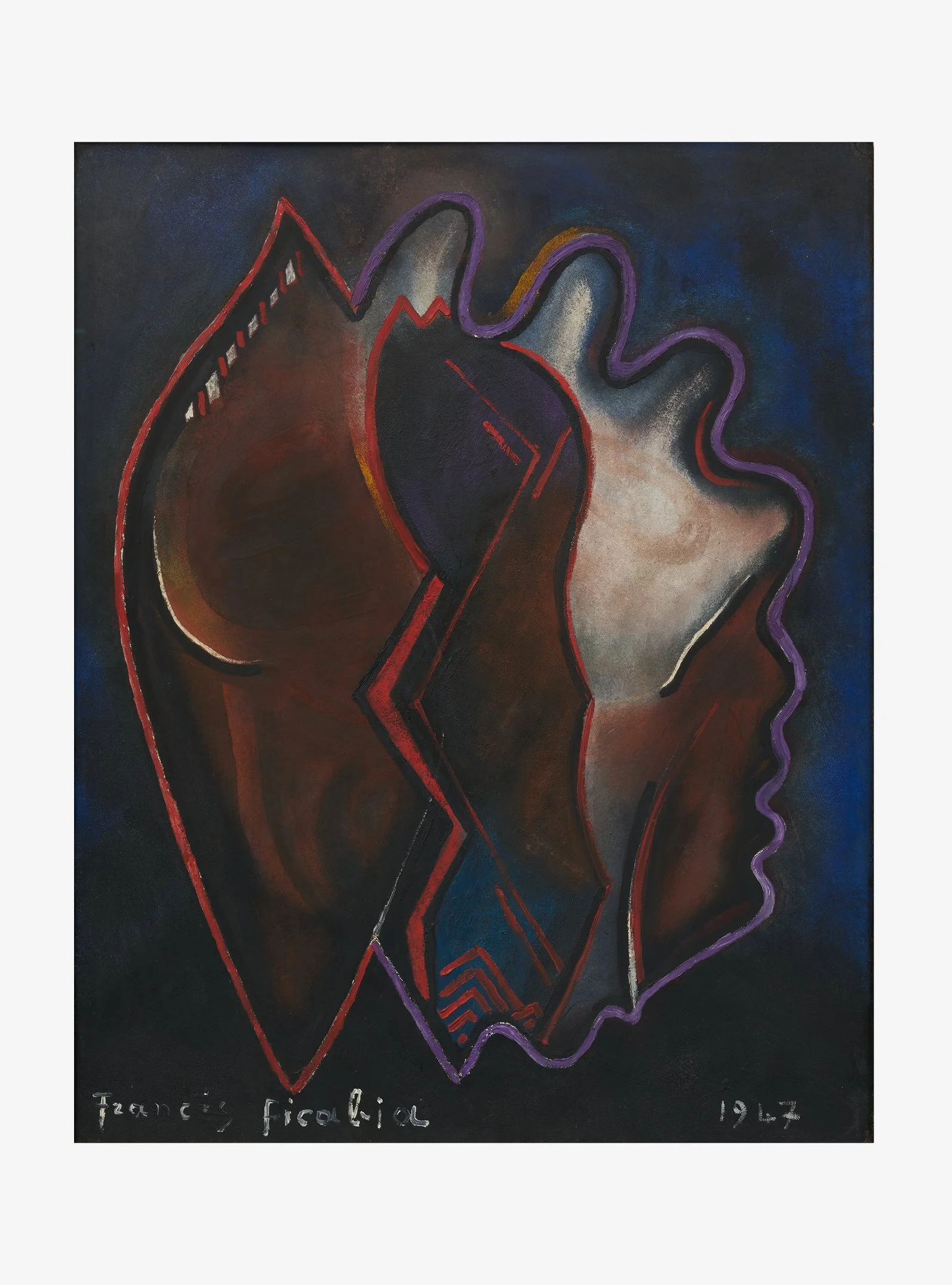
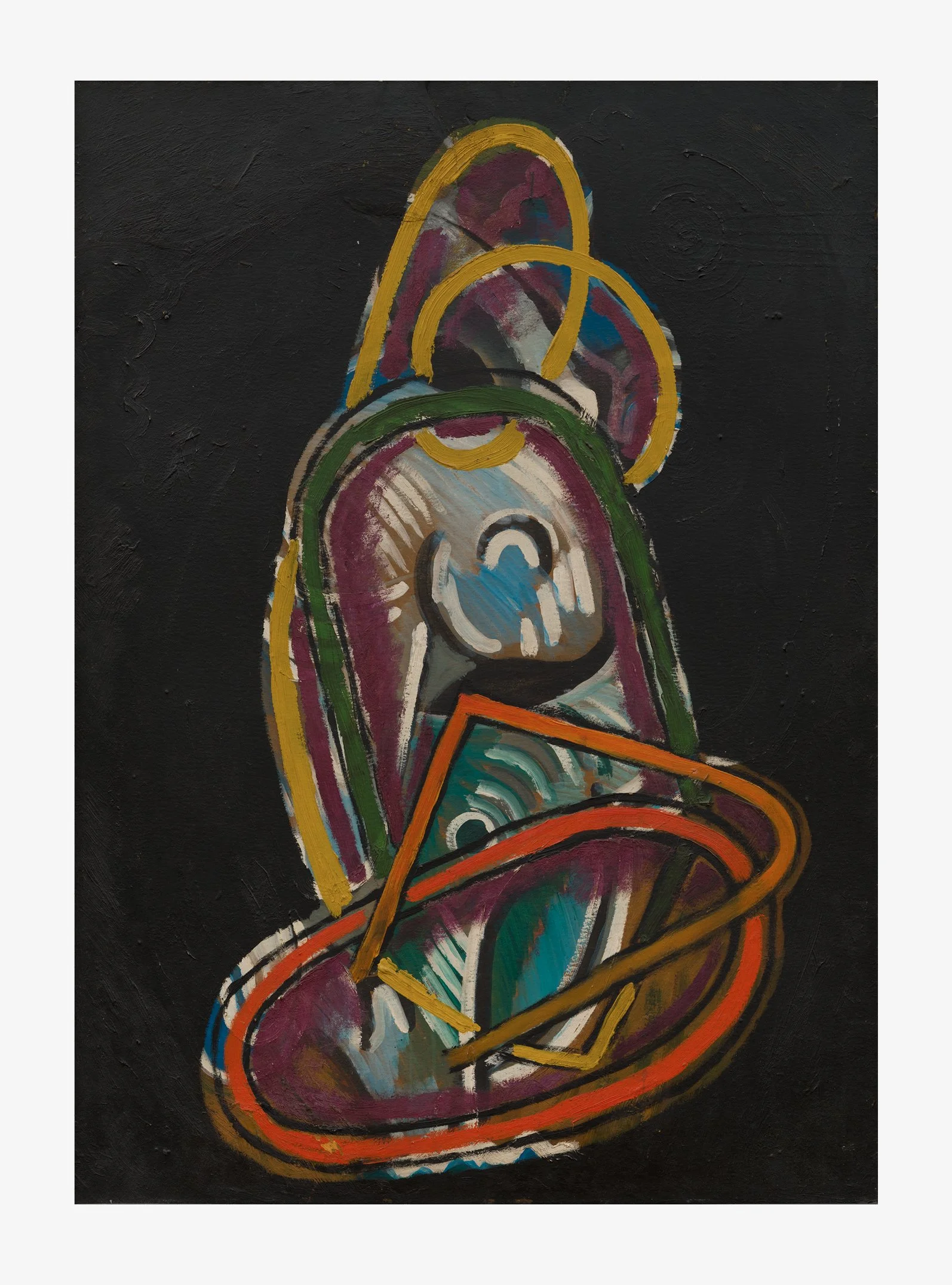
Picabia remained steadfast in following his own path and the post-war period was no exception, during which time he returned to Paris. From 1945 to 1952, his new aesthetic direction embraced emblematic abstractions. With this group of work, the artist’s handling of paint also changed as he fully adopted impasto, evident in ‘Composition’ (1951). Though a significant move away from his preceding series of female nudes and figures, he continued to employ his tried-and-tested technique of sampling, borrowing and assimilating. The selection on view highlights the role that prehistoric and primitive artistic sources had on Picabia’s creative output, evoking cave paintings, Neolithic artefacts as well as African and Oceanic art. The central figure in ‘Trèfle à une feuille (One-Leaf Clover)’ (ca. 1946 – 1947) can be considered a shield-like form or a stylization of an African mask—both haunting and powerful images that capture the existential angst of the post-war era. Although ostensibly abstract, the amorphous form in ‘Composition abstraite’ (1947) recalls a shell, embodying the rich diversity of shapes, tones and textures that inhabit Picabia’s sophisticated late oil paintings.
The breadth of Picabia’s works on view concludes with works on paper that testify to his self-referential impulse. Unable to settle with either figuration or abstraction throughout his career, ‘Ilma’s Paris Horizons’ (1951) balances both with the hair and lips of a woman discernible amongst curvilinear forms. Parallels can be found between the work’s composition and some of Picabia’s final oils, ‘Tableau vivant’ (1951) and ‘Jeudi’ (1951), rendered here in black ink. The use of text as a compositional device recalls his Dada spirit, inviting comparison with his seminal work ‘L’OEil cacodylate (The Cacodylic Eye)’ (1921). ‘Dada’ (1951) sees Picabia personify the movement with an ironic inflection, a final statement on the death of Dada.
Stretching from the painted horizons of his early landscapes to the fluid forms of ‘Ilma’s Paris Horizons,’ this exploration of Picabia’s restless shift between different styles reminds us of how contemporary he was. His legacy lives on in the art scene today, with the many facets of his oeuvre offering various touchpoints of inspiration. His role within international circles is highlighted in the forthcoming exhibition ‘Picabia Méditerranée. Picasso, Delaunay, Laurencin…’ at Musée d’Art Moderne de Céret, France, from 27 June to 29 November 2026.
Info + opening times
Hauser & Wirth