
Incubator
Valentina Attolini
05.November.26 – 29.November.26
Incubator presents 'Undertow,' a new body of charcoal drawings on canvas by Valentina Attolini.
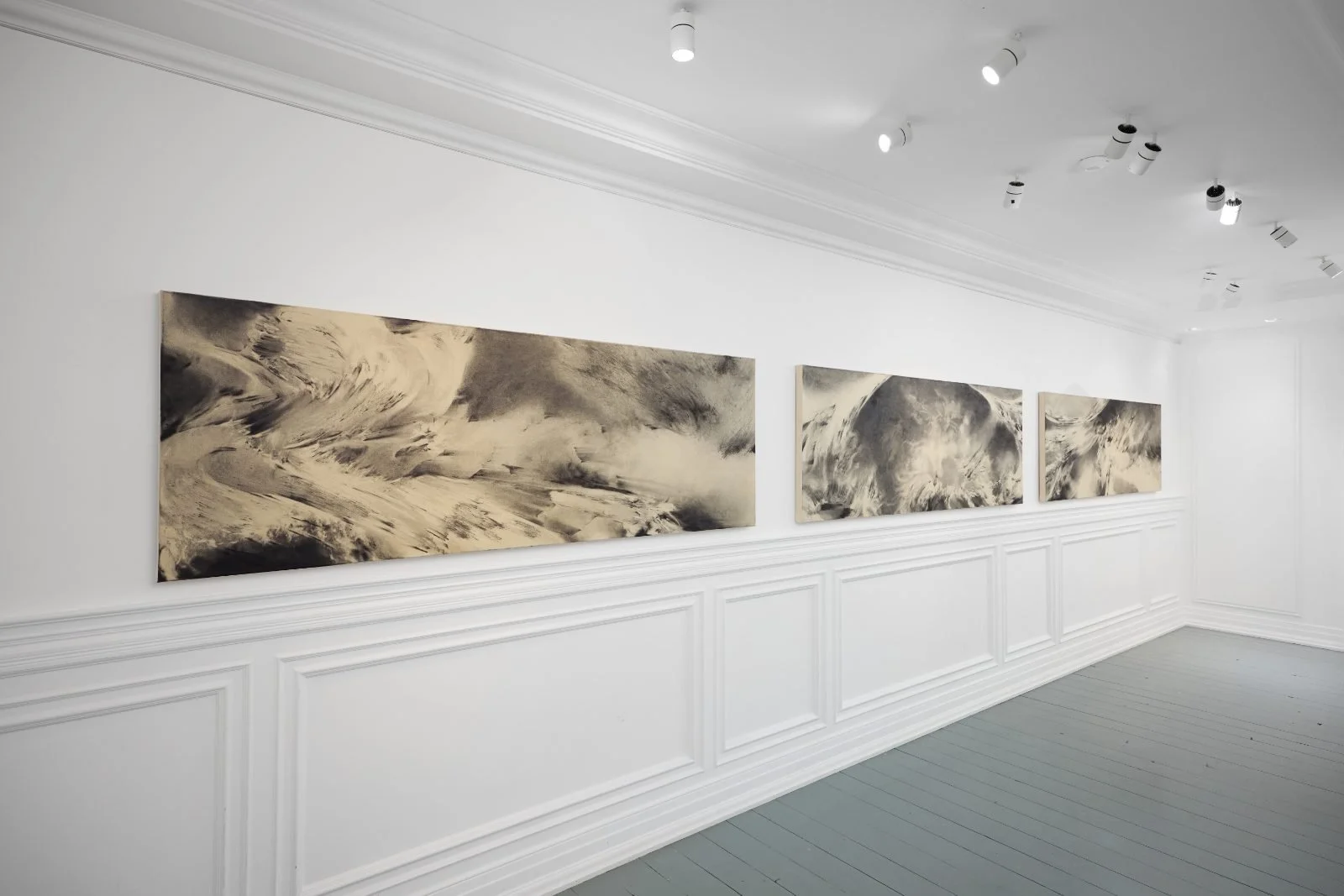
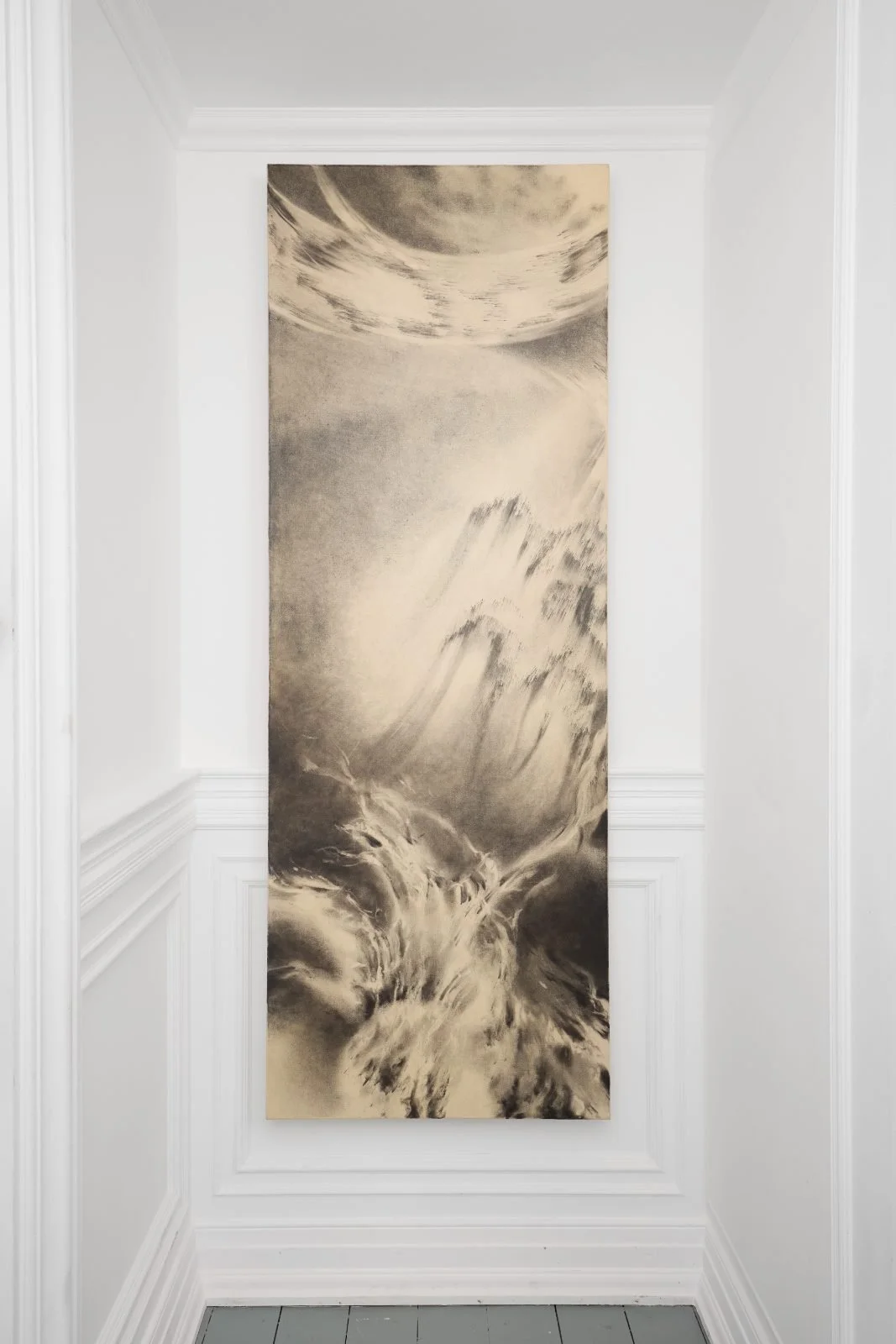
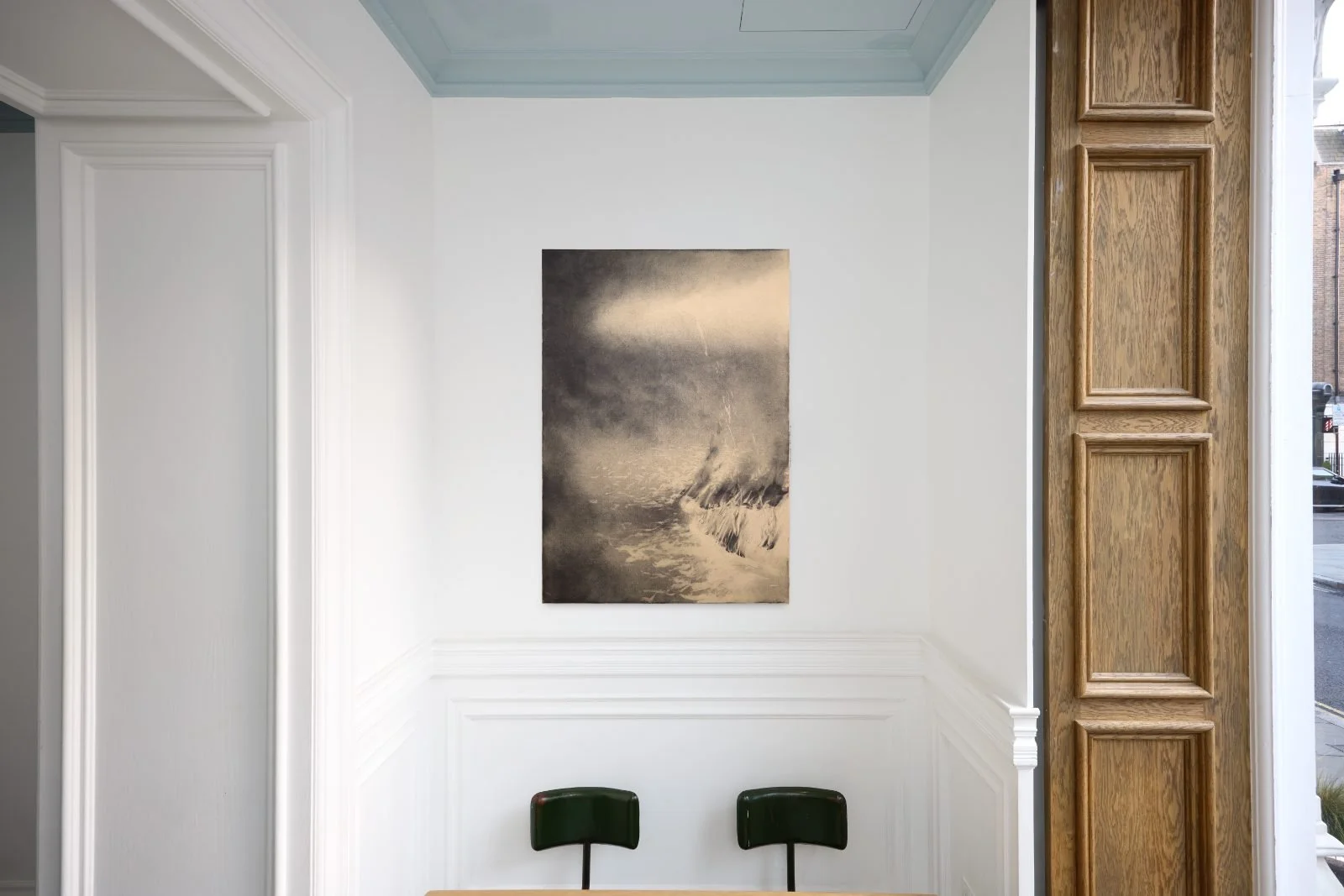
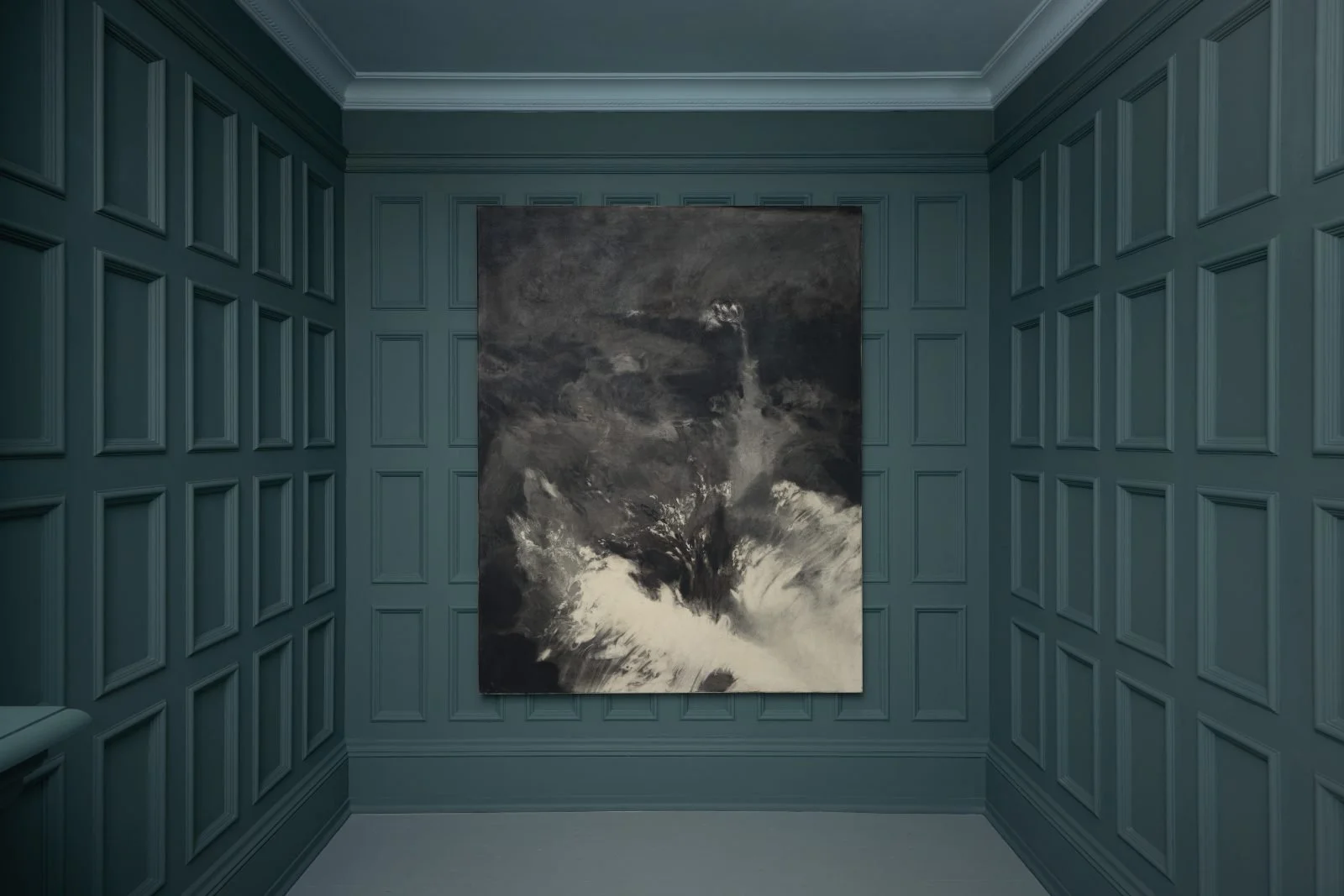
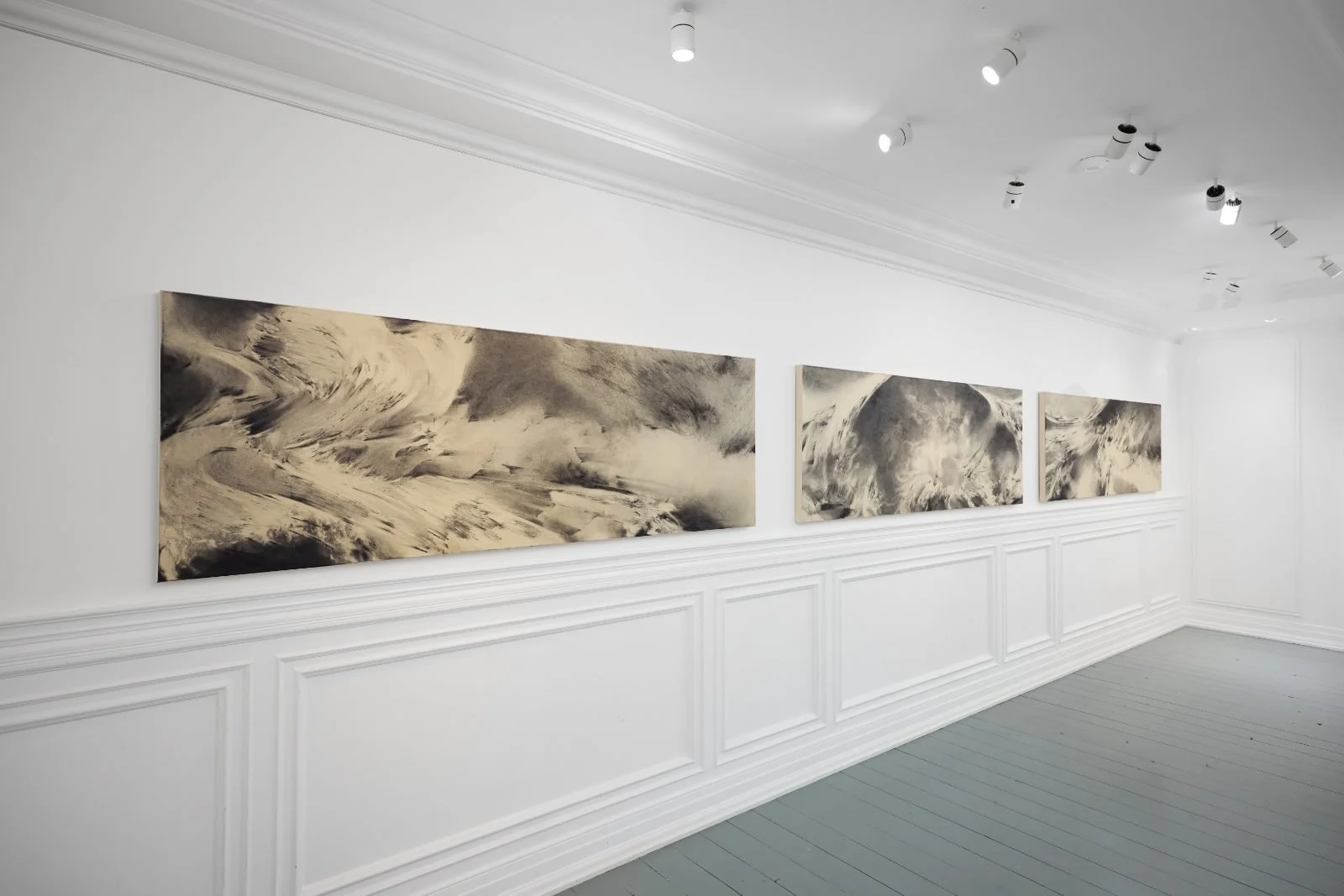
An undertow is the current beneath a breaking wave that pulls water back out to sea, often against the direction of what can be seen on the surface. For Attolini it is an image for forces that are felt rather than seen: a hidden pull running beneath something, a contradiction that creates rhythm and keeps things moving. The body registers these forces in the same way. Emotional memory settles there and arrives as sensation before the mind can name it, and drawing becomes a way of letting that feeling surface in a visual language of tension, weight, space and flow.
Working by the sea in Margate, Attolini builds each image with her hands directly on the surface, through contact, accumulation, friction and erasure. Every mark is the record of a gesture. Charcoal is laid down in dense, smoky fields and worked until light appears to be drawn out of the dark; each layer keeps the trace of what came before it, so the canvas holds the history of its own making. Explosive sprays and streaming lines surge across each canvas, at times recalling water breaking or wind moving through grass before slipping into abstraction and generously opening up these paintings for the viewer’s singular interpretation.
Many of the works are long and narrow, asking the eye, and the body, to travel across them. Attolini wants the works to be active, "like a space or a moment that is happening" because movement is what makes something alive; nothing is ever really fixed.
Opposing tensions recur throughout: push and pull, light and darkness, weight and levity, stillness and motion. Rather than resolve them, the works hold them in suspension as marks gather, collide and disperse like currents.
The titles of many of the works refer to corporeal sensation - ‘Blows air between my ribs’, ‘Climbs my throat and spills’ and ‘I let it warm and whiten my bones’, allowing the viewer to locate these forces directly within the body. The inner and the outer are not separate here. Experience arrives from outside and settles in; drawing transforms it, and it is released again.
Attolini finds these exchanges clearest in nature, where the forces of the elements are so primal that they can feel soothing and intimidating at once. The body is made of the same flows and responds to them: entering that moving world brings the strangeness of arriving and the slow recognition of belonging, of being outside and inside the movement at once. There is pleasure, she says, in not understanding completely, in allowing oneself to be moved by things. Drawing is how Attolini captures the sensation of those forces before releasing it, allowing each work to hold the current for a moment before letting it go and once again creating space.
Info + opening times
Incubator