
JC Gallery
Toni LaSelle
09.June.25 – 16.August.25
JC Gallery announces a solo presentation of work by Dorothy Antoinette (Toni) LaSelle.
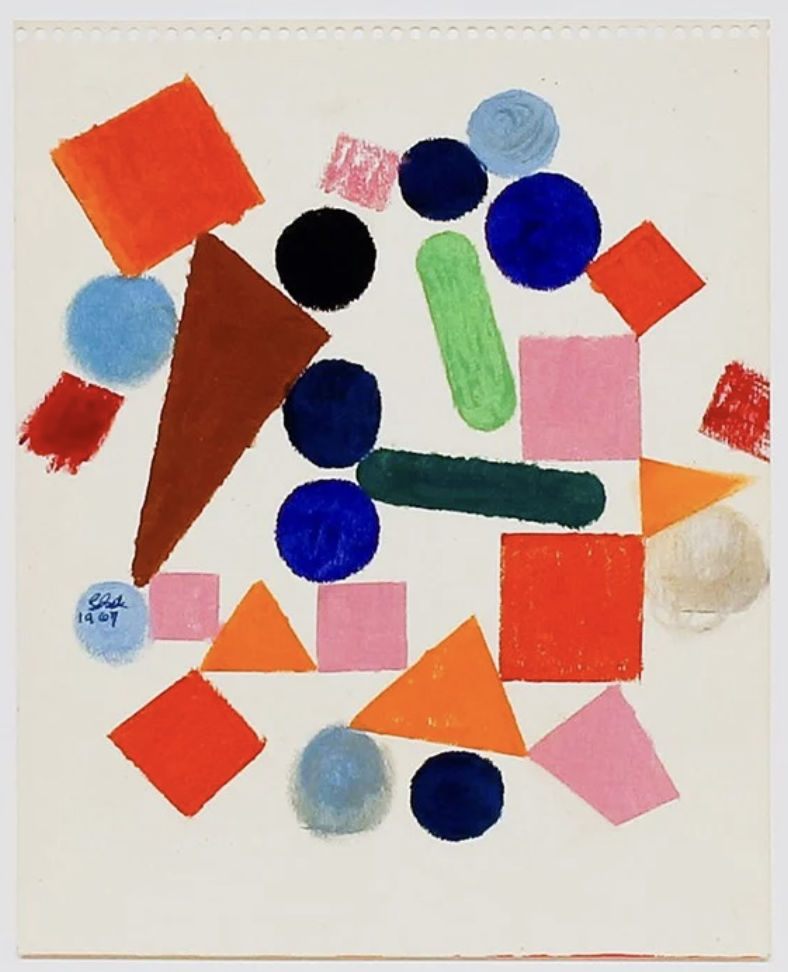

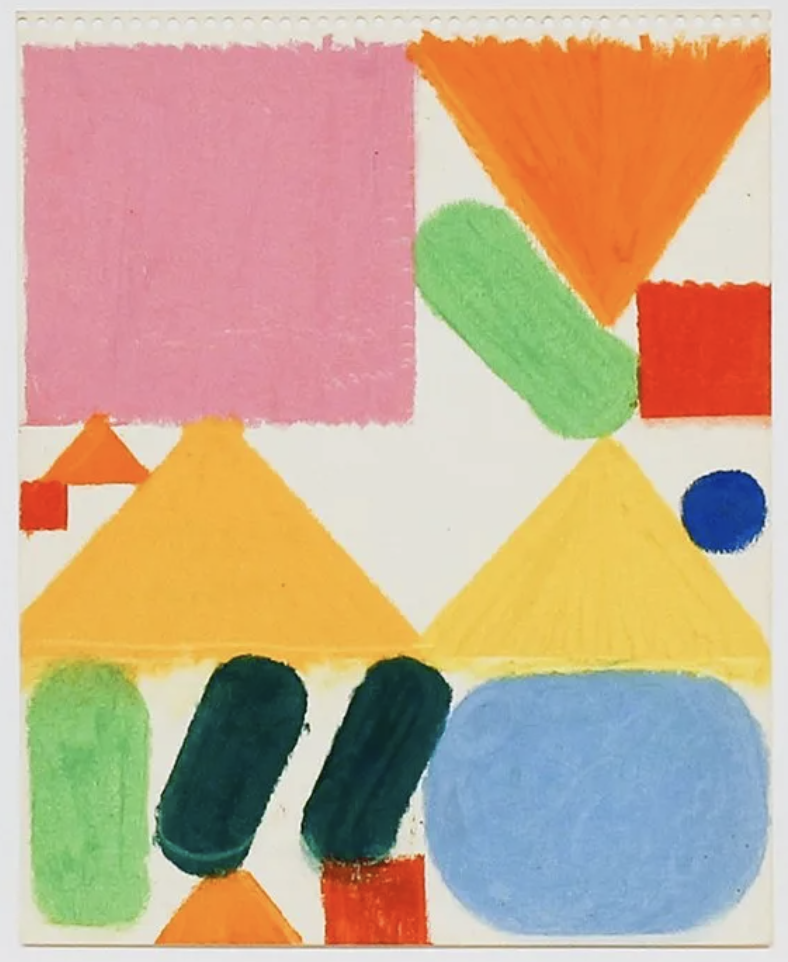
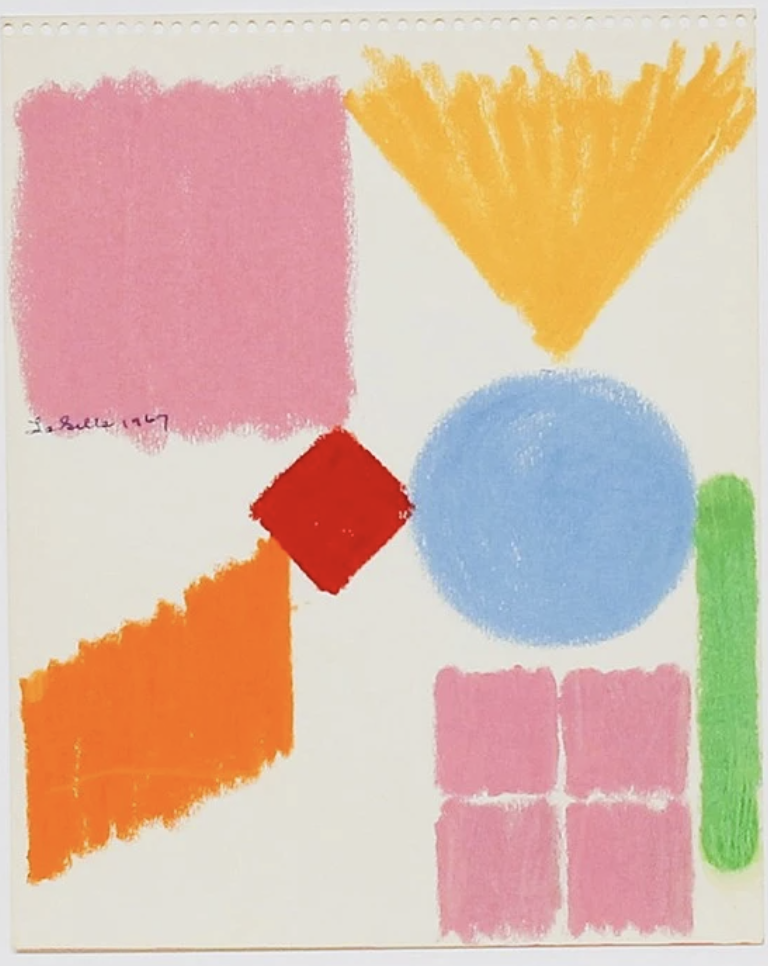
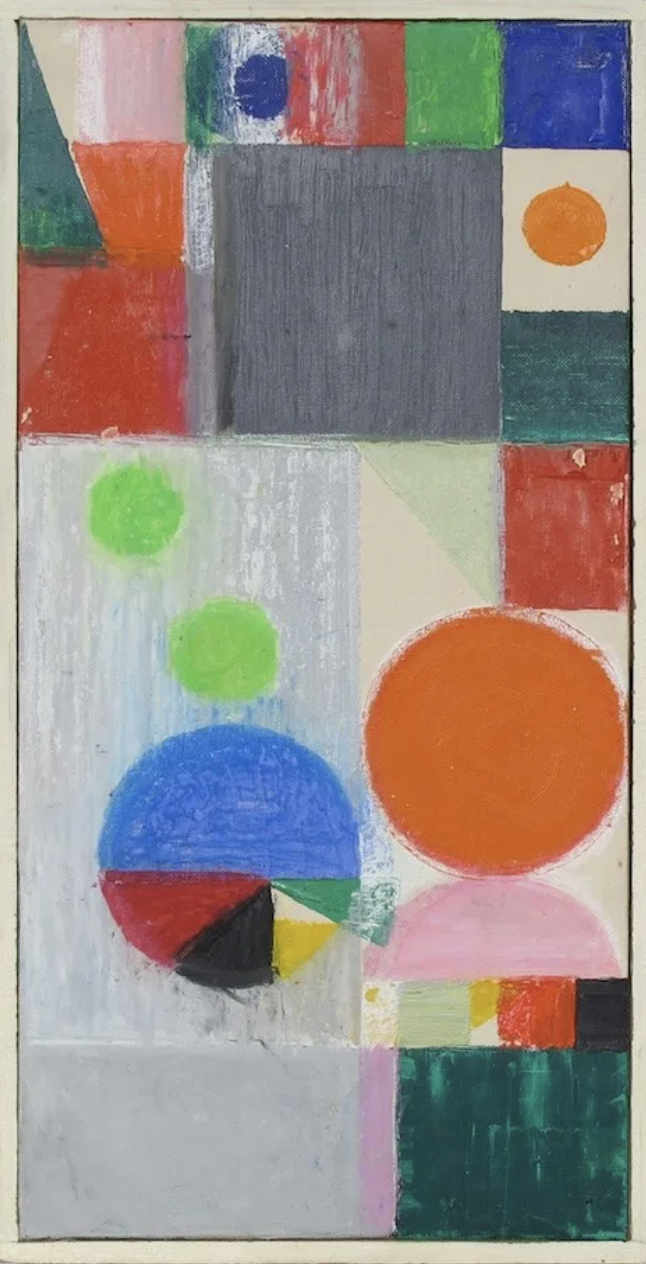
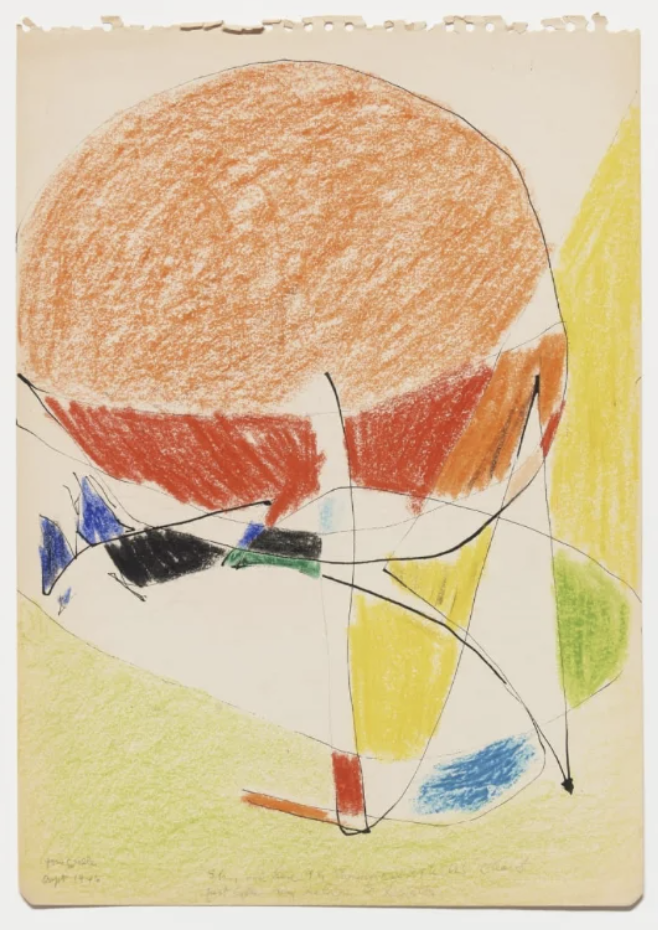
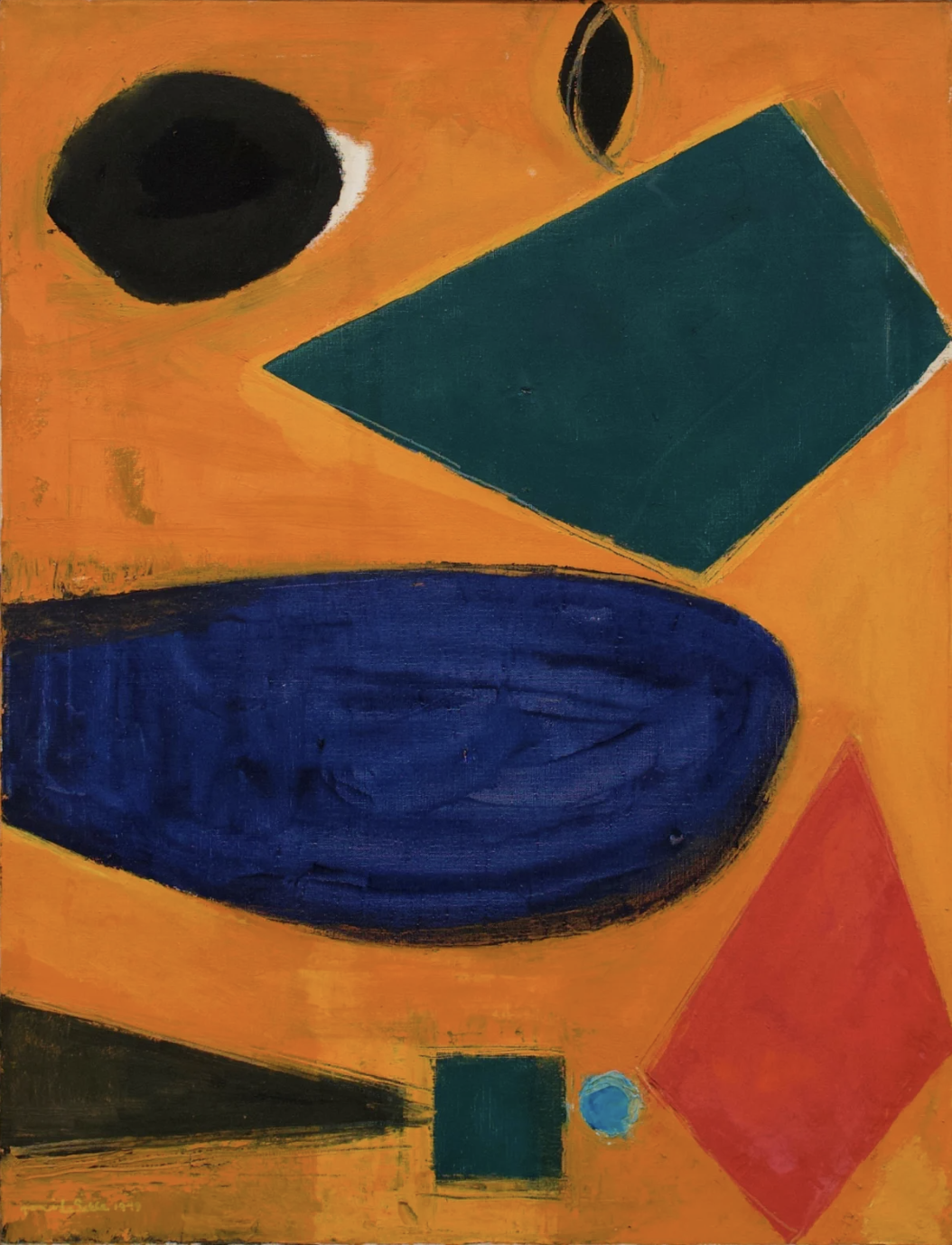
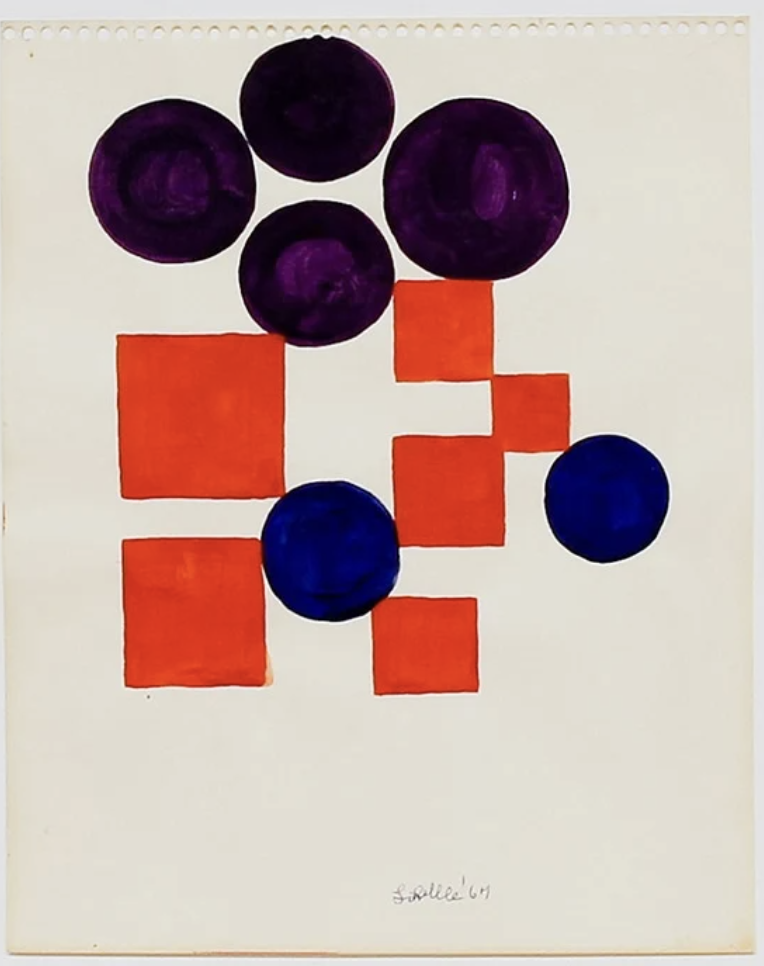
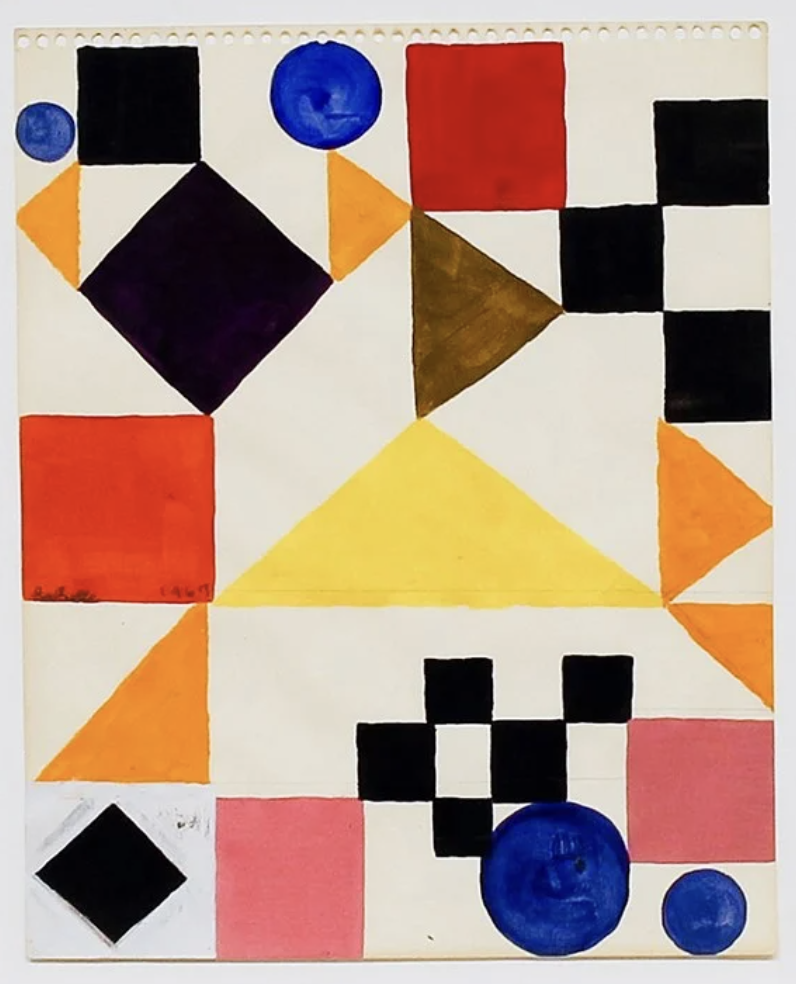
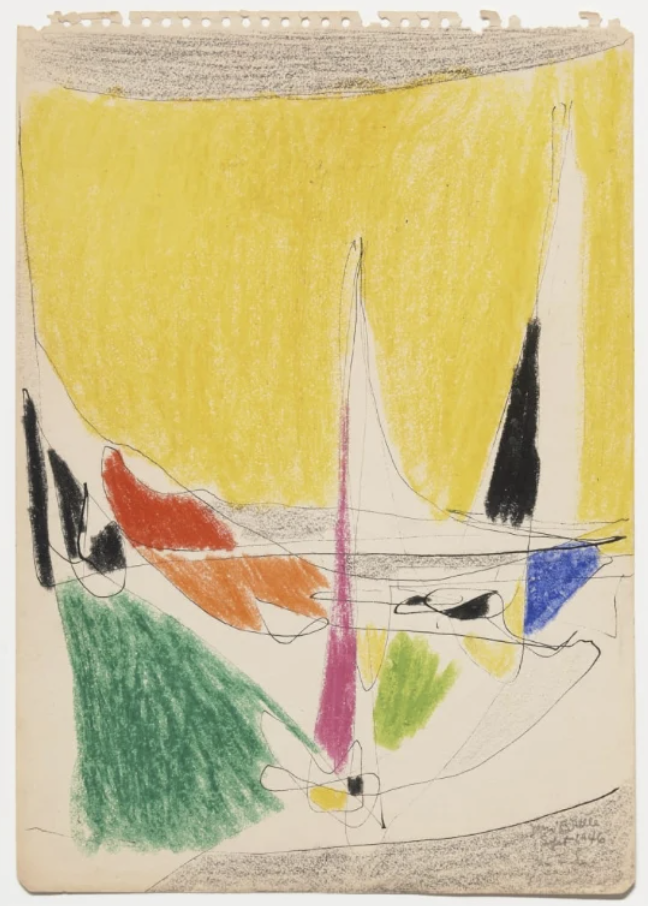
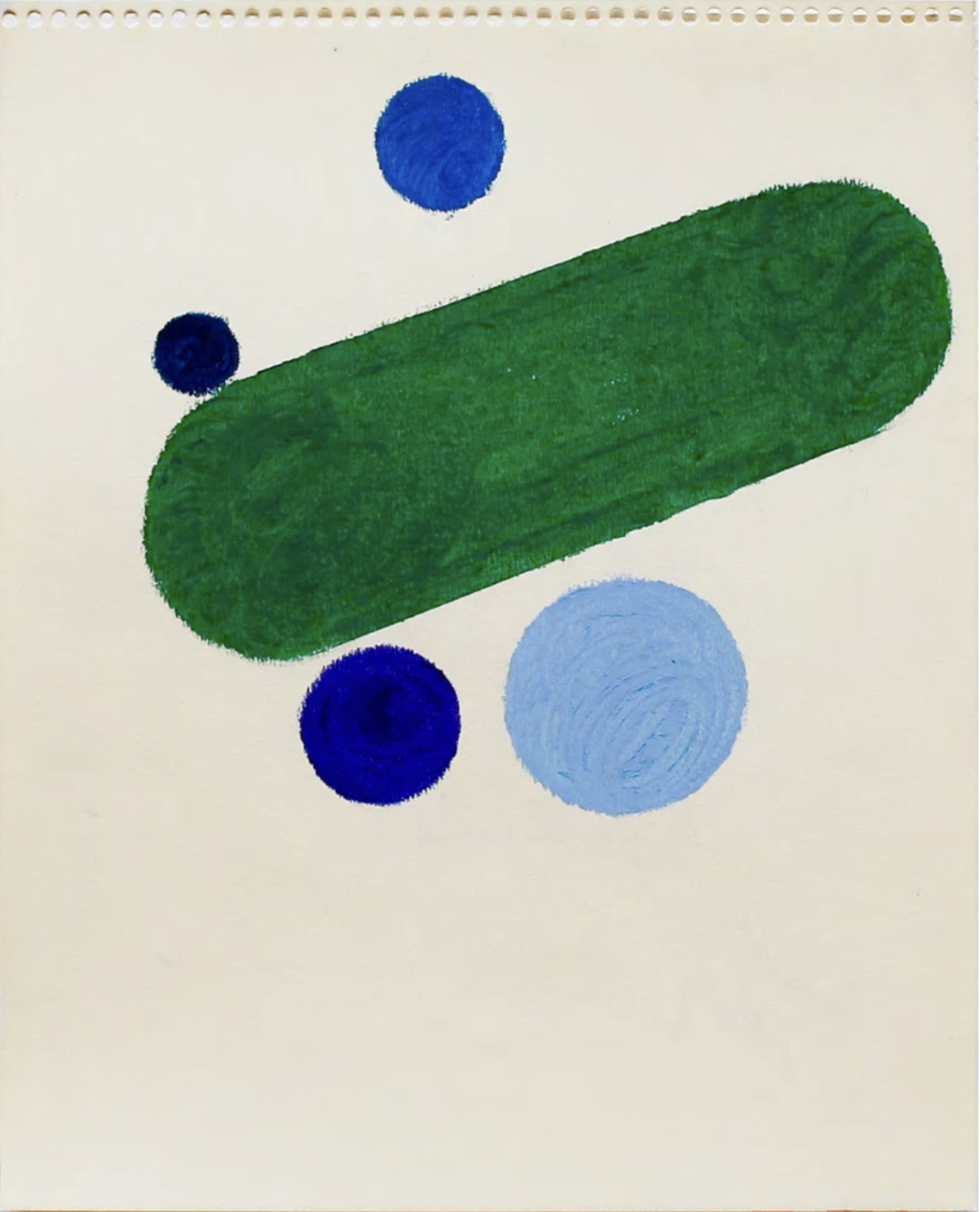
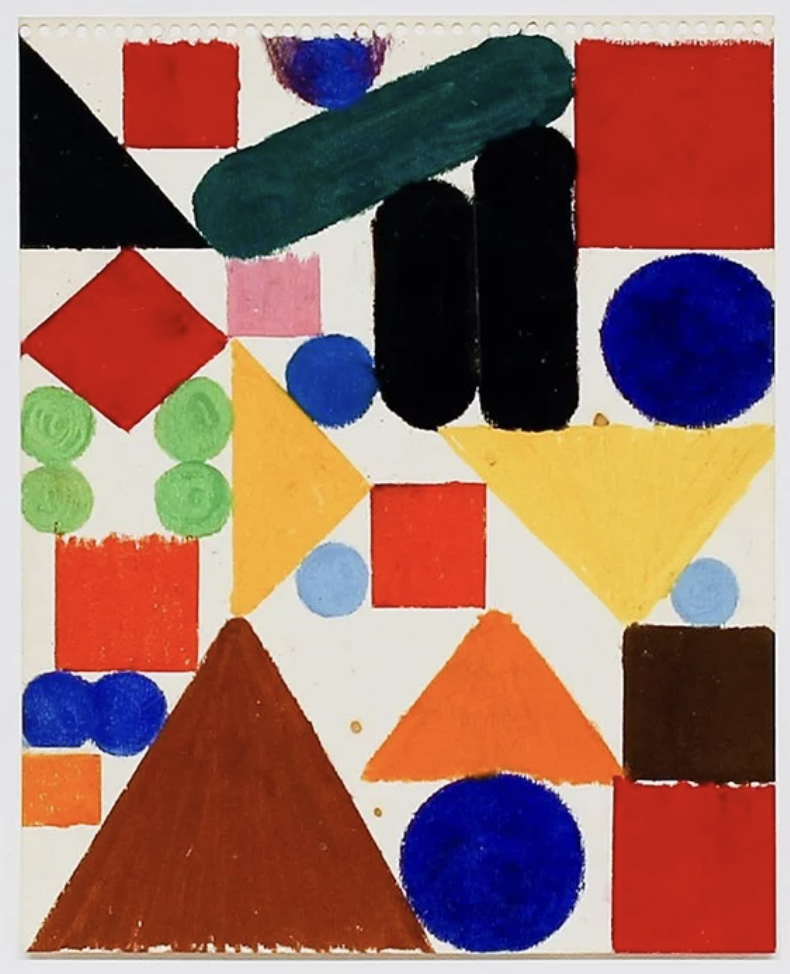
Toni LaSelle (1901–2002) was a pioneering American modernist and a key figure in shaping modern art education in the United States. Strongly influenced by European movements such as the Bauhaus and Constructivism, LaSelle’s practice is defined by a rigorous and elegant exploration of colour, form, and spatial harmony. As both an artist and teacher, she played a critical role in introducing and advocating modernist ideas in America, long before they were widely embraced. This striking show, featuring both paintings and works on paper, offers a rare opportunity to engage with LaSelle’s sophisticated abstract compositions.
Toni LaSelle is a pioneering female American modernist, whose work resonates with the complexity and optimism of a changing world. In the margins of Post-war American modernism, where New York's downtown clamour drowned out many regional voices, Dorothy Antoinette “Toni” LaSelle (1901–2002) composed a quiet, rigorous modernism that was at once fiercely independent and uncannily attuned to international currents. For decades, LaSelle maintained her artistic practice from Denton, Texas, while building a transatlantic conversation with the European avant-garde and its American interpreters— notably Hans Hofmann and László Moholy-Nagy. That she remained largely overlooked during her lifetime speaks less to the work's significance than to the narrow lens of the art historical canon. LaSelle’s 1946 painting Gulf of bitterness is emblematic of her commitment to synthesizing modernist principles within a personal, painterly idiom. The work suggests stained glass not only in its structural composition—its planes of colour delineated by bold linear elements—but also in its luminosity, an evocation of light filtered through coloured glass. The reference is not incidental: LaSelle had been deeply involved in the design of stained-glass windows for the Little Chapel in the Woods, a 1939 collaboration at what is now Texas Woman’s University. Her immersion in the chapel project marked a turning point, leading her to absorb the formal clarity and spiritual resonance of stained glass into her own painterly vocabulary.
Though often compared to Mondrian for her use of grids and geometric abstraction, LaSelle diverged from his Neoplasticism in critical ways. Her touch is looser, her palette more sensuous and varied. In Space Composition #1, the scaffolding of straight lines and primary colours gives way to rhythmic, fluid brushwork.
If Mondrian sought a metaphysical equilibrium, LaSelle sought a visual dynamism—more Hofmann than De Stijl, more Bonnard than Bauhaus. LaSelle studied with Hans Hofmann in Provincetown beginning in 1944, attracted less by his aesthetic than by his pedagogy. What she found compelling in Hofmann was his insistence on individual vision—on what she described as “discernment” rather than dogma. Her charcoal drawings from this period—especially the 1946 Figure, Space Planes—deploy Hofmann’s pushpull dynamic in two dimensions, using erasure and mark to articulate volumetric space within the confines of the picture plane.
These are not studies; they are arenas of spatial inquiry. By the early 1950s, LaSelle's work had shifted. Her 1953 notebook drawings, many made at her Provincetown studio at 3 Soper Street, show a growing embrace of hard-edge abstraction, presaging the more rigid geometries of her 1960s compositions. These small works on paper are formalist in the best sense: studies in balance, proportion, and chromatic resonance. They also echo her lifelong fascination with stained glass, particularly in the use of opaque planes edged by dark contours—a visual grammar also seen in the early works of Georges Rouault. Yet even as she flirted with the grid, LaSelle never surrendered to pure formalism. Her compositions remain energized by the memory of organic form, a trace of life beneath geometry. LaSelle’s story complicates dominant narratives of American abstraction.
Her trajectory was neither provincial nor derivative; rather, it was polyphonic, shaped by transatlantic travel, interdisciplinary curiosity, and a Midwestern pragmatism that resisted aesthetic dogma. Her work—lyrical but structured, painterly yet precise. Her own phrase, ‘a state of becoming’, aptly describes both her work and her ethos: restlessly experimental, perpetually unfinished, and vitally open to redefinition.
Today, renewed attention to her work—through recent acquisitions by the Museum of Fine Arts, Houston, and major retrospectives in Texas and New York. In a moment increasingly attentive to the peripheries of mid-century abstraction, LaSelle emerges not as a regional footnote, but as a central figure in the deeper, more diverse history of American modernism.
Info + opening times
JC Gallery