
Maximillian William
The Fallen Easel
24.April.26 – 30.May.26
Maximillian William presents The Fallen Easel, an exhibition that brings together LA-based artists Christina Forrer (b. 1978) and Sharif Farrag (b. 1993), alongside a single work by John Baldessari (1931–2020).
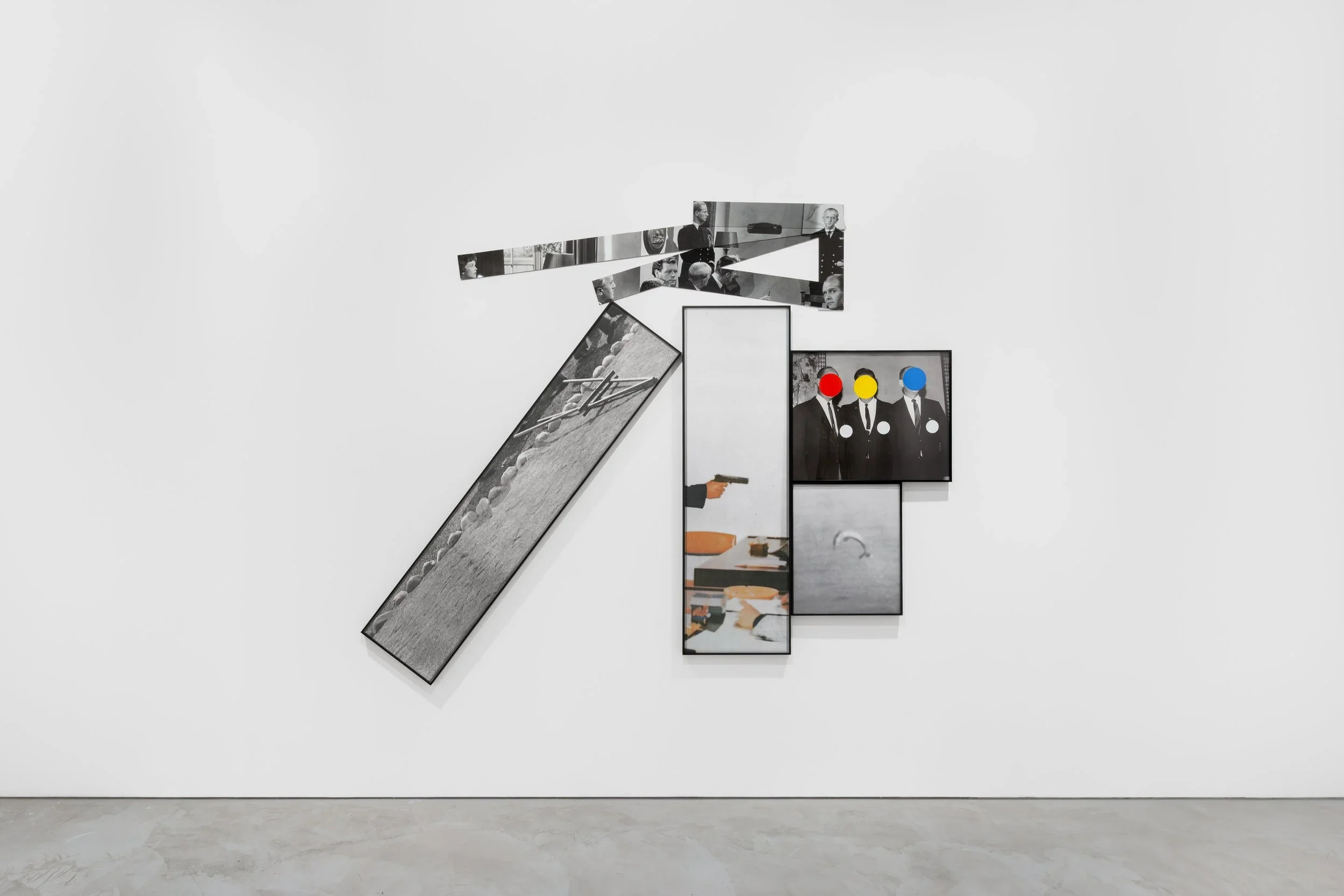
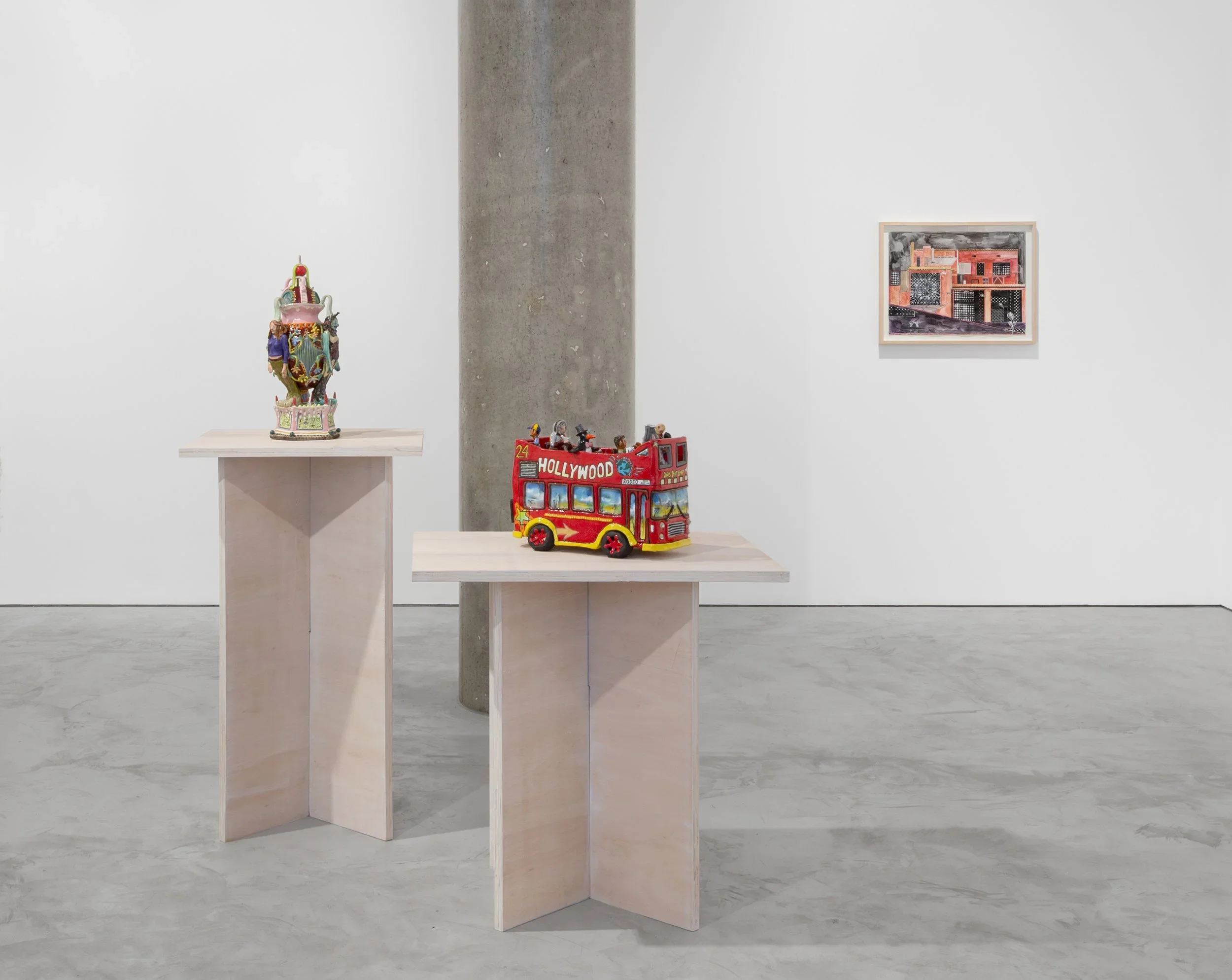
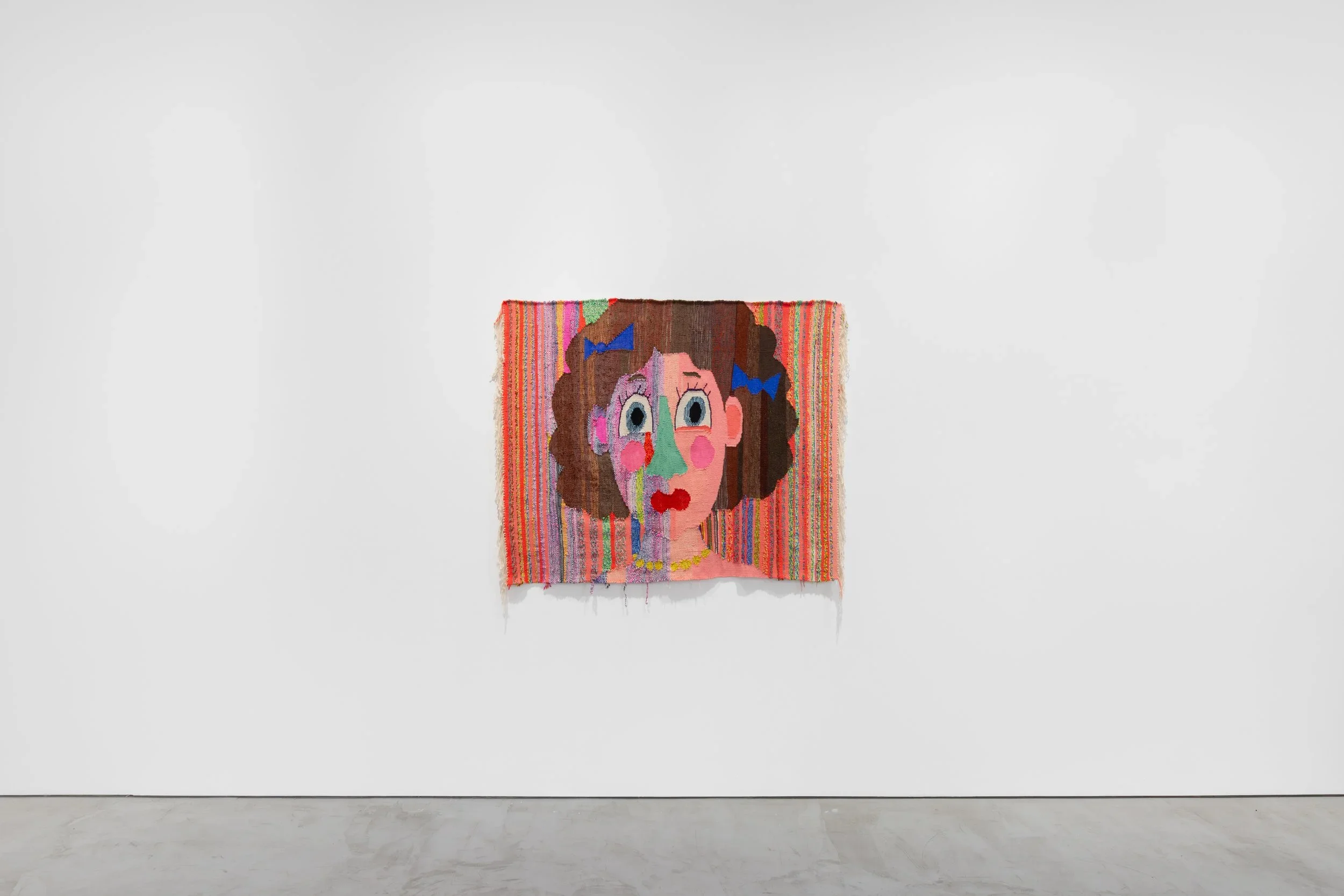
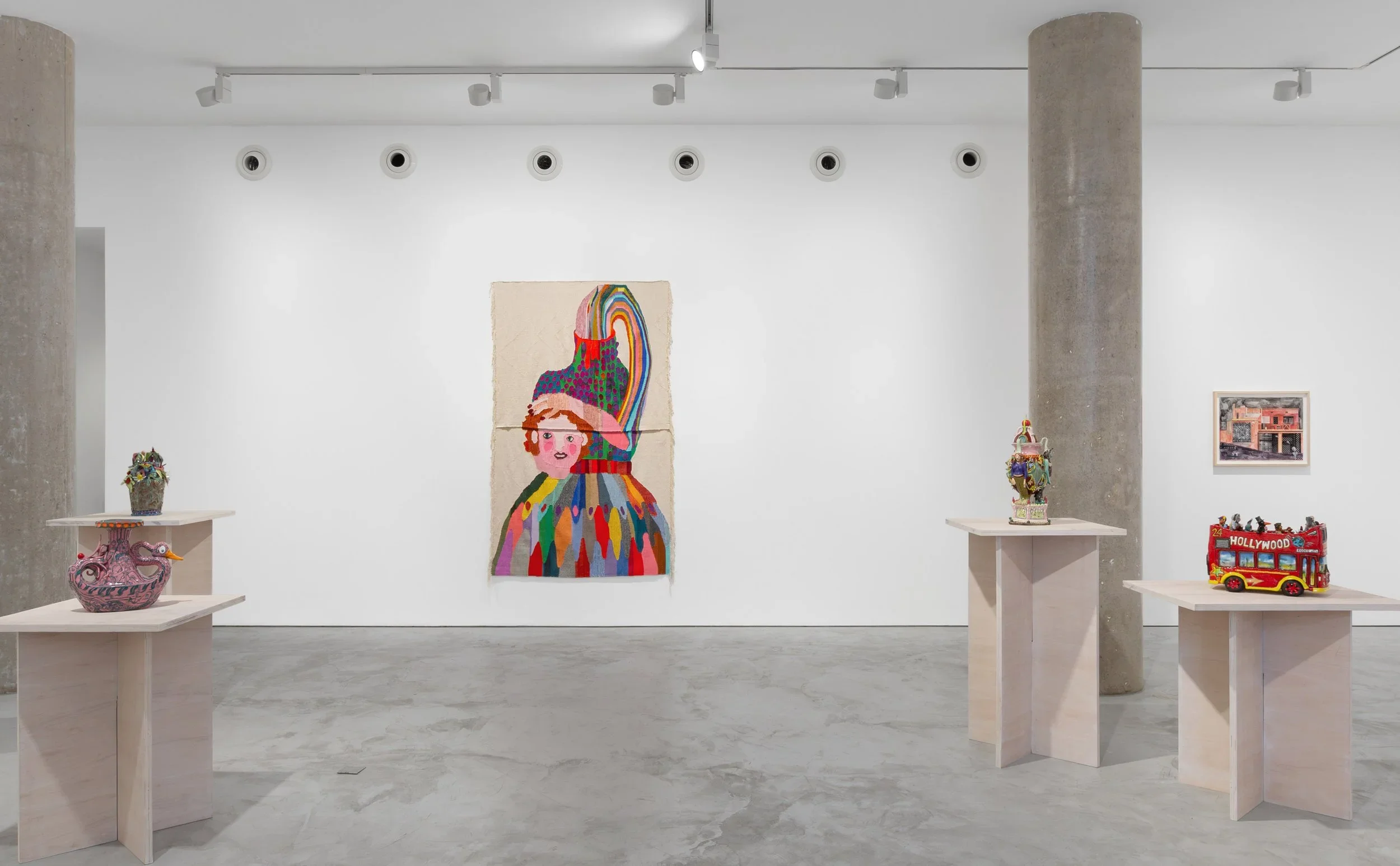
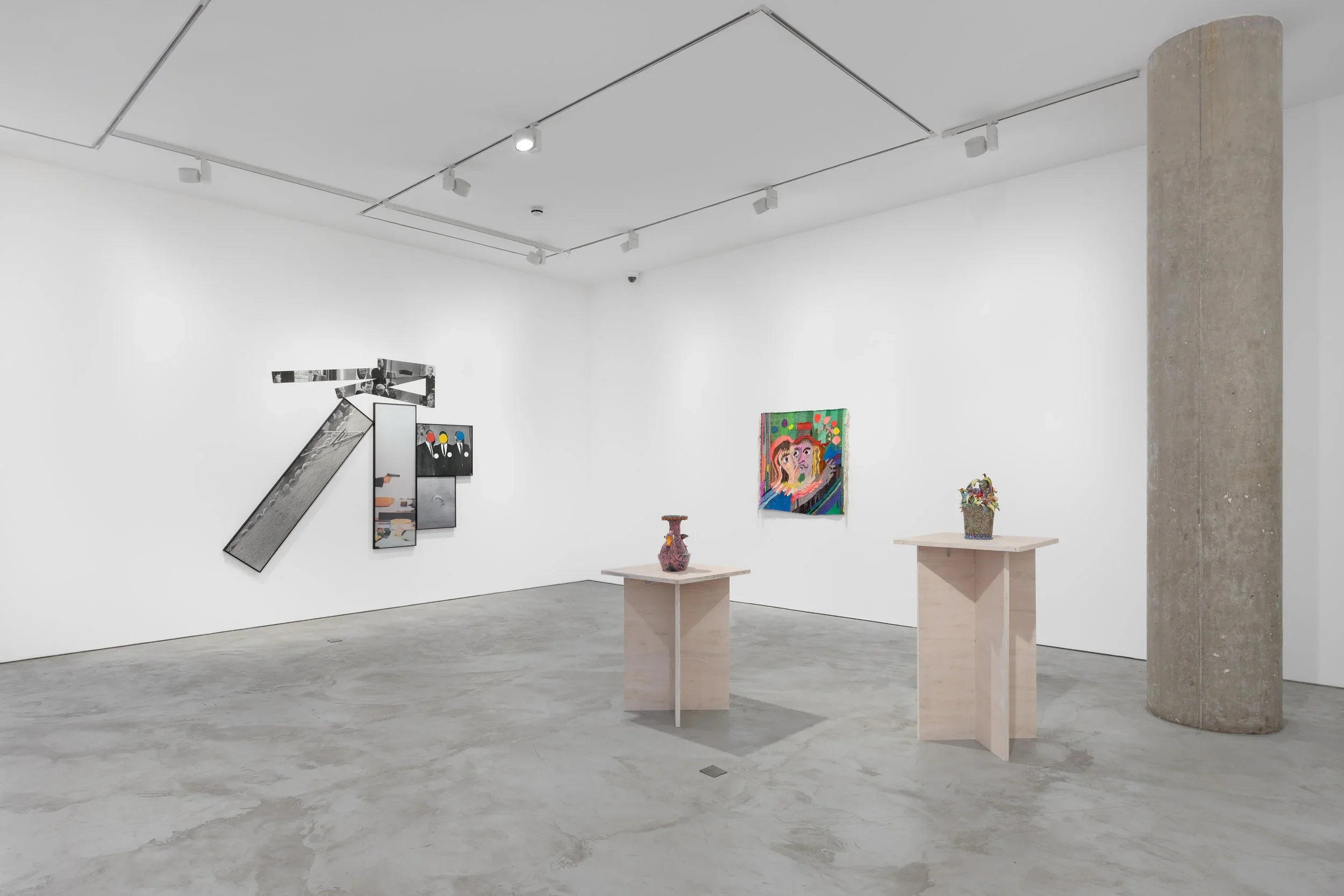
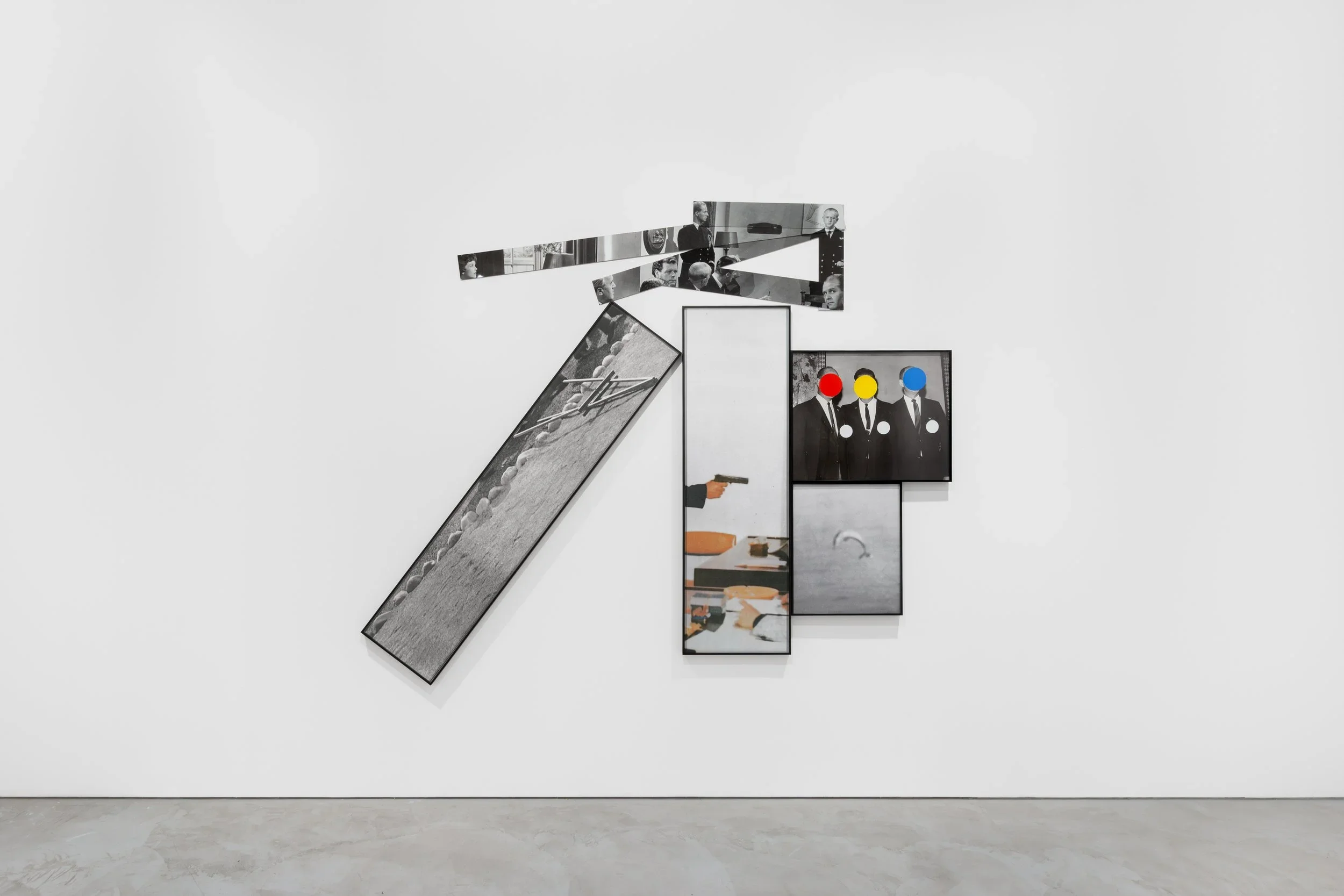
Though all three of the artists in the exhibition share a playfully subversive approach to form and narrative, the exhibition foregrounds a set of contrasts, particularly in terms of medium, tone and voice. John Baldessari’s The Fallen Easel (1988), a dynamic composition of nine monochrome photographs, inhabits the gallery as a wry interlocutor between Farrag and Forrer. In one of The Fallen Easel’s images, the faces of three besuited men are obscured by the artist’s trademark circles of primary colours, while in another, tightly cropped into a long horizontal format, we see an easel pushed to the ground as if abandoned by a frustrated painter. Working with found photographs and film stills, Baldessari asks questions about origins and authorship, as well as the instability of narrative in pictorial art.
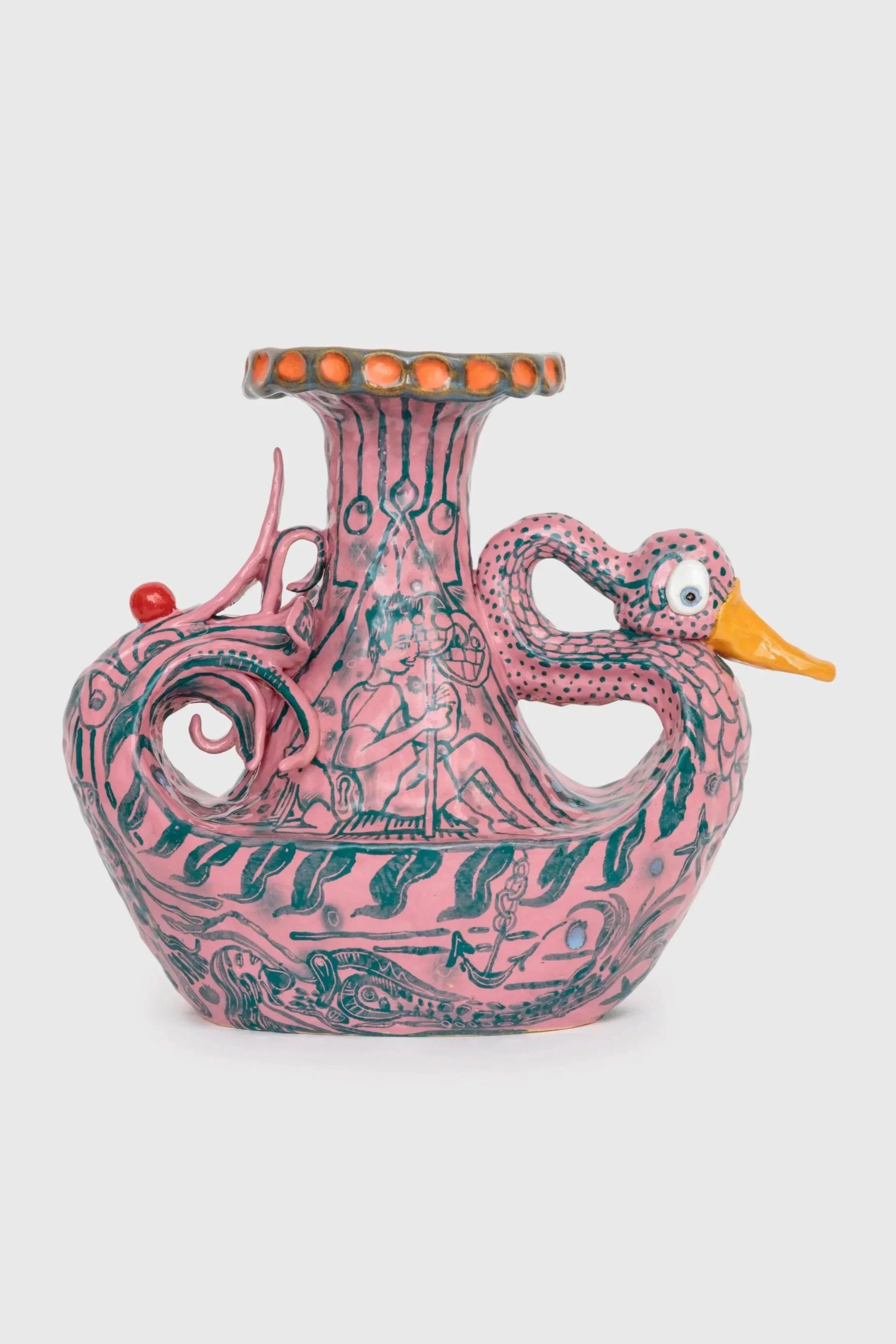
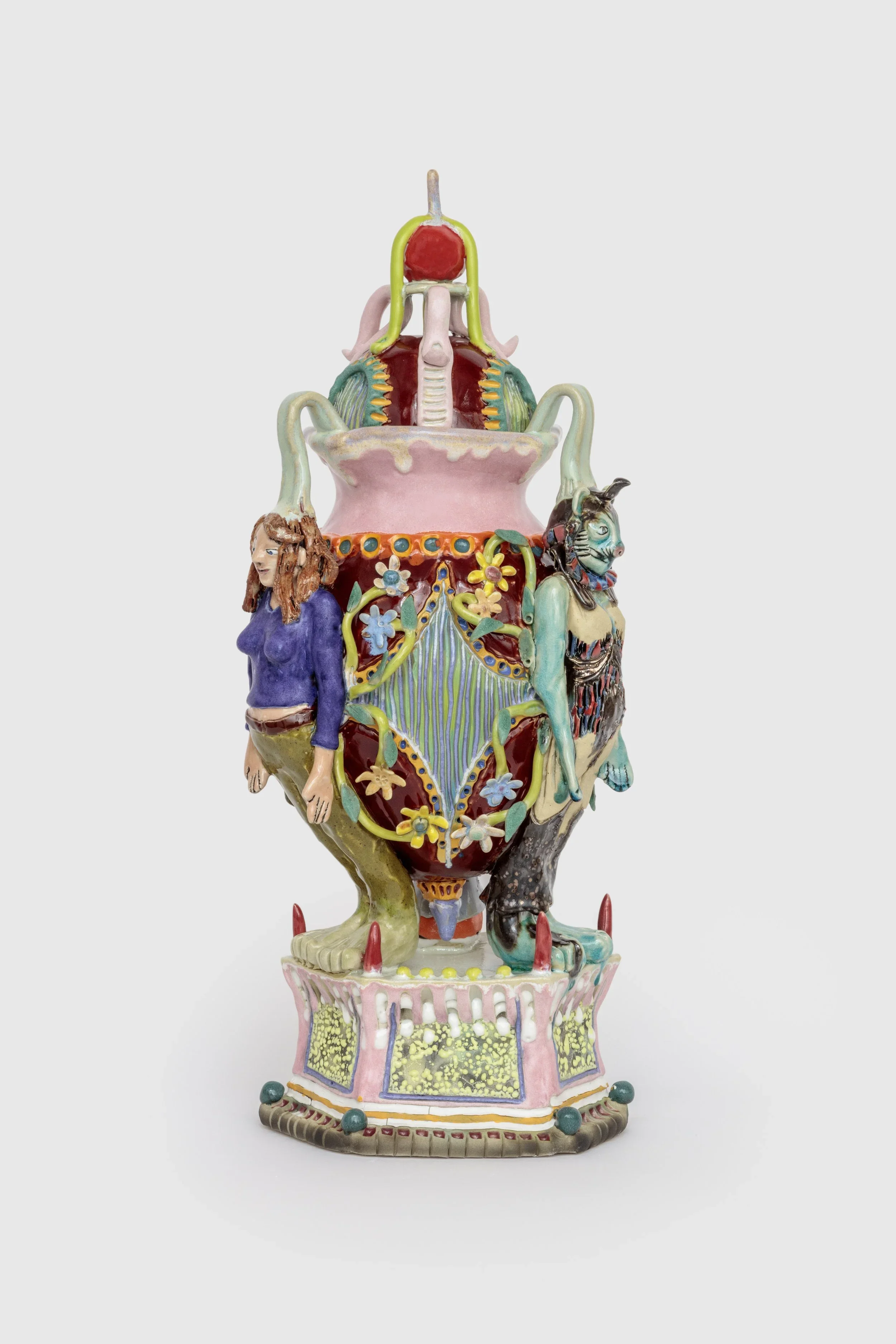
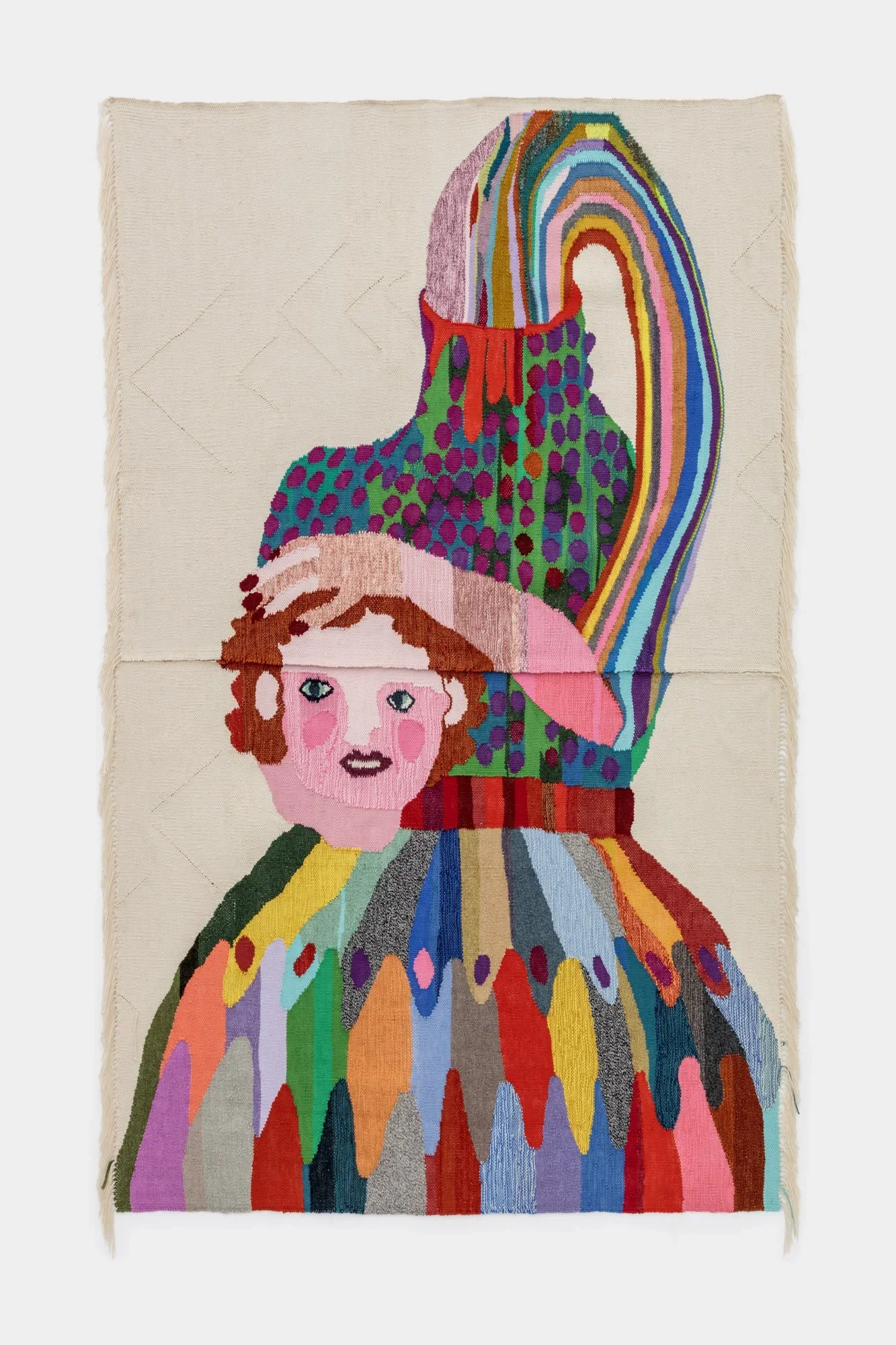
Farrag’s glazed ceramics often feature agglomerations of street-smart oddballs, bizarre natural forms and mythical creatures, often reflecting the heightened irreality of life in LA. Forrer’s weavings, by contrast, occupy a more interiorised space, where snippets of psychodrama and folklore unfold upon the textured surface of a warm tapestry. Forrer’s Regula (2026) depicts a woman holding a head, which may or may not be her own, with an arm that appears to be connected to her severed neck by a stream of delirious colour. The expression on the disembodied head is strangely calm, and overall the work offers a startling combination of humour and violence, even while the weave itself offers a visual experience distinct from any hint of narrative. Farrag’s Jester Jug (2026) is a lush overflow of flowers and creatures, while a small blue figure – the jester? – emerges from the vessel that supports the profusion of life.
Despite both artists drawing upon popular forms of storytelling, from comic books to myths, the medium-specific experience of looking at their work is vividly different. The smooth, glazed surface of Farrag’s ceramics evokes a sense of luxuriousness even while the energy and characters seem to subvert that association. Where Farrag’s sculptures express a centrifugal force, Forrer’s woven works conjure an interiorised space, in a medium that evokes domesticity and humility, if also synonymous with fairy tales and historical dramas. And while Farrag’s work reveals the strange, surreal surface of urban life, not least in a work such as Dead Man’s Party (2026), an open-top double-decker bus that serves to unify London and LA, Forrer’s dives deep into our unconscious, revealing, in the warp and woof of her tapestries, our darkest conflicts and desires.
Info + opening times
Maximillian William